
Orange Cake
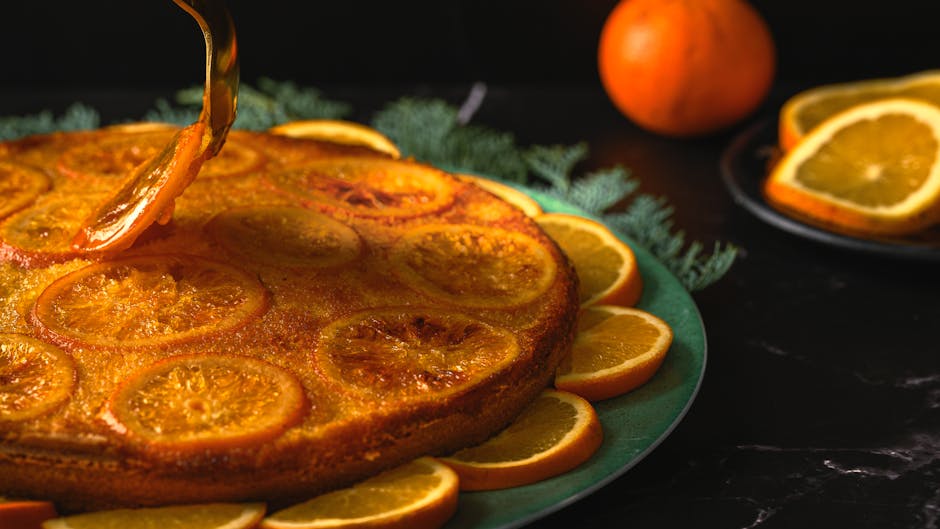
Orange cake is a butter or oil-based cake built around fresh orange zest and juice rather than vanilla or chocolate, giving it a bright, slightly tart flavor and a moist, dense-but-tender crumb. Most versions fall into one of three families: a simple loaf or bundt soaked in orange syrup after baking, a layered sponge with orange curd or buttercream, or a Mediterranean-style whole-orange cake made by boiling entire oranges (peel included) and blending them into the batter.
Varieties
Whole-orange cakes (common in Mediterranean and Middle Eastern baking) boil entire oranges, peel included, then blend them into the batter, producing a denser, almost pudding-like crumb and a more bitter edge from the pith. Bundt-style orange cakes soaked in syrup after baking are lighter and sweeter, closer to a classic pound cake.
Buying tips
If buying oranges specifically for baking, choose ones that feel heavy for their size (more juice) with tight, unblemished skin, since the zest is used raw and any wax or damage affects flavor. Navel oranges are the standard choice for balance of sweetness and acidity; avoid pre-zested jarred products, which lose aromatic oil quickly after processing.
Substitutes
Orange extract — 1/2 teaspoon per tablespoon of fresh zest called for
Delivers concentrated orange flavor without the moisture or texture of zest; combine with a little extra lemon zest to avoid a one-note, artificial taste.
Orange marmalade — 2 tablespoons marmalade replaces 1 tablespoon zest plus 2 tablespoons juice
Adds sweetness and small peel pieces; reduce the recipe's sugar slightly since marmalade is already sweetened.
Mandarin or clementine zest and juice — 1:1
Sweeter and less acidic than orange, giving a softer, less tart finish in the batter.
Blood orange zest and juice — 1:1
Similar acidity to regular orange but with a deeper color and a faint berry note; good for cakes finished with a glaze where color shows.
Bottled orange juice with added zest from a lemon — 1:1 for the juice, plus 1/2 teaspoon lemon zest per tablespoon of orange zest needed
Bottled juice lacks the aromatic oils found in fresh peel, so the lemon zest helps restore some of the missing brightness.
Storage
Store orange cake covered at room temperature for up to 3 days if it has a syrup soak or glaze, since the sugar helps preserve moisture. Cakes with cream cheese frosting or fresh curd filling need refrigeration and are best eaten within 4 days; bring to room temperature before serving so the crumb softens back up.
How to use
Serve as is with tea or coffee, or warm individual slices for 10 seconds in the microwave to loosen the glaze before plating with whipped cream or crème fraîche. Leftover orange cake also works crumbled into a trifle or layered with mascarpone in a quick icebox cake.
What it pairs with
Pairs well with dark chocolate ganache, pistachios, cardamom, and Greek yogurt or mascarpone on the side. A light olive oil drizzle over a plain orange loaf cake is a classic Mediterranean pairing.
Nutrition
A standard slice of orange cake runs roughly 300-350 calories depending on the amount of butter, sugar, and glaze used, with the orange zest and juice contributing negligible calories but real vitamin C and a small amount of fiber if whole fruit is blended into the batter.
FAQ
Why does my orange cake taste bland even with a lot of zest?
Zest loses aromatic oil quickly once grated, so it needs to go into the batter within minutes of zesting, and rubbing it into the sugar first (rather than just stirring it in) releases more of the oil into the mix.
Can I use orange juice instead of milk in a cake recipe?
Yes, but only in recipes without buttermilk or dairy leavening reactions; the added acidity can toughen gluten slightly, so reduce the flour's protein impact by resting the batter 10 minutes before baking.
Why did my orange cake sink in the middle?
This usually means the batter was underbaked or the oven door was opened too early; orange cakes with added juice carry extra moisture and often need 5-10 minutes longer than a standard vanilla cake of the same size.
Should I remove the white pith when zesting for cake?
Yes, zest only the colored outer peel; the white pith underneath is bitter and will make the cake taste chalky if it ends up in the batter.
Have orange cake on hand? Find recipes with our Recipe Generator →