
Ouzo
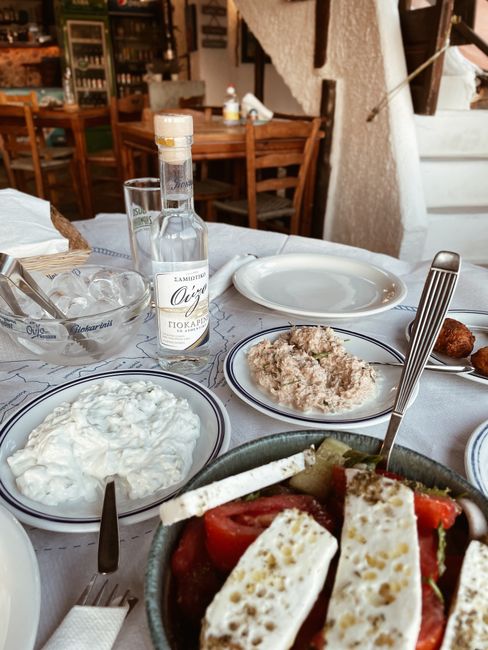
Ouzo is a Greek anise-flavored spirit, typically 37.5 to 47.5% ABV, made by distilling or flavoring a neutral base (often derived from grape must, the same byproduct used for tsipouro) with anise seed, fennel, and other botanicals like mastic or coriander. It's clear in the bottle but turns milky white when mixed with water or ice, a reaction called the louche effect caused by anise oils becoming insoluble as the alcohol is diluted.
Varieties
Ouzo, raki, and pastis are close cousins built on anise, but differ in base spirit and sweetness: ouzo and raki are traditionally distilled with a grape-must base and are typically less sweet, while pastis is usually made from a neutral grain or beet spirit and tends to be sweeter and higher proof. Sambuca, made in Italy, uses star anise and is notably sweeter and more syrupy than any of the others, closer to a liqueur than a spirit.
Buying tips
Look for the phrase 'distilled ouzo' or 'traditional ouzo of Plomari/Thessaly' on the label, which indicates the anise flavor came from actual distillation rather than added essence; these tend to taste rounder and less harsh. Common well-regarded brands include Plomari, Barbayanni, and Giannatsis.
Substitutes
Pastis — 1:1
French anise spirit with a similar licorice profile, though usually sweeter and slightly higher proof; works well in both drinks and cooking.
Sambuca — 3:4 (use 3/4 the amount of sambuca)
Sambuca is sweeter and more syrupy than ouzo, so cut back slightly or the dish or drink will taste candied.
Raki (Turkish) — 1:1
Nearly identical production and flavor to ouzo; a direct swap in almost any recipe.
Anise extract plus vodka — 1/4 teaspoon extract per 1.5 oz vodka, in place of 1.5 oz ouzo
A workable stand-in when no anise liqueur is on hand, though it won't produce the louche effect when mixed with water.
Anisette — 3:4 (use 3/4 the amount of anisette)
Sweeter and lower proof than ouzo; reduce the amount and expect a softer anise flavor.
Storage
An unopened bottle keeps indefinitely at room temperature out of direct sunlight. Once opened, reseal tightly and it stays good for cooking and drinking for at least a year or two, though the anise aroma slowly fades, so use it within about 18 months for the best flavor in cocktails.
How to use
Splash into seafood dishes and marinades for shrimp, mussels, or octopus, deglaze a pan after searing fish, add to tomato-based sauces for a subtle anise note, or use in flambe for shellfish and desserts. Most commonly it's served neat or on ice, or mixed about 1 part ouzo to 2 or 3 parts cold water so it clouds.
What it pairs with
Pairs with Greek mezze: olives, feta, grilled octopus, fried calamari, and saganaki. The anise flavor also complements citrus, fennel, and rich, oily fish like sardines and mackerel.
Nutrition
A standard 1.5 oz shot of ouzo has roughly 95 to 100 calories, all from alcohol, with no fat and negligible carbohydrate unless the specific bottling is sweetened, in which case a few grams of sugar may be present.
FAQ
Why does ouzo turn cloudy when you add water or ice?
Ouzo contains anethole, an oil from anise and fennel that dissolves in alcohol but not in water. When water dilutes the alcohol content, the oil comes out of solution and scatters light, turning the drink milky white (the louche effect).
Is ouzo the same as absinthe?
No. Absinthe is typically much higher proof (often 55 to 75% ABV), gets its flavor mainly from wormwood along with anise, and historically contains thujone; ouzo is lower proof and built almost entirely around anise and fennel without wormwood.
Can ouzo be substituted with just anise seeds or star anise?
Not directly for drinking, but for cooking you can simmer crushed anise seed or star anise in a neutral spirit or in the dish's liquid to approximate the flavor, though you'll miss the alcohol strength and mouthfeel ouzo brings to sauces and flambes.
Does the alcohol in ouzo cook off completely when flambeing?
No, flambeing burns off only a portion of the alcohol, typically leaving 15 to 25% behind depending on flame time and pan surface area, so the dish will still carry some ouzo flavor and a small amount of alcohol.