
Parmigiano-Reggiano Rinds
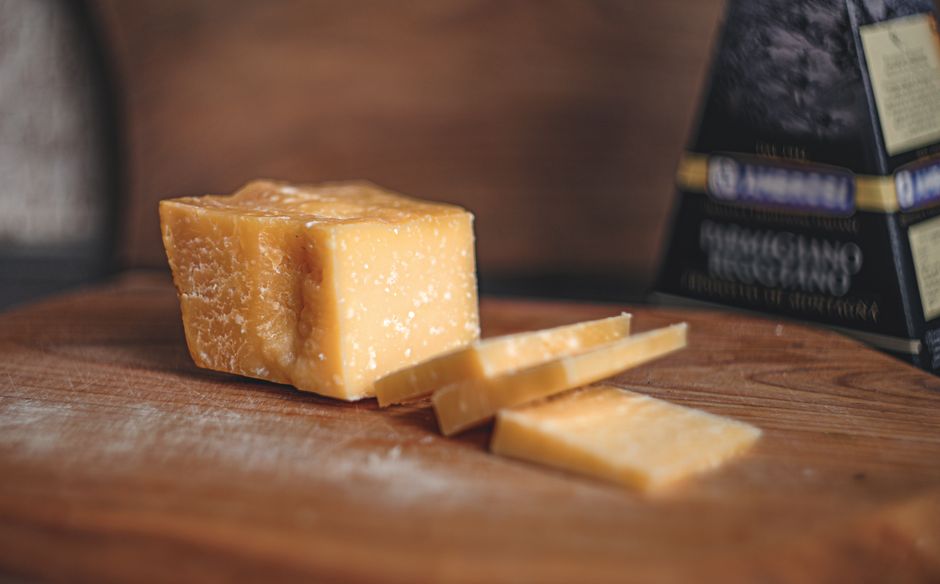
Parmigiano-Reggiano rinds are the hard, waxy outer layer of the wheel that's too dense to grate or eat on its own. They're not a byproduct to throw away: simmered in liquid, the rind slowly softens and releases the cheese's savory, salty depth without melting into strings, making it a working pantry ingredient in its own right rather than kitchen scraps.
Varieties
Rinds from pre-grated or lower-quality "parmesan" style cheeses are often coated in wax or cellulose and won't soften or flavor liquid the same way; only rinds from a real aged wedge, Parmigiano-Reggiano, Grana Padano, or similar, are worth saving for cooking.
Buying tips
Save rinds from wedges as you use up the cheese rather than buying them separately; many cheese counters also sell bags of rind trimmings cheap since they can't sell them as grating cheese. Look for rinds that are pale gold and dry, not sticky or showing mold beyond the natural waxed coating.
Substitutes
Grana Padano rind — 1 rind piece : 1 rind piece
Slightly milder and less crystalline than Parmigiano-Reggiano, but simmers the same way and works interchangeably in soups and beans.
Pecorino Romano rind — 1 rind piece : 1 rind piece
Made from sheep's milk and noticeably saltier and sharper; good in tomato-based sauces but can overwhelm delicate broths.
Kombu (dried kelp) — 1 small strip per pot
Not a cheese flavor at all, but a vegan way to add savory depth to broths and beans when no rind is available.
Nutritional yeast — 1-2 tablespoons per pot
Adds a savory, faintly cheesy note stirred in at the end, but doesn't simmer or thicken the way a rind does.
Storage
Keep rinds in a zip-top bag or airtight container in the refrigerator for up to a month, or freeze them for up to a year. Frozen rinds can go straight into a simmering pot without thawing.
How to use
Drop a rind into simmering soup, bean pots, risotto, or tomato sauce and let it cook for at least 30 minutes so the fat and salt render into the liquid; fish it out and discard before serving since it never fully softens into something pleasant to eat. It also works tucked into a pot of minestrone or a batch of stock alongside vegetables and bones.
What it pairs with
Pairs naturally with tomatoes, white beans, potatoes, and leafy greens in soups, and with Arborio rice in risotto where the released fat helps build a creamy texture without extra butter.
Nutrition
The rind itself is mostly discarded, but the fat and sodium it releases into the cooking liquid are real, so a pot simmered with a rind will run slightly saltier and richer than the same recipe without one. Adjust added salt accordingly.
FAQ
Can you eat Parmigiano-Reggiano rind?
It's technically edible but very tough and waxy even after a long simmer. Most cooks discard it after it has flavored a dish rather than eating it directly.
How long should a rind simmer to release flavor?
At least 30 minutes; an hour or more in a slow-simmered soup or stock gives noticeably more depth since the fat needs time to render out.
Can you reuse a rind more than once?
Yes, a rind that's still mostly intact after one simmer can be rinsed, refrozen, and used again in a second pot, though it releases less flavor each time.
Does the rind need to be labeled Parmigiano-Reggiano to work?
No, but it should come from a genuinely aged hard cheese. Waxed or processed rinds from cheap pre-grated tubs won't soften or release the same savory fat.
Have parmigiano-reggiano rinds on hand? Find recipes with our Recipe Generator →