Arborio Rice

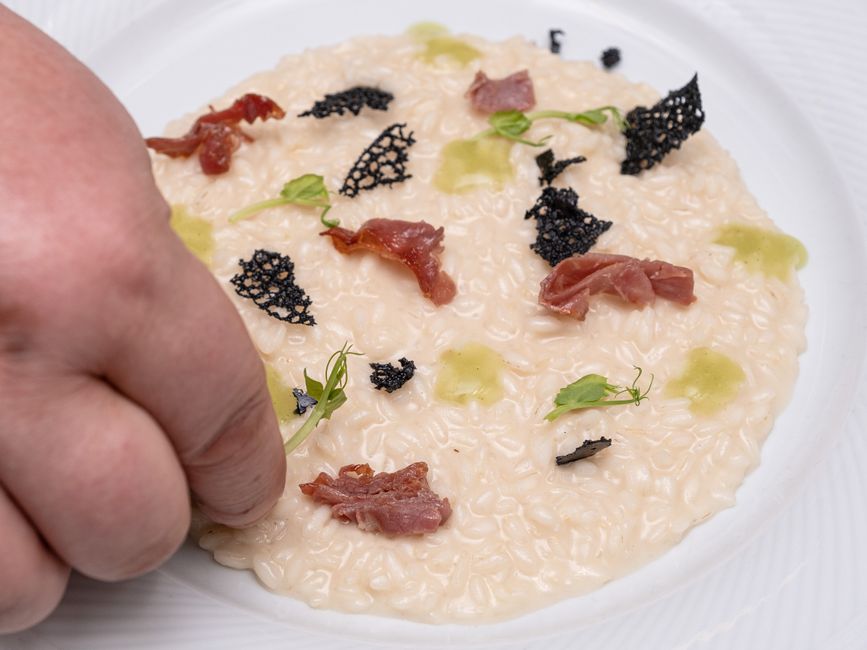
Arborio is a short-grain Italian rice named for the town of Arborio in the Po Valley, where it's grown along with other risotto rices. Its grains are short, plump, and starchy, with a distinct white, chalky core (the 'pearl') that stays firm even as the outer starch cooks down into a creamy sauce. That high amylopectin starch content is what gives risotto its signature texture without any cream added.
Varieties
Arborio, carnaroli, and vialone nano are all short-grain Italian risotto rices but behave differently: arborio is the most widely available and forgiving, carnaroli holds its bite longest and is favored by professional cooks, and vialone nano cooks fastest and absorbs liquid in a way that suits looser, wetter risottos.
Buying tips
Look for rice labeled 'superfino,' the top grading for Italian short-grain rice, which indicates the largest, most uniform grains. Check the package for a recent milling date if visible, and avoid bags with a lot of broken grains or powdery dust at the bottom, which suggests age or rough handling.
Substitutes
Carnaroli rice — 1:1
Higher starch and a sturdier grain that holds its shape longer, considered the premium risotto rice by many Italian cooks; produces an even creamier result.
Vialone Nano rice — 1:1
Shorter and rounder than arborio, releases starch quickly, traditional choice for looser, more brothy risottos in the Veneto region.
Sushi rice (short-grain Japanese rice) — 1:1
Similar starch content and stickiness; makes a passable risotto but the grains are smaller and softer, so it can turn mushy if overcooked.
Pearl barley — 1:1
Not rice at all, but makes a chewy, nutty 'orzotto' with a similar creamy technique; needs about 10 more minutes of cooking time.
Long-grain rice (in a pinch) — 1:1
Lacks the starch to release a creamy sauce, so the result is closer to a rice pilaf with a splash of cheese sauce than true risotto.
Storage
Store uncooked arborio rice in an airtight container in a cool, dark pantry, where it keeps well for 1-2 years. Cooked risotto only holds for 2-3 days refrigerated in a sealed container, and it firms up considerably as it cools, so it reheats best with a splash of extra broth or water stirred in over low heat.
How to use
Almost exclusively used for risotto, where it's toasted in fat, then cooked by gradually adding warm broth in stages while stirring, coaxing starch out of the grains into a creamy sauce. It also works in rice pudding, arancini (fried risotto balls), and baked rice casseroles where a creamy, cohesive texture is wanted rather than separate fluffy grains.
What it pairs with
Pairs with Parmesan, white wine, butter, saffron, mushrooms, seafood like shrimp or scallops, and spring vegetables such as asparagus or peas. A dry white wine used to deglaze the pan early in cooking also works well served alongside the finished dish.
Nutrition
Arborio rice is a refined starch, roughly 150 calories per cooked half-cup, mostly carbohydrate with small amounts of protein and negligible fat. It's not a significant source of fiber since the bran has been polished off.
FAQ
Do you need to rinse arborio rice before cooking?
No. Rinsing washes away the surface starch that risotto depends on for its creamy texture, so arborio should go straight from the bag into the pan unrinsed.
Why did my risotto turn out gluey instead of creamy?
Gluey risotto usually means the rice was overcooked past al dente or too much liquid was added at once instead of in gradual, stirred additions, which overworks the starch.
Can arborio rice be cooked like regular white rice in a rice cooker?
It can be steamed that way, but it won't produce risotto's creamy sauce, since that texture comes from the constant stirring and gradual broth additions, not just the rice itself.
Is arborio rice gluten-free?
Yes, rice is naturally gluten-free, though anyone with celiac disease should check that the packaging confirms no cross-contamination during processing.
Have arborio rice on hand? Find recipes with our Recipe Generator →