Parmigiano Reggiano Risotto Recipe
Toasting the rice before adding any liquid keeps each grain intact so the risotto turns out creamy from released starch rather than mushy, and finishing off the heat with cold butter and freshly grated Parmigiano Reggiano (a technique called mantecatura) emulsifies the sauce into something glossy instead of gluey.
- Prep
- 10 min
- Cook
- 30 min
- Total
- 40 min
- Servings
- 4
Ingredients
- 1 1/2 cups Arborio rice
- 1 cup Parmigiano Reggiano, finely grated, plus more for serving
- 4 tbsp unsalted butter, divided
- 1/2 cup dry white wine
- 6 cups chicken or vegetable stock, warmed
- 1 medium shallot, finely minced
- 1 tbsp olive oil
- 1/2 tsp kosher salt
- 1/4 tsp black pepper, freshly ground
Nutrition per serving
- Calories
- 539
- Protein
- 15g
- Carbs
- 61g
- Fat
- 23g
Based on the recipe as written, one serving. Recalculates if you swap an ingredient above. An estimate only, exact values depend on the specific ingredients used.
Need different units or a different yield? Try our Conversion Calculator →
Instructions
- 1Bring the stock to a bare simmer in a saucepan and keep it warm over low heat; cold stock added to the rice will stall the cooking and make the texture uneven.
- 2In a wide, heavy-bottomed pot, heat the olive oil and 1 tablespoon of the butter over medium heat. Add the shallot and cook, stirring, for 2-3 minutes until softened but not browned.
- 3Add the Arborio rice and stir constantly for 1-2 minutes, until the edges of the grains look slightly translucent and the rice smells toasted.
- 4Pour in the white wine and stir until it's fully absorbed, about 1 minute.
- 5Add a ladleful of warm stock (about 3/4 cup) and stir often, letting the liquid absorb almost completely before adding the next ladleful. Repeat for 18-22 minutes, keeping the risotto at a gentle bubble the whole time.
- 6Taste the rice around the 18-minute mark; it's done when the grains are tender but still have a slight bite at the center and the risotto slowly spreads out if you drag a spoon through it.
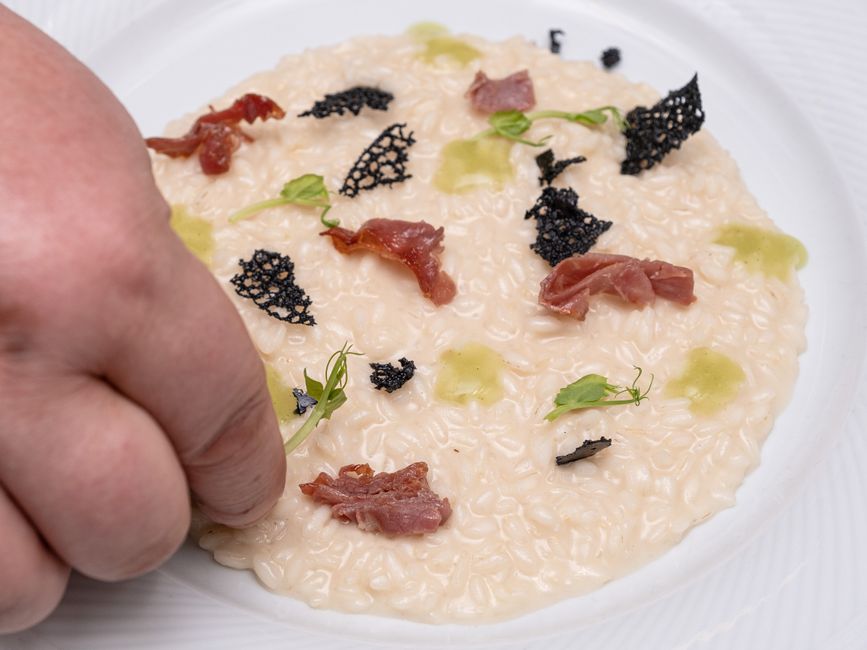
- 7Remove the pot from the heat. Vigorously stir in the remaining 3 tablespoons of butter and the grated Parmigiano Reggiano until the risotto turns glossy and creamy.
- 8Season with salt and black pepper, adjusting carefully since Parmigiano Reggiano already carries a fair amount of salt.
- 9Spoon into warmed bowls immediately and top with extra shaved or grated Parmigiano Reggiano.
Tips & variations
- Save the rind from a wedge of Parmigiano Reggiano and simmer it in the stock while it warms, then fish it out before ladling; it adds real depth without extra work.
- Stir in a handful of thawed peas or thin asparagus tips during the last 5 minutes of cooking for a spring version.
- No white wine on hand: substitute an equal amount of stock plus a teaspoon of lemon juice for acidity.
- Pre-grated cheese in a shaker won't melt the same way; grate a block of real Parmigiano Reggiano on the small holes right before using it.
Storage & reheating
Refrigerate leftover risotto in an airtight container for up to 3 days. Reheat gently in a pan with a splash of stock or water, stirring constantly, since risotto stiffens as it cools and needs the extra liquid to loosen back up. It doesn't freeze well; the texture turns grainy once thawed.
Tips from the Tulo kitchen
- Keep the stock at a simmer, not a rolling boil, the whole time you're cooking the rice, cold or lukewarm stock added mid-cook slows everything down and leads to unevenly cooked grains.
- Stir often but not nonstop; the rice needs brief contact with the hot pot bottom to release starch, so a stir every 20-30 seconds works better than continuous stirring.
FAQ
What's the difference between Parmigiano Reggiano and regular Parmesan?
Parmigiano Reggiano is a protected designation of origin (DPO) cheese made only in a specific region of northern Italy following strict aging rules (minimum 12 months, often 24-36). Generic "Parmesan" sold outside that region can be made with different methods and shorter aging, so the flavor is milder and less complex.
Can I make this risotto without wine?
Yes. Replace the wine with an equal amount of the warm stock plus a teaspoon of lemon juice added at the same step; the acid still cuts through the richness of the butter and cheese.
Why did my risotto turn out gluey instead of creamy?
Gluey risotto usually means the rice was stirred too aggressively and constantly from the start, which releases too much starch too fast, or the liquid was added too quickly instead of ladle by ladle.
Can I use a different rice?
Carnaroli or Vialone Nano both work and are traditional alternatives to Arborio; they hold their shape slightly better under longer cooking. Regular long-grain or short-grain rice won't release enough starch to get a creamy result.