
Peperonata
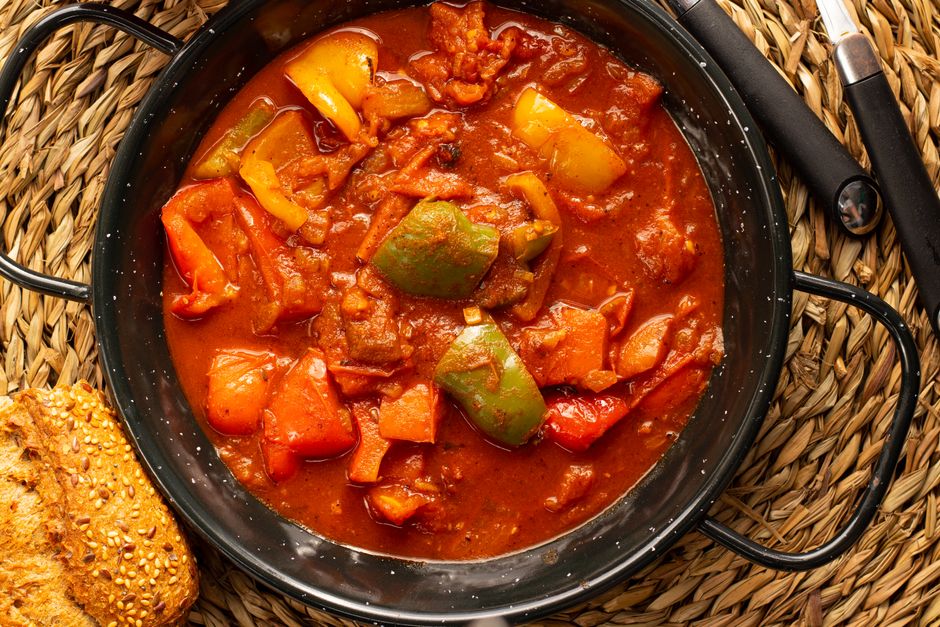
Peperonata is a Southern Italian condiment and side dish of sweet bell peppers slow-cooked with onions, garlic, and often tomato in olive oil until the peppers collapse into a soft, jammy, sweet-and-tangy mixture. A splash of vinegar or white wine at the end balances the sweetness. It's served warm, at room temperature, or cold, and works as an antipasto, a topping, or a side.
Varieties
Sicilian versions often add capers, green olives, or pine nuts for a briny, sweeter profile closer to caponata, while Piedmontese peperonata stays simple with just peppers, onion, and sometimes tomato. Some regional recipes skip tomato entirely and rely on the peppers' own natural sweetness.
Buying tips
Choose firm, glossy, thick-walled bell peppers in red, yellow, and orange for the best sweetness and color; green peppers are more bitter and less suited to peperonata's sweet-tangy profile. Heavier peppers for their size tend to have thicker flesh and less waste.
Substitutes
Jarred roasted red peppers, drained and chopped with a little olive oil and vinegar — 1:1
Much faster and no cooking required, but lacks the caramelized onion and slow-cooked depth peperonata gets from a long simmer.
Giardiniera, drained and chopped — 1:1
More acidic and crunchy rather than soft and sweet; works better as a sandwich topping than a side dish.
Caponata (Sicilian eggplant relish) — 1:1
Heavier and more complex, with eggplant, capers, and olives adding a briny edge not found in peperonata.
Quickly sautéed bell peppers and onions (not slow-cooked) — 1:1
Lighter and brighter tasting since the vegetables keep some bite, but misses the jammy sweetness that comes from a long simmer.
Storage
Store peperonata covered in the refrigerator for up to a week; the flavor actually improves after a day as the peppers continue to marinate in the oil. It can be frozen in an airtight container for up to 3 months, though the peppers will soften further once thawed.
How to use
Serve as an antipasto with crusty bread and cheese, spoon over grilled sausage, swordfish, or chicken, fold into scrambled eggs or a frittata, toss with short pasta, or layer onto a sandwich with provolone or mortadella.
What it pairs with
Pairs well with grilled Italian sausage, swordfish or other firm white fish, burrata or fresh mozzarella, soft polenta, and crusty bread for soaking up the oil.
Nutrition
The peppers and onions themselves are low in calories and high in vitamin C, but most of peperonata's calories come from the olive oil used to slow-cook them, so portion size matters more than the vegetable content.
FAQ
Is peperonata served hot or cold?
Either. It's traditionally served warm or at room temperature as a side or antipasto, and leftovers are often eaten cold straight from the refrigerator.
What's the difference between peperonata and caponata?
Peperonata is built on sweet bell peppers and onions; caponata is an eggplant-based Sicilian relish that typically includes capers, olives, and celery, giving it a briny, more complex flavor.
Does peperonata need vinegar?
Most traditional recipes finish with a small splash of red or white wine vinegar, or sometimes white wine, to cut the sweetness of the slow-cooked peppers and onions.
Can peperonata be canned for long-term storage?
Yes, but it requires a tested water-bath canning recipe with enough added acid (vinegar) to make it shelf-stable; homemade batches without proper acidity should stay refrigerated.
Have peperonata on hand? Find recipes with our Recipe Generator →