
Pepperoncini
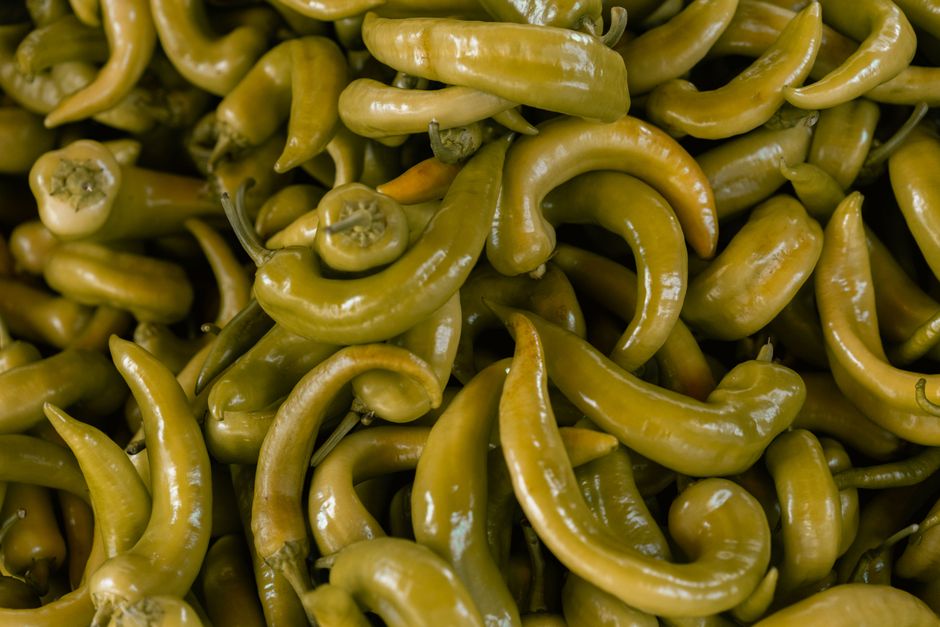
Pepperoncini are small, thin-walled, mildly tangy chile peppers, usually 2 to 3 inches long, with a wrinkled yellow-green skin and a slightly sweet, vinegary flavor. They're almost always sold pickled in a brine of vinegar, water, and salt, rather than fresh, and sit at the low end of the heat scale, around 100 to 500 Scoville units, roughly on par with a mild banana pepper.
Varieties
Golden Greek pepperoncini (the type used for pickling) are milder and sweeter than the similarly shaped Tuscan or "friggitelli" frying peppers, which are meant to be sautéed fresh rather than brined.
Buying tips
Check the ingredient list for whole peppers rather than "sliced" or "salad peppers," which are sometimes a mix of odds and ends. Peppers should look plump and hold their shape in the jar rather than looking mushy or discolored, which signals an older or lower-quality pack.
Substitutes
Banana peppers (pickled) — 1:1
Milder and slightly sweeter with less tang; the closest texture and heat match.
Pickled jalapeños — 1:2
Use about half as much since jalapeños bring real heat instead of a mild tang.
Giardiniera (chopped) — 1:1
Different mix of vegetables, but delivers a similar vinegary bite in sandwiches and salads.
Cherry peppers (pickled) — 1:1
Rounder and slightly hotter, but close in brine flavor; slice to match pepperoncini's shape.
Storage
Keep the jar sealed and refrigerated after opening, submerged in its own brine, and it will keep for several months. If the brine level drops below the peppers, top it off with white vinegar and water in equal parts to keep them from drying out or spoiling.
How to use
Slice into rings for sandwiches, subs, and pizza, or leave whole in Greek salads, antipasto platters, and relish trays. Chop and stir into pasta salads, tuna or chicken salad, and creamy dips for a tangy kick. The brine itself can be used in place of vinegar in a vinaigrette or added to deviled eggs and potato salad.
What it pairs with
Pairs well with salty cured meats like salami and ham, sharp provolone or feta, and rich, fatty dishes such as Italian beef or gyros, where the vinegar bite cuts through the fat.
Nutrition
Pepperoncini are very low in calories, around 4 to 5 per pepper, but the brine is high in sodium, so a serving of several peppers can add a noticeable amount of salt to a dish.
FAQ
Are pepperoncini and banana peppers the same thing?
No, though they're often confused. Pepperoncini have a slightly wrinkled skin and a sharper vinegar tang, while banana peppers are smoother, longer, and a bit sweeter.
How spicy are pepperoncini?
They rank around 100 to 500 Scoville heat units, well below jalapeños (2,500 to 8,000), so most people experience them as tangy rather than hot.
Can you eat pepperoncini straight from the jar?
Yes, they're fully pickled and ready to eat with no cooking needed. Many people eat them whole as a snack or side alongside sandwiches.
Can pepperoncini brine be reused?
Yes, once for a quick pickle. Pour it over cucumber slices, red onion, or hard-boiled eggs and refrigerate for at least a day, but discard after one reuse since the acidity weakens.
Have pepperoncini on hand? Find recipes with our Recipe Generator →