
Pepperoni
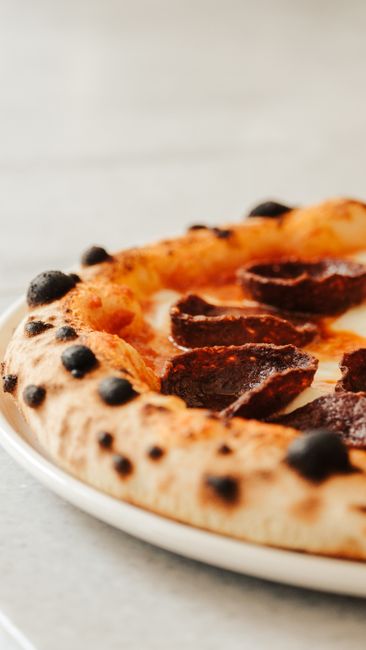
Pepperoni is an American-style dry salami made from cured pork and beef (or pork alone), seasoned heavily with paprika, cayenne, garlic, and fennel or anise, which gives it its characteristic red-orange color and tangy, slightly smoky heat. It's fermented and air-dried like other salamis, then usually sold pre-sliced in resealable packs or as a whole stick for slicing at home.
Varieties
Small-diameter 'cup and char' pepperoni, made with natural casing, shrinks and curls into crispy bowls when baked, while larger, flatter sandwich-style pepperoni is milder and made to lie flat for slicing on sandwiches. Turkey pepperoni is a leaner formulation aimed at reducing fat and sodium, with a noticeably softer texture and less browning when cooked.
Buying tips
Choose pepperoni with a deep red-orange color from real paprika rather than an artificially pink or dull brown tone, and check that the surface isn't excessively slick or wet, which can signal poor storage. Whole sticks keep longer and let you control slice thickness; pre-sliced packs are convenient but dry out faster once opened.
Substitutes
Hard salami (Genoa or plain hard salami) — 1:1 by weight
Milder and less smoky, without the paprika tang, but nearly identical texture and fat content once cooked.
Dry-cured Spanish chorizo, sliced thin — 1:1 by weight
More intense smoked paprika flavor and firmer bite; use slightly fewer slices if the brand runs spicier than pepperoni.
Turkey pepperoni — 1:1 by weight
Noticeably leaner with less rendered fat, so it browns less and stays flatter instead of curling into cups.
Soppressata, thinly sliced — 1:1 by weight
Coarser grind with visible fat flecks and a spicier, more peppery finish than standard pepperoni.
Cooked and crumbled bacon — 3/4 cup crumbled per cup of sliced pepperoni
Works as a smoky, salty stand-in on pizza or in pasta, but lacks the paprika-forward flavor and won't form crisp cups.
Storage
Once opened, keep pepperoni tightly wrapped or in a sealed container in the refrigerator; sliced pepperoni stays good for about 2 to 3 weeks, while an unsliced stick lasts closer to a month due to less surface exposure. For longer storage, freeze in a zip-top bag with the air pressed out for up to 2 months; texture turns slightly drier after thawing, which is fine for cooked applications like pizza but noticeable on a charcuterie board.
How to use
Most common as a pizza topping, where slices placed before baking crisp at the edges and pool rendered fat in the center. Also used in sandwiches, calzones, stromboli, pasta sauces, omelets, and quesadillas. For extra-crispy 'cup and char' pieces, use a natural-casing brand and bake at a higher oven temperature (475°F/245°C or above) so the edges curl before the center dries out.
What it pairs with
Classic with mozzarella and tomato sauce on pizza, and with provolone or giardiniera in Italian-style sandwiches. On a charcuterie board, pair with sharp provolone, olives, pepperoncini, and a crusty bread to balance the fat and spice.
Nutrition
Pepperoni is calorie-dense and high in sodium and saturated fat, typically around 130 to 140 calories per ounce with roughly 450 to 500 milligrams of sodium; it contributes protein but is generally used as a flavoring meat rather than a primary protein source.
FAQ
Why does some pepperoni curl into little cups when baked?
That effect comes from natural casing pepperoni, which shrinks unevenly as it renders fat, pulling the edges up into a bowl shape that traps oil and crisps. Collagen-cased pepperoni lies mostly flat instead.
Is pepperoni already cooked, or does it need to be cooked before eating?
Pepperoni is cured and fermented, not raw, so it's safe to eat straight from the package. It's typically heated anyway for flavor and texture, since baking crisps the edges and renders excess fat.
Can pepperoni be frozen?
Yes, wrapped tightly with air removed, pepperoni freezes well for up to about 2 months. It thaws slightly drier, which barely matters once it's cooked into pizza or pasta.
What's the actual difference between pepperoni and regular salami?
Pepperoni is a specific American subtype of salami, made spicier and more heavily seasoned with paprika and cayenne, and it's usually softer and smaller in diameter than a traditional Genoa or hard salami.
Have pepperoni on hand? Find recipes with our Recipe Generator →