
Pigeon Peas
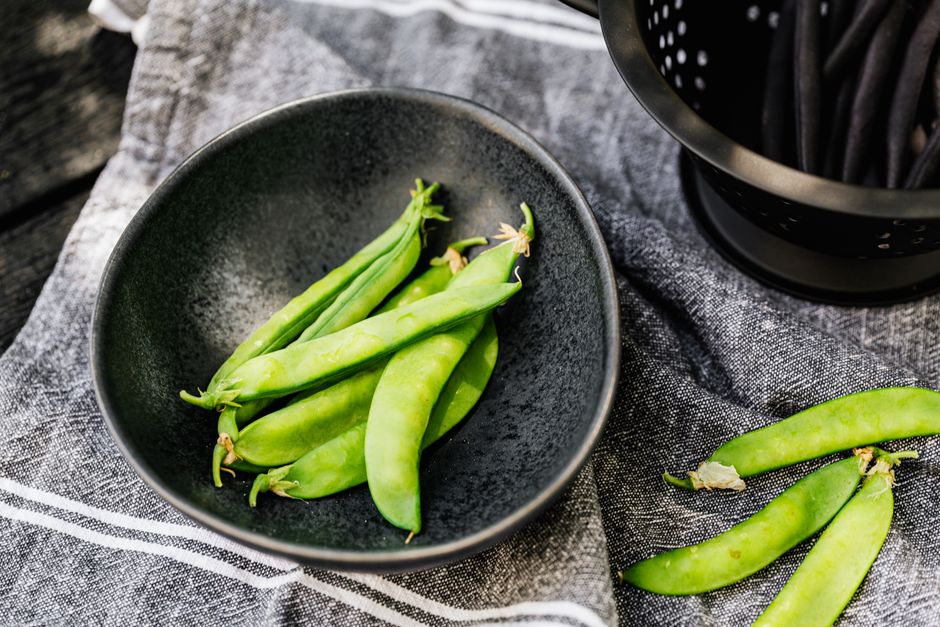
Pigeon peas (Cajanus cajan) are small, round legumes grown throughout the Caribbean, India, Africa, and Latin America, known by different names depending on the region: gandules in Puerto Rico and the Dominican Republic, gungo peas in Jamaica, toor or arhar in India. They're sold fresh in the pod, dried, or canned, and have a mildly nutty, slightly sweet, earthy flavor with a texture that holds together better than lentils but softens faster than most dried beans.
Varieties
Fresh (green) pigeon peas and dried (mature) pigeon peas come from the same plant at different harvest stages: fresh peas are pale green, softer, and slightly sweeter, used in dishes like Puerto Rican gandules verdes, while dried peas turn tan or brown and need longer cooking. Toor dal is dried pigeon peas that have been split and hulled, cooking faster and breaking down into a smoother texture than whole dried peas.
Buying tips
Dried pigeon peas should be a uniform light tan to olive color with no shriveling, dark spots, or dust in the bag, an sign of age or moisture damage. Fresh pods should feel firm and plump with visible bumps from the peas inside; avoid pods that are flat, yellowed, or split open. For canned, check the sodium content since brands vary widely.
Substitutes
Black-eyed peas — 1:1
Closest match in size and texture for Caribbean rice dishes like arroz con gandules; flavor is a bit more earthy and less sweet.
Toor dal (split pigeon peas) — 1:1
If a recipe calls for whole dried pigeon peas but only split toor dal is on hand, it works but cooks faster and breaks down more, so check doneness earlier.
Split yellow peas — 1:1
A good stand-in for Indian dal recipes; slightly starchier and less nutty, but simmers into a similar soft, thick texture.
Red lentils — 1:1
Works for dal-style dishes but cooks in about 15-20 minutes rather than 45-60, so reduce liquid and cooking time accordingly.
Pink beans or pinto beans — 1:1
Larger and starchier, best for stews and braises rather than rice dishes where pigeon peas need to stay distinct and whole.
Storage
Dried pigeon peas keep in an airtight container in a cool, dark pantry for up to a year, though older peas take noticeably longer to soften. Fresh pigeon peas in the pod stay good in the refrigerator for about a week; shelled fresh peas can be frozen for up to 6 months. Once a can is opened, transfer unused peas with their liquid to a sealed container and use within 3-4 days.
How to use
Simmer dried peas into Caribbean rice and peas (arroz con gandules, arroz con gandules verdes), cook down with onion, garlic, cumin, and turmeric for Indian toor dal, or add to West African and East African stews with tomato and greens. Fresh or frozen pigeon peas need less cooking time than dried and hold their shape well in soups and pilafs.
What it pairs with
Pairs naturally with coconut milk, cumin, turmeric, curry leaves, scotch bonnet or habanero, rice, plantains, and pork or smoked meats in Caribbean cooking.
Nutrition
Pigeon peas are a strong plant-based protein source, roughly 20% protein by dry weight, and are high in dietary fiber, folate, iron, and potassium, similar in profile to lentils and split peas.
FAQ
Do dried pigeon peas need to be soaked before cooking?
Soaking for 4-8 hours or overnight cuts the simmer time roughly in half, from about an hour down to 25-30 minutes, but unsoaked peas will still cook through if given the extra time and enough liquid.
Are pigeon peas the same as black-eyed peas?
No, they're different species. Pigeon peas are rounder, slightly smaller, and grow in pods on a shrubby plant, while black-eyed peas are a type of cowpea with a distinctive black spot; they're interchangeable in many rice and stew recipes but aren't botanically related.
Is toor dal the same thing as pigeon peas?
Yes, toor dal is simply dried pigeon peas that have been split and had their outer skin removed, which is why it cooks faster and has a smoother texture than whole dried pigeon peas.
Can canned pigeon peas replace dried in a recipe?
Yes, drain and rinse them and add near the end of cooking since they're already soft; one standard 15-ounce can is roughly equivalent to 1.5 cups of cooked dried peas.
Have pigeon peas on hand? Find recipes with our Recipe Generator →