
Pink Lemons
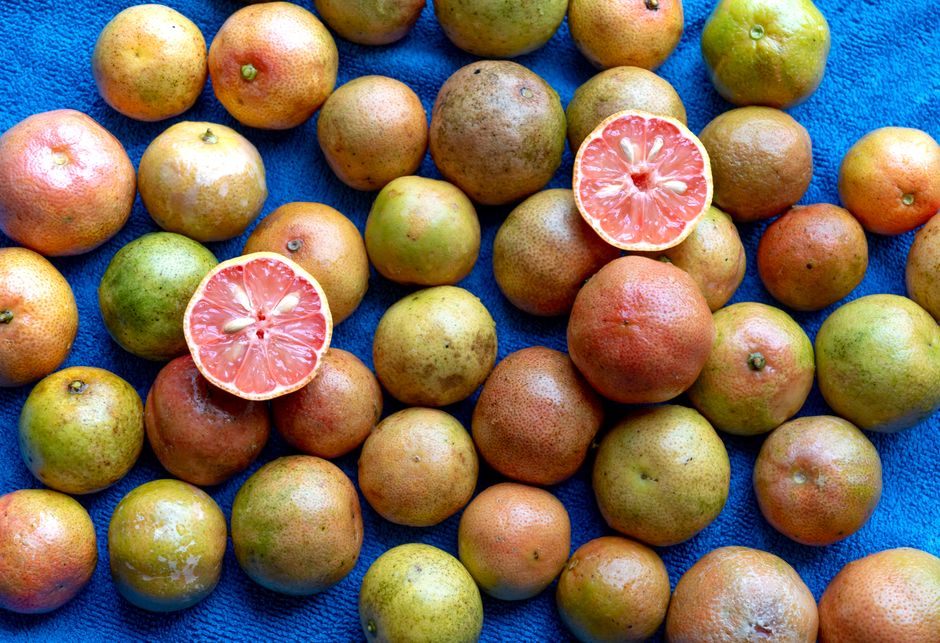
Pink lemons, most often the variety sold as Pink Variegated Eureka or 'Pink Lemonade' lemon, are a natural mutation of the standard Eureka lemon. The skin is streaked with green and yellow stripes while young and fades to a softer yellow as the fruit ripens, but the real distinction is inside: the flesh runs pale pink to salmon rather than white-yellow. The juice itself is nearly clear with only a faint blush, and tastes almost identical to a regular lemon, maybe slightly less acidic and a touch sweeter, but not different enough to change a recipe's balance.
Varieties
Pink lemons are not a separate species but a variegated sport of the Eureka lemon, sometimes marketed as 'Pink Lemonade' lemon. A related but distinct fruit, the pink-fleshed 'Pink Lemon' hybrid sold in some specialty markets, may actually be a lemon-citron cross with a thicker rind and different acidity, so check the specific variety name if flavor consistency matters for a recipe.
Buying tips
Look for fruit that gives slightly to pressure and feels heavy for its size, a sign of more juice. Green striping on the skin doesn't mean underripe; it's a permanent or fading trait of the variety, so judge ripeness by firmness and color depth of the yellow rather than the stripes alone.
Substitutes
Regular Eureka or Lisbon lemon — 1:1
Nearly identical acidity and flavor; you lose the pink flesh and striped peel but gain nothing else to adjust for.
Meyer lemon — 1:1
Sweeter and less tart, with a faint orange-blossom note; good if you want to echo the mild sweetness of pink lemon juice.
Bottled lemon juice — 1:1
Convenient but flatter in flavor and missing the aromatic oils in the zest; only use when zest isn't needed.
Storage
Store pink lemons at room temperature for up to a week if using soon, or in the refrigerator crisper drawer for up to three weeks. Keep whole until ready to cut, since the exposed pink flesh browns and dries out faster than white lemon flesh once sliced.
How to use
Use exactly as you would a regular lemon: juiced for dressings, marinades, and cocktails, or zested for baking. The pink flesh is worth showing off in dishes where the cut fruit is visible, such as thin lemon slices layered on a tart, floated in water or cocktails, or arranged over roasted fish.
What it pairs with
Works well anywhere lemon pairs naturally: with olive oil and garlic for roasted vegetables or fish, with honey and mint in drinks, and with cream or mascarpone in desserts where the pink-tinged juice can lightly tint a glaze or curd.
Nutrition
Nutritionally identical to standard lemons: high in vitamin C, low in calories, with a small amount of fiber concentrated in the pith and membranes. The pink coloring comes from anthocyanin pigments and doesn't add meaningful nutritional value on its own.
FAQ
Does pink lemon juice actually turn things pink?
Only very faintly. The juice is nearly clear with a slight blush, so it won't visibly tint a dish the way the flesh appears when sliced.
Are pink lemons more sour or less sour than regular lemons?
They're generally slightly less acidic and a bit sweeter than a standard Eureka lemon, though the difference is subtle enough that most people can't tell in a blind taste test of the juice alone.
Why is the skin striped instead of solid yellow?
The stripes come from chlorophyll variegation in the peel, a genetic trait of this lemon sport. Stripes are most visible on young fruit and fade somewhat as the lemon fully ripens on the tree.
Can pink lemons be grown at home?
Yes, the tree is sold commercially as a dwarf variety and grows well in containers in warm climates or indoors near a sunny window, producing fruit with the same pink flesh and striped skin as store-bought ones.
Have pink lemons on hand? Find recipes with our Recipe Generator →