
Porchetta
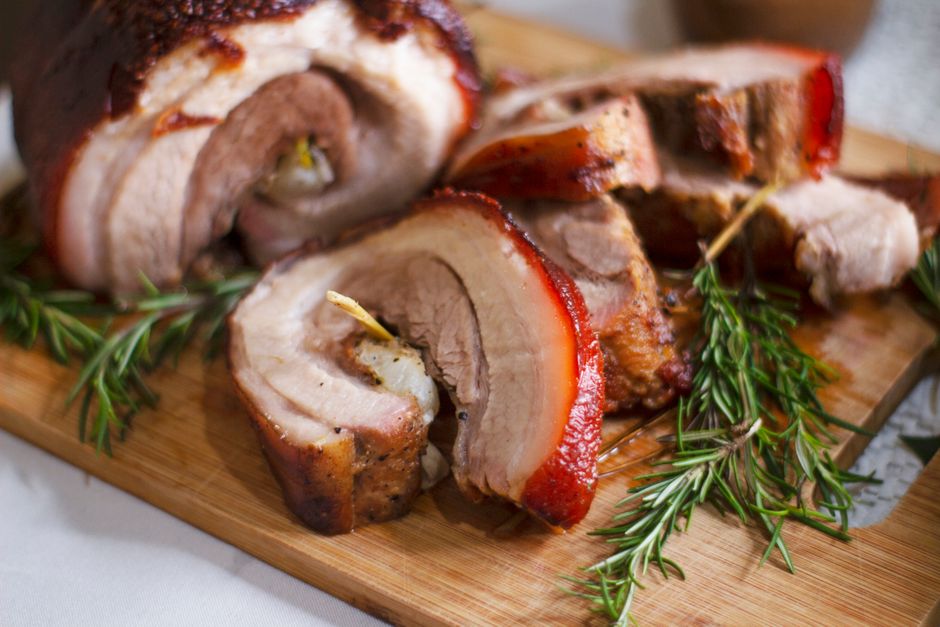
Porchetta is a central Italian pork roast made by deboning a whole pig or a large cut like pork belly and loin, seasoning the inside generously with garlic, rosemary, fennel seeds or pollen, salt, and pepper, then rolling it tightly and roasting it low and slow until the skin blisters into crackling. The result is a roast with three distinct textures in one bite: crisp skin, rich fat, and lean seasoned meat. It's traditionally served sliced, either warm as a main course or cold in a sandwich.
Varieties
Porchetta di Ariccia (from the Lazio region) is traditionally made from a whole deboned pig, while porchetta made from just pork belly and loin, common outside Italy, is a simplified version of the same technique. Umbrian versions lean more heavily on wild fennel and less on garlic than versions from further south.
Buying tips
When buying prepared porchetta from a butcher or deli, ask for a piece cut from the center of the roll rather than the end, since center cuts have a more even ratio of skin, fat, and meat. The skin should look deeply browned and blistered, not pale or rubbery, which signals it was roasted long enough to render properly.
Substitutes
Slow-roasted pork shoulder with fennel and garlic rub — 1:1 by weight
Season a boneless pork shoulder with the same fennel, garlic, and rosemary mix and roast until the skin (if left on) crisps. Won't have the tight rolled layers but delivers nearly identical flavor.
Store-bought rotisserie or deli-roasted pork with crackling — 1:1 by weight
Look for a rotisserie pork loin or shoulder with crisp skin at an Italian deli; season leftover portions with extra fennel and garlic if the flavor is too plain.
Pork belly roasted separately from a seasoned loin — 1:1 by weight, combined
Roast a seasoned pork loin and a piece of crackling-topped pork belly side by side, then slice and layer them together to mimic porchetta's fat-to-meat ratio.
Prosciutto or coppa (for flavor, not texture) — about half the amount
Works only as a stand-in in sandwiches or antipasto boards where porchetta's saltiness and pork flavor matter more than its crackling texture; it will not replicate the roast itself.
Storage
Wrap cooled porchetta tightly in foil or plastic and refrigerate for up to 4 days. The skin softens once chilled, so if crisp skin matters, re-crisp slices under a broiler or in a hot skillet for 1-2 minutes before serving. For longer storage, slice and freeze in a single layer, then transfer to a freezer bag for up to 2 months.
How to use
Slice thin for the classic porchetta sandwich on crusty bread with just salt and maybe arugula, since the meat is already fully seasoned. Serve thicker slices warm as a main course alongside roasted potatoes or braised greens. Chopped porchetta scraps and crackling can be folded into fried rice, added to a frittata, or used to top pizza in place of sausage.
What it pairs with
Pairs well with bitter greens like broccoli rabe or radicchio, which cut through the richness, as well as with sharp mustard, pickled vegetables, and a simple squeeze of lemon. A medium-bodied red like Chianti or a dry Italian white with good acidity both work well alongside it.
Nutrition
Porchetta is high in fat and sodium because of the belly, skin, and heavy salting used to cure the exterior before roasting, so it's typically eaten in modest portions rather than as an everyday protein. It's also a good source of protein and B vitamins like the rest of pork.
FAQ
What's the difference between porchetta and regular roast pork?
Regular roast pork is usually a single cut like a loin or shoulder seasoned on the outside. Porchetta is specifically boned, seasoned on the inside, rolled so the fat and skin end up on the exterior, and tied before roasting, which is what produces its layered texture.
Can porchetta be made ahead for a party?
Yes. It actually slices more cleanly once fully cooled, so roasting it the day before, refrigerating it whole, and slicing cold or after a brief reheat is a common approach for feeding a crowd.
Why is my porchetta skin not crisping?
The skin needs to be completely dry before it goes into the oven and roasted uncovered at a high enough final temperature, usually 450-475°F for the last 20-30 minutes, to blister properly. Moisture trapped under foil or a lid is the most common reason it stays leathery.
Is porchetta the same as pancetta?
No. Pancetta is cured, unrolled or rolled pork belly eaten thinly sliced, usually raw-cured or cooked as a small ingredient in other dishes. Porchetta is a fully roasted, herb-seasoned pork roast meant to be a standalone dish.
Have porchetta on hand? Find recipes with our Recipe Generator →