
Radicchio
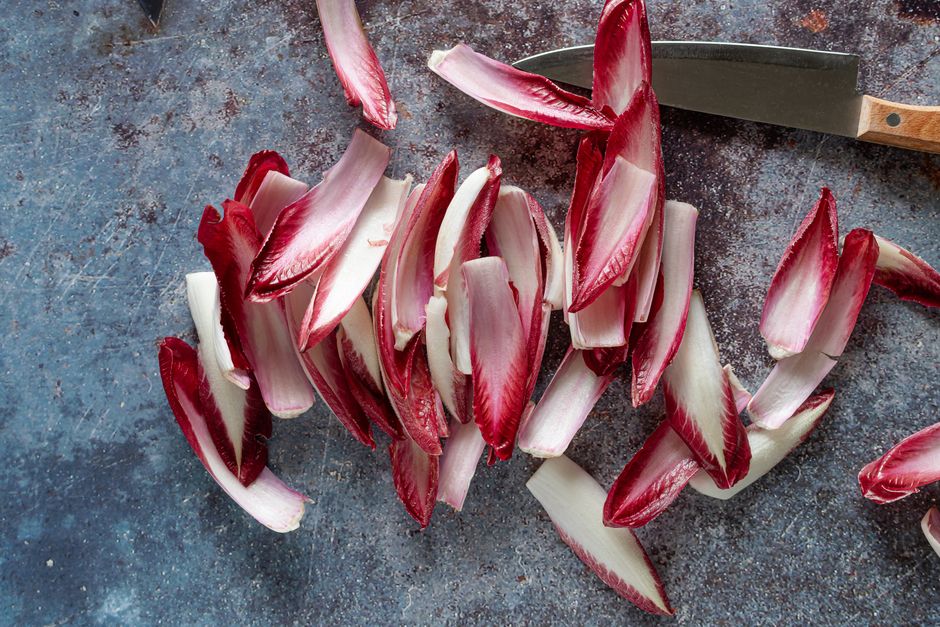
Radicchio is a leafy chicory, not a cabbage or lettuce despite the resemblance, prized for its deep red-purple leaves, white ribs, and assertively bitter flavor. It's most often eaten raw in salads or grilled and roasted, which mellows the bitterness into something nuttier and slightly sweet.
Varieties
Chioggia is the round, tightly-packed red-and-white head most common in grocery stores. Treviso is more elongated and slightly milder, closer to endive in shape. Castelfranco is a speckled cream-and-red variety with a much milder, less bitter flavor, best eaten raw.
Buying tips
Choose heads that feel heavy and dense for their size with tightly packed, crisp leaves and no browning at the edges or base. Avoid heads that feel light or spongy, a sign they've dried out and turned more bitter than usual.
Substitutes
Belgian endive — 1:1
Milder and less bitter with a similar crunch; good in salads where you want less bite.
Treviso chicory — 1:1
A close relative of radicchio with elongated leaves; nearly identical flavor and the easiest true swap.
Red cabbage, shredded — 1:1
Much less bitter and more watery in texture; works for color and crunch but not for flavor-driven dishes.
Frisée — 1:1
Lighter, feathery texture with mild bitterness; better suited to salads than grilling.
Arugula — 1:1
Peppery rather than bitter, but adds a similar sharp contrast to rich or fatty dishes.
Storage
Keep whole, unwashed heads in a perforated or loosely closed plastic bag in the refrigerator crisper drawer. Whole heads stay firm for up to two weeks; once cut, wrap tightly and use within four to five days as cut edges brown.
How to use
Shred raw into salads with something fatty and something sweet, like blue cheese and pears or oranges and olive oil, to offset the bitterness. Halve or quarter heads, brush with oil, and grill or roast at 425°F for 10-15 minutes until charred at the edges and softened; heat converts much of the bitterness into a mellow, slightly sweet flavor. It also holds up well braised in risotto or pasta with pancetta.
What it pairs with
Pairs well with rich, fatty, or sweet ingredients that counter its bitterness: blue cheese, balsamic vinegar, honey, pancetta, walnuts, pears, and citrus.
Nutrition
Radicchio is very low in calories and carries a modest amount of fiber, vitamin K, and antioxidant plant compounds that give it its color, but it's typically eaten in small enough portions that its nutritional impact is minor.
FAQ
Why does my radicchio taste so bitter?
Bitterness is normal and comes from natural compounds called intybin and lactucin. It intensifies with age and cold storage, so older or long-stored heads taste sharper than fresh ones.
Does cooking radicchio reduce the bitterness?
Yes. Grilling, roasting, or sauteing breaks down the bitter compounds and caramelizes the natural sugars, turning the flavor noticeably sweeter and nuttier than raw radicchio.
Can you eat radicchio raw?
Yes, it's commonly eaten raw in salads, though its bitterness is strongest uncooked. Soaking sliced leaves in ice water for 10-15 minutes mellows the bite somewhat before serving.
Is radicchio the same as red cabbage?
No. Radicchio is a chicory related to endive and escarole, while red cabbage is a brassica. They look similar sliced but radicchio is far more bitter and has a more tender leaf.
Have radicchio on hand? Find recipes with our Recipe Generator →