
Porgy
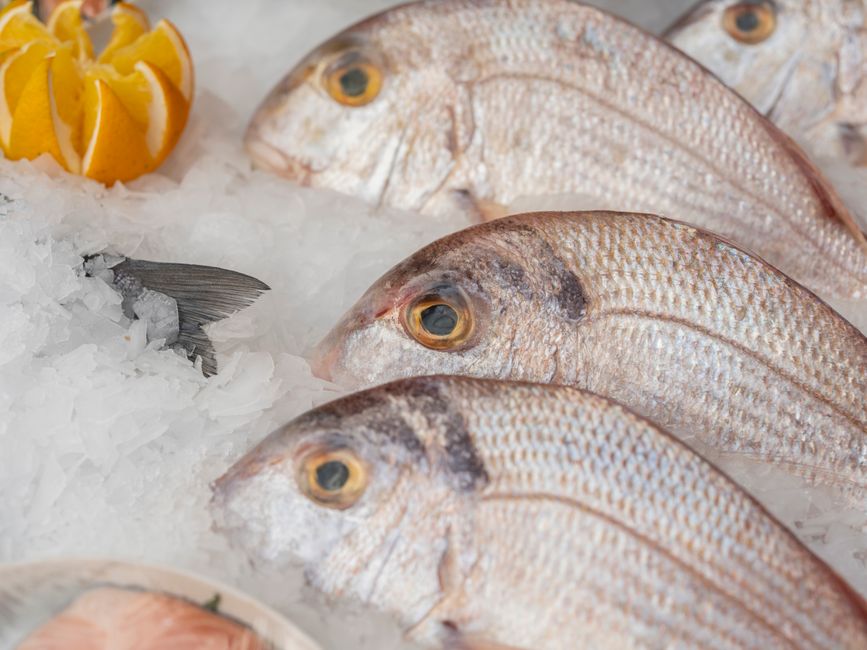
Porgy is the common market name for several small saltwater fish in the Sparidae family, most often the scup (Stenotomus chrysops) found along the U.S. Atlantic coast. It's a compact, deep-bodied fish with silvery, faintly pink-striped scales, firm white flesh, and a mild, slightly sweet flavor closer to snapper than to oily fish like mackerel. Porgy is usually sold whole, since the body is bony and small fillets don't yield much meat, and it's a staple of Mediterranean, Caribbean, and Chinese-American cooking.
Varieties
"Porgy" is a loose market name covering several Sparidae species: scup on the U.S. East Coast, sheepshead and pinfish in the Gulf, and various sea breams sold as porgy internationally. They're culinarily interchangeable even though they're not all the same species.
Buying tips
Choose whole fish with clear, bulging eyes, bright red gills, and scales that are shiny and firmly attached, not dulled or slimy. The flesh should spring back when pressed. Ask the fishmonger to scale and gut it, since porgy scales are small but stubborn.
Substitutes
Red snapper — 1:1 by weight
Firmer flesh and a similar mild-sweet flavor; works well whole or filleted in the same recipes.
Black sea bass — 1:1 by weight
Slightly denser texture but very close in flavor; a common substitute in whole-fried or steamed preparations.
Sea bream (dorade) — 1:1 by weight
A close relative of porgy in the same family, nearly interchangeable in whole roasted or grilled dishes.
Tilapia fillets — 1:1 by weight
Much milder and softer, best for pan-fried or sauced dishes rather than whole-fish preparations where porgy's texture matters.
Storage
Keep whole porgy on ice or in the coldest part of the refrigerator, wrapped loosely in plastic, and use within a day or two of purchase. Once scaled and gutted, it should be cooked the same day. For longer storage, freeze whole and cleaned fish tightly wrapped in plastic then foil for up to three months.
How to use
Most often cooked whole: scored, seasoned, and either fried, steamed with ginger and scallion, grilled, or roasted with lemon and herbs. The small pin bones and skin crisp up well, and the bones make a light, sweet stock. Fillets, when available, work in a hot pan with just butter and lemon since the flesh is delicate and overcooks fast.
What it pairs with
Pairs well with ginger, garlic, scallion, and soy in Cantonese-style steaming, or with olive oil, lemon, oregano, and capers in Mediterranean roasting and grilling.
Nutrition
Porgy is a lean white fish, low in fat and calories, with a solid dose of lean protein and modest omega-3s, similar in profile to snapper or sea bass.
FAQ
Is porgy a good fish to eat whole?
Yes. Its small size (usually 1 to 2 pounds) and low bone-to-meat ratio in the body cavity make it well suited to whole cooking methods like frying and steaming, where the skin and bones add flavor.
Does porgy have a strong fishy taste?
No, it's mild and slightly sweet, similar to snapper or sea bream, without the strong flavor of oily fish like bluefish or mackerel.
How do you know when porgy is fully cooked?
The flesh turns opaque white and pulls away from the bone easily; for a whole fish this usually takes 15 to 20 minutes at 400°F when roasted, or 8 to 10 minutes per side when pan-fried.
Can you eat the skin on porgy?
Yes, and it's worth doing. When scaled well and cooked over higher heat, porgy skin crisps up and is commonly eaten along with the flesh.
Have porgy on hand? Find recipes with our Recipe Generator →