
Rugelach
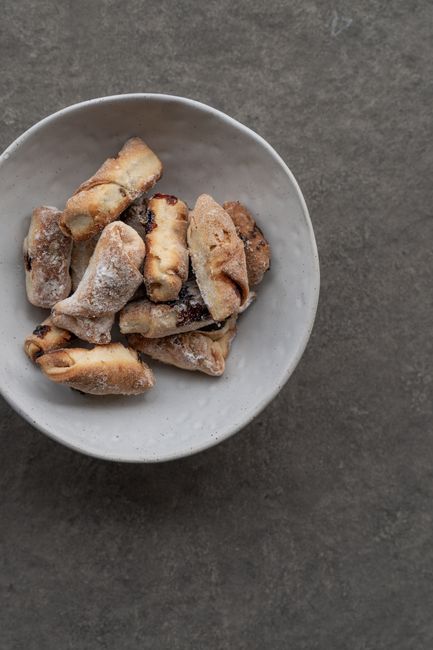
Rugelach is a small, crescent or spiral-shaped pastry made from a cream cheese dough rolled around a sweet filling, most commonly cinnamon-sugar with walnuts, chocolate, apricot preserves, or raspberry jam. Originating in Ashkenazi Jewish communities in Poland, it's now a standard bakery-case item across the U.S., sold both plain and glazed. The dough is tender and slightly tangy from the cream cheese, closer in texture to a flaky pastry than a cookie, even though it's usually displayed alongside cookies.
Varieties
Cinnamon-walnut and chocolate are the most common fillings in the U.S., while apricot, raspberry jam, and poppy seed are more traditional in older Eastern European recipes. Some bakeries also make a savory version with cheese or herbs, though this is far less common than the sweet varieties.
Buying tips
At a bakery counter, look for rugelach with visible layers when you break one open, a sign the dough was rolled and chilled properly rather than rushed. Avoid pieces that look greasy or have leaked filling and hardened on the outside, which usually means they've sat out too long or been reheated.
Substitutes
Babka slices — 1:1 by serving
Same Ashkenazi bakery lineage and similar cinnamon or chocolate swirl flavor, but a yeasted bread texture instead of flaky pastry.
Hamantaschen — 1:1 by serving
Triangular cookie with a similar range of fillings (poppy seed, apricot, chocolate); drier and less flaky than rugelach's cream cheese dough.
Mini cinnamon rolls — 1:1 by serving
Closest in flavor profile if the rugelach was cinnamon-walnut; softer and less buttery-flaky, and usually iced rather than sugar-dusted.
Palmiers (elephant ears) — 1:1 by serving
Made from puff pastry rather than cream cheese dough, so crisper and more brittle, but a similar rolled-pastry-with-filling shape.
Homemade rugelach dough substitute: sour cream in place of cream cheese — 1:1 by weight
For baking your own, sour cream can replace cream cheese in the dough; the result is slightly less rich and a touch more tender, not a store-bought swap.
Storage
Store baked rugelach in an airtight container at room temperature for up to 3 days, or refrigerate for up to a week since the cream cheese dough is perishable. Freeze baked rugelach in a single layer, then transfer to a freezer bag, for up to 2 months; thaw at room temperature for about an hour before serving.
How to use
Serve as a dessert or with coffee and tea; it's traditionally part of Hanukkah and Rosh Hashanah spreads but works as an everyday bakery treat. Warm briefly in a 300°F oven for 5 minutes to restore flakiness if it's a day or two old. Unbaked, filled rugelach dough freezes well: freeze the shaped crescents on a tray, then bake straight from frozen, adding 3-4 minutes to the bake time.
What it pairs with
Pairs well with black coffee or unsweetened tea, which cut the pastry's sweetness and richness. Apricot or raspberry-filled versions go well alongside a cheese plate; chocolate or cinnamon-walnut versions work best after a savory meal as a standalone dessert.
Nutrition
Rugelach is a rich, high-calorie pastry due to the cream cheese and butter in the dough; a single piece typically runs 100-150 calories depending on size and filling, with chocolate or nut fillings adding more fat and sugar.
FAQ
Is rugelach a cookie or a pastry?
It's technically a pastry: the cream cheese dough is laminated and rolled like a pie or croissant dough rather than mixed like a cookie dough, which is what gives it its flaky layers.
Why is my rugelach dough hard to roll?
Cream cheese dough is very soft at room temperature. Chill it for at least 2 hours, ideally overnight, and roll it cold, working quickly before it warms up and sticks.
Can rugelach be made ahead for a holiday?
Yes. Shape and freeze the unbaked crescents up to a month ahead, then bake straight from the freezer the day of serving so they're fresh and flaky rather than reheated.
Why did the filling leak out during baking?
This usually means the dough was rolled too thin at the edges or the filling was spread too close to the border. Leave a small unfilled margin and roll the crescents snugly to seal in the filling.
Have rugelach on hand? Find recipes with our Recipe Generator →