
Shredded Cheese
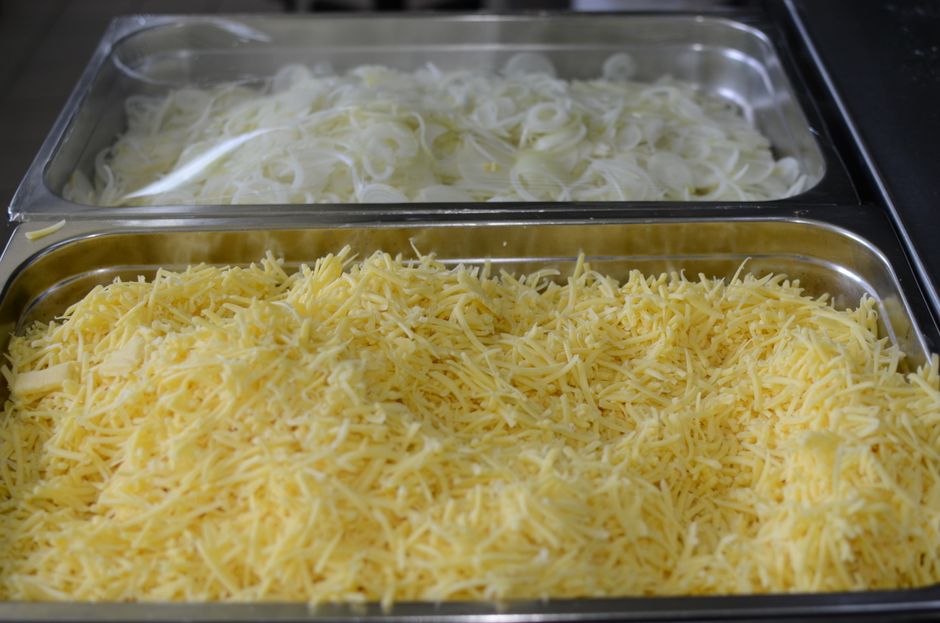
Shredded cheese is cheese that has been grated into thin strands, either at home with a box grater or commercially packaged in bags. Bagged shredded cheese is usually coated with a small amount of starch (potato starch, cellulose, or cornstarch) to keep the strands from sticking together, which also means it melts slightly less smoothly than cheese shredded fresh from a block.
Varieties
Pre-shredded bags labeled as a single cheese (like 'sharp cheddar') differ from 'Mexican blend' or 'Italian blend' bags, which mix two to four cheeses, usually cheddar, Monterey Jack, mozzarella, and provolone, chosen for a balance of melt, stretch, and flavor rather than any single cheese's characteristics.
Buying tips
Check the ingredient list if avoiding starches or fillers; some brands add more cellulose than others. For the best melt, buy a block and shred it at home, or choose bags labeled 'natural' with minimal additives. Pre-shredded Mexican or Italian blends are convenient but often melt greasier than a single hand-shredded cheese.
Substitutes
Freshly grated block cheese — 1:1 by weight
Melts smoother than bagged shredded cheese since it has no anti-caking starch coating; the closest substitute in every recipe.
Cheese slices, torn or chopped small — 1:1 by weight
Works in casseroles and melted sandwiches, though it won't distribute as evenly as true shreds in a batter or dough.
Grated Parmesan or Pecorino — 1/2 the amount
Much saltier and more concentrated in flavor, so use less; best for topping rather than melting into a sauce.
Cream cheese, softened — About 3/4 the amount by weight
Only suitable in sauces and dips where a creamy texture is wanted rather than distinct melted strands.
Storage
Keep unopened bags in the refrigerator until the printed date. Once opened, press out excess air, reseal tightly or transfer to a zip-top bag, and use within one to two weeks; shredded cheese dries out and molds faster than a block because of its increased surface area. Shredded cheese also freezes well for up to three months in a freezer bag with the air pressed out, and can be added to cooked dishes straight from frozen.
How to use
Best for melting applications: on top of casseroles, nachos, pizza, and baked pasta, or stirred into sauces, quesadillas, and omelets. Because it melts faster than a solid block, add it toward the end of cooking and remove the dish from heat as soon as it's melted to avoid a greasy, separated texture.
What it pairs with
Cheddar and Monterey Jack blends pair well with beans, corn, and chili in Tex-Mex dishes; mozzarella suits tomato sauce and basil; a Parmesan and mozzarella blend works well over roasted vegetables or baked pasta.
Nutrition
Nutrition matches the parent cheese by weight, but pre-shredded bags contain slightly less cheese per volume because of the added anti-caking starch, so per-cup calorie and fat counts run a touch lower than an equal cup of freshly grated cheese.
FAQ
Why doesn't bagged shredded cheese melt as smoothly as block cheese?
The starch coating added to prevent clumping also interferes with how the fat and protein in the cheese flow together as it heats, resulting in a slightly grainier or oilier melt compared to cheese shredded fresh.
Can I shred cheese ahead of time and store it myself?
Yes. Shred it cold straight from the refrigerator for cleaner strands, toss lightly with a teaspoon of cornstarch per 2 cups to prevent clumping, and store in a sealed bag for up to a week.
Why does my shredded cheese clump together in the bag?
Clumping happens when cheese warms up and the fat softens, causing strands to stick; keeping the bag cold and using it quickly after opening reduces this.
Is pre-shredded cheese less healthy than block cheese?
Not meaningfully. The added starch is present in very small amounts and contributes a negligible number of calories compared to the cheese itself.
Have shredded cheese on hand? Find recipes with our Recipe Generator →