
Small Potatoes
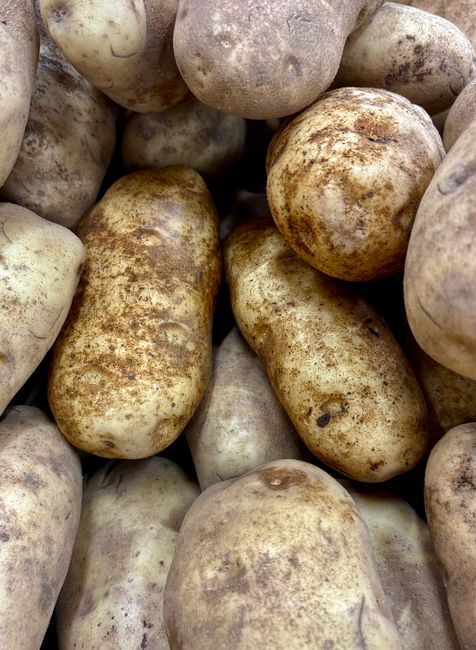
Small potatoes are simply potatoes harvested or sorted small, generally 1 to 2 inches across, rather than a specific variety. Bags labeled "small potatoes," "baby potatoes," or "creamer potatoes" at the grocery store are usually a mix of red, yellow, and purple varieties picked for uniform size rather than for being immature. They're prized for cooking whole: the skin-to-flesh ratio is high, they hold together through boiling and roasting, and they need no cutting or peeling for most preparations.
Varieties
"New potatoes" specifically means any variety harvested early in the season before the skin has set, giving thin, papery skin and a sweeter flavor; "small potatoes" or "creamer potatoes" just refers to size at harvest and can be any variety, mature or not. Fingerlings are a distinct, naturally elongated variety group (like Russian Banana or French Fingerling) rather than a small version of a round potato.
Buying tips
Choose potatoes that are firm with smooth, unbroken skin and no green tinge (a sign of solanine exposure from light) or visible sprouts. Look for a bag with uniform sizing, since mismatched sizes cook unevenly whether boiling or roasting. A slight give when squeezed means they're starting to soften and should be used soon.
Substitutes
Large potatoes cut into 1 to 1.5-inch chunks — 1:1 by weight
Cut into pieces as close to uniform size as possible so they finish cooking at the same time; russets fall apart more easily than waxy varieties, so Yukon Gold or red potatoes hold up better.
Fingerling potatoes — 1:1 by weight
Elongated rather than round, but similarly waxy and skin-on; halve lengthwise if they're much longer than the small potatoes called for.
Creamer potatoes (baby red or Yukon Gold) — 1:1 by weight
Essentially the same product under a different label; thin skins, buttery texture, no substitution adjustment needed.
New potatoes — 1:1 by weight
Thinner, more delicate skin and slightly sweeter, more watery flesh; cook a few minutes less than mature small potatoes to avoid them going mushy.
Storage
Keep in a cool, dark, well-ventilated place like a pantry or root cellar, ideally 45-55°F, in a paper bag rather than plastic. They'll keep for 2-3 weeks this way. Avoid the refrigerator: temperatures below 40°F convert starch to sugar, giving boiled and roasted potatoes an off-sweet taste and darker color when browned. Keep them away from onions, which release gases that speed up sprouting.
How to use
Best cooked whole or halved with the skin on: boiled for potato salad, roasted at 400-425°F until the skins crisp and blister (about 30-40 minutes), or smashed flat after boiling and roasted again for a crispy exterior with a soft center. Their small size means no peeling or chopping, which also means less starch is lost to the cooking water compared to cut potatoes, so they hold a firmer texture in salads.
What it pairs with
Pairs well with butter, olive oil, garlic, and hardy herbs like rosemary, thyme, and dill. Works as a side for roasted or grilled meats, and holds up in vinaigrette-based potato salads better than starchy russets.
Nutrition
Because the skin makes up a larger share of a small potato than a large one, they deliver more fiber and potassium per bite when eaten unpeeled. A medium serving (about 5-6 small potatoes) has roughly 130-150 calories and a meaningful dose of vitamin C and B6.
FAQ
Are small potatoes the same as new potatoes?
Not always. New potatoes are specifically early-harvest potatoes with thin, unset skins, while small potatoes at the store are often mature potatoes that were simply sorted by size and can have slightly thicker skin.
Do you need to peel small potatoes?
No, and most recipes call for leaving the skin on since it holds the potato together during boiling and roasting and adds texture and fiber.
Why do small potatoes sometimes split their skins when boiled?
Rapid boiling causes the starch inside to expand faster than the skin can stretch; simmering gently rather than at a hard boil reduces splitting.
Can small potatoes be roasted from raw, or do they need to be boiled first?
They can go straight into the oven raw, but parboiling for 8-10 minutes first and then roasting gives a crispier skin and fluffier interior, since the surface starch gelatinizes before browning.
Have small potatoes on hand? Find recipes with our Recipe Generator →