
Smoked Sausage
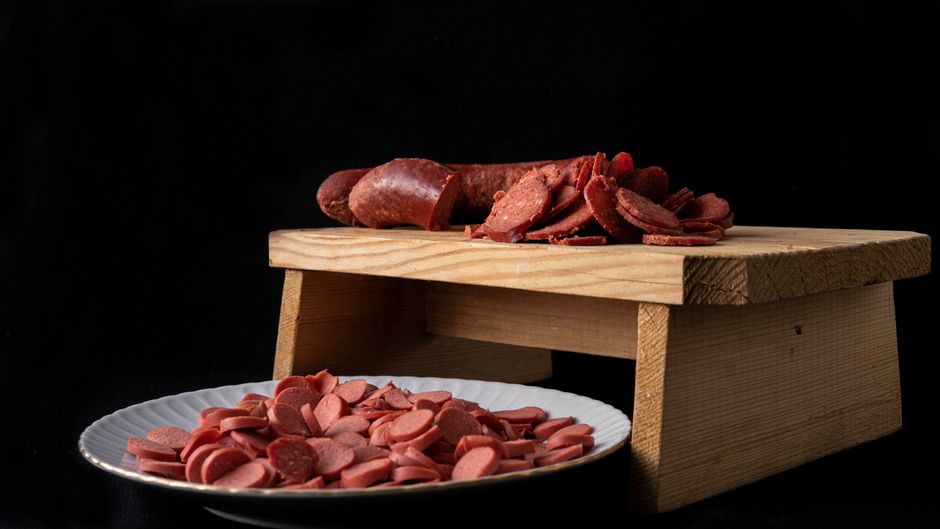
Smoked sausage is precooked sausage, usually pork, beef, or a combination, that has been cured and slowly smoked over wood to develop a deep savory flavor and firm, snappy texture. Because it's already fully cooked, it only needs to be reheated and browned rather than cooked through, which makes it one of the fastest proteins to add to a skillet, soup pot, or grill.
Varieties
Kielbasa, andouille, and smoked bratwurst are all technically types of smoked sausage but differ in spice level and origin: kielbasa (Polish) is garlicky and mild, andouille (Cajun) is coarsely ground and spicy, and bratwurst (German) is finer and more delicate. 'Smoked sausage' as a generic grocery store label usually refers to a mild, all-purpose pork or pork-beef link similar to kielbasa.
Buying tips
Check the ingredient list for the type of wood smoke used (hickory is common and mild) and whether it's naturally smoked or has liquid smoke added, which tends to taste flatter. Firmer links with visible casing snap cleanly when sliced; a mushy texture suggests excess moisture or a lower-quality fill.
Substitutes
Kielbasa — 1:1
Very close in texture and smokiness; Polish kielbasa is milder and slightly sweeter with more garlic.
Andouille sausage — 1:1
Spicier and more heavily smoked; good in gumbo, jambalaya, or red beans where extra heat is welcome.
Smoked bratwurst — 1:1
Milder, slightly finer grind; works well sliced into pasta or bean dishes but reads less rustic on a grill platter.
Chorizo (Spanish, cured/smoked style) — 3:4
Denser and more intensely spiced with smoked paprika; use a bit less by weight since flavor is stronger.
Turkey smoked sausage — 1:1
Leaner with less rendered fat; add a splash of oil when browning to prevent sticking.
Bacon or diced ham (in cooked dishes) — 1:1 by weight, adjusted to taste
Not a direct match in texture, but can stand in for the smoky, salty note in soups and beans; add near the start to render fat.
Storage
Unopened vacuum-sealed smoked sausage keeps in the refrigerator until the printed date, generally two to three weeks. Once opened, use within a week. Sliced or whole, it freezes well for up to two months in an airtight bag; thaw in the refrigerator before reheating.
How to use
Slice into rounds or diagonal pieces and brown in a dry or lightly oiled skillet to render fat and crisp the edges. Common in red beans and rice, jambalaya, gumbo, bean soups, skillet potatoes, pasta dishes, and sliced onto a grill alongside peppers and onions. Because it's precooked, the goal is browning and heating through, roughly 5-8 minutes in a skillet or 10-12 minutes on a grill, not full cooking.
What it pairs with
Pairs well with cabbage, sauerkraut, mustard, potatoes, bell peppers, onions, and beans. Also complements sharp cheddar in skillet dishes and holds up against bold spices like smoked paprika and cayenne.
Nutrition
Smoked sausage is calorie-dense and high in sodium and saturated fat due to the curing process; a 2-ounce serving typically runs 150-200 calories with 400-600mg of sodium. Turkey or chicken versions cut fat significantly while keeping the smoky flavor.
FAQ
Do I need to cook smoked sausage before eating it?
It's fully cooked during processing, so it's safe to eat cold, but reheating and browning it in a skillet or on a grill improves both texture and flavor by rendering some of the fat.
Can smoked sausage be grilled from frozen?
It's better to thaw it first in the refrigerator; grilling from frozen leads to a charred exterior before the inside is fully heated through.
Why did my smoked sausage split its casing while cooking?
Natural casings expand as fat renders and steam builds inside; scoring the casing lightly before cooking or keeping heat at medium instead of high reduces splitting.
Is smoked sausage the same as summer sausage?
No. Summer sausage is a fermented, shelf-stable dry sausage meant to be eaten cold, while smoked sausage is moist, refrigerated, and typically reheated before serving.
Have smoked sausage on hand? Find recipes with our Recipe Generator →