
Steak Pasta
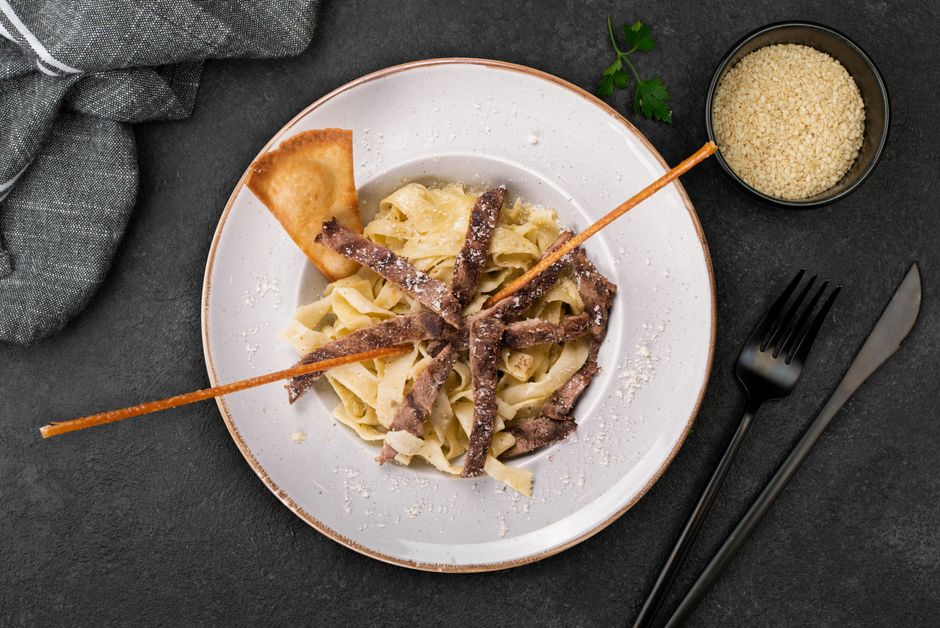
Steak pasta refers to any pasta dish built around seared or grilled steak, usually sliced thin and layered over noodles with a butter, garlic, cream, or peppercorn-based sauce. The steak is cooked separately from the pasta and added at the end, so the choice of cut and how it's rested and sliced matters more here than in most steak preparations, since thin unevenly cooked slices dry out fast once mixed into hot pasta.
Varieties
Ribeye and strip steaks are naturally more tender and forgiving in pasta because of their fat content, while flank and skirt are leaner working muscles that require thin slicing against the grain to avoid a chewy texture once mixed with noodles.
Buying tips
For pasta, buy a cut at least 1 inch thick so it can be seared hot and fast without overcooking the interior before slicing. Ribeye and strip are more forgiving for beginners; flank and skirt need a meat thermometer and a sharp knife to slice thin against the grain.
Substitutes
Boneless ribeye — 1:1 by weight
The most common choice for steak pasta because its fat marbling keeps thin slices from drying out when tossed with hot noodles.
New York strip (top loin) — 1:1 by weight
Leaner than ribeye with a firmer bite; sear a bit less to avoid toughening thin slices.
Flank steak — 1:1 by weight
Budget option; must be sliced very thin against the grain or it turns chewy once cooled slightly on the pasta.
Skirt steak — 1:1 by weight
Beefier flavor than flank, cooks fast, but is thin and easy to overcook past medium-rare.
Sirloin tip — 1:1 by weight
Leaner and more affordable than ribeye; sauce the pasta generously since sirloin tip dries out faster without fat cover.
Grilled chicken breast — Use in place of steak, similar weight
Not a beef substitute in flavor, but a common lighter swap for the same style of creamy or garlic pasta.
Portobello mushroom, sliced and seared — Use in place of steak, similar weight
A vegetarian swap that mimics the meaty texture and browning of steak but has none of its protein content.
Storage
Cooked steak for pasta keeps in an airtight container in the refrigerator for 3 to 4 days, but store it separate from the sauced pasta if possible since the acidity and heat of reheated sauce continues to cook and toughen the meat. Reheat steak gently in a low pan or add it cold to the pasta at the very end just to warm through.
How to use
Sear or grill the steak to just under the target doneness, rest it for 5 to 10 minutes, then slice thin against the grain and fold it into the pasta off the heat so residual warmth finishes it without overcooking. Works well with cream sauces, garlic butter, peppercorn sauce, and simple olive oil and parmesan.
What it pairs with
Pairs well with garlic, cracked black pepper, mushrooms, cream or gorgonzola sauces, and a dry red wine like a Cabernet Sauvignon or Zinfandel served alongside the finished dish.
Nutrition
A 4-ounce cooked portion of steak adds roughly 200 to 290 calories and 20 to 26 grams of protein to the dish depending on the cut, with fat content varying widely between lean cuts like sirloin tip and marbled cuts like ribeye.
FAQ
Should you cook the steak before or after the pasta?
Cook the steak first and let it rest while the pasta finishes, then slice and fold it in at the end. Adding raw steak to hot pasta cooks it unevenly and doesn't produce a proper sear.
Why does the steak turn chewy after sitting in the pasta?
Residual heat and acidic or salty sauces continue to firm up the proteins in the meat over time, which is why leaner cuts like flank or sirloin tip toughen faster than well-marbled cuts like ribeye.
What doneness should the steak be before slicing it for pasta?
Pull the steak at medium-rare, around 130 to 135°F internal, since it will continue cooking slightly from residual heat and again briefly when tossed with hot pasta.
Can leftover steak from another meal be used in pasta?
Yes, cold leftover steak works well sliced thin and added to hot pasta off the heat, which gently warms it without the risk of overcooking that reheating in a pan carries.
Have steak pasta on hand? Find recipes with our Recipe Generator →