
Sunchoke
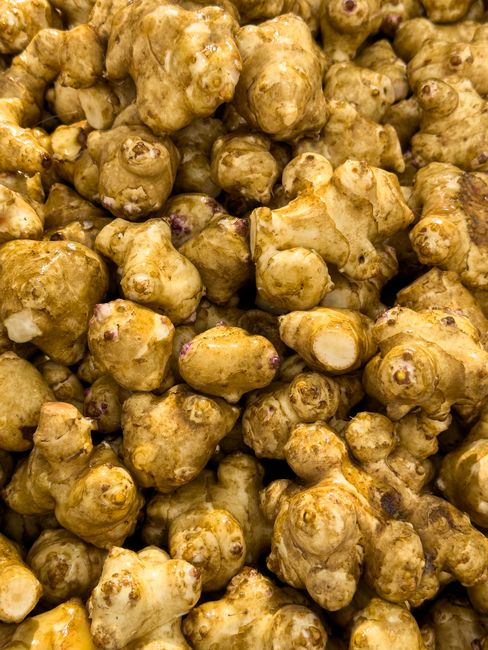
Sunchokes (Helianthus tuberosus), also called Jerusalem artichokes, are the knobby, ginger-like tubers of a species of sunflower native to North America. Despite the name, they have no relation to Jerusalem or to globe artichokes, though cooked sunchokes share a faint, nutty artichoke-heart flavor. Raw, they're crisp and slightly sweet, closer to a water chestnut; cooked, they turn creamy and starchy, similar to a potato but with more sweetness.
Varieties
Red-skinned and white-skinned sunchoke varieties exist; red types tend to be slightly sweeter and less knobby, but both cook the same way.
Buying tips
Choose firm, smooth-skinned tubers without soft spots, green tinges, or sprouting eyes. Smaller, less knobby ones are easier to peel and yield less waste; size doesn't affect flavor.
Substitutes
Potato — 1:1
Best texture match for roasting, mashing, or soups; lacks the nutty sweetness but works in almost any cooked application.
Water chestnuts — 1:1
Good raw substitute for salads or slaws where sunchoke's crisp, sweet crunch matters more than starchiness.
Jicama — 1:1
Another raw substitute with similar crunch and mild sweetness, though less nutty.
Salsify — 1:1
Closer flavor match, an earthy, faintly oyster-like sweetness that works well roasted or pureed.
Parsnip — 1:1
Sweeter and more fibrous than sunchoke, but a reasonable stand-in for roasting or soups.
Storage
Store unwashed sunchokes in a paper bag in the refrigerator crisper drawer, where they'll keep for about two to three weeks. Their thin skins bruise and dry out easily, so avoid plastic bags, which trap moisture and speed up rot. Do not wash until ready to use.
How to use
Scrub well and use raw, thinly sliced, in salads for crunch, or peel and cook by roasting, sauteing, or boiling for soups and purees. Roasting at 400°F for 25 to 35 minutes brings out their natural sugars and mellows the sulfurous edge that raw or undercooked sunchokes can have. Because they discolor quickly once cut, hold peeled or sliced pieces in acidulated water (water with a splash of lemon juice) until cooking.
What it pairs with
Pairs well with butter, cream, thyme, and garlic in purees, and with citrus, olive oil, and Parmesan when shaved raw into salads. Also complements rich proteins like pork belly, duck, and scallops.
Nutrition
Sunchokes are notably high in inulin, a prebiotic fiber the body can't fully digest, which is why they're famous for causing gas in some people. They're a good source of potassium and iron and lower in starch-driven calories than potatoes.
FAQ
Why do sunchokes cause digestive discomfort?
They're high in inulin, a fiber that resists digestion in the small intestine and ferments in the colon, producing gas. Cooking them thoroughly and eating smaller portions at first reduces the effect.
Do sunchokes need to be peeled?
Not necessarily. The skin is edible and adds fiber, though it can taste slightly bitter or gritty if the tuber is very knobby. Scrubbing well is sufficient for most roasted or sauteed preparations.
Why did my cooked sunchokes turn gray?
Sunchokes oxidize quickly once cut, similar to apples or potatoes. Holding cut pieces in water with lemon juice or vinegar before cooking prevents the discoloration.
Can sunchokes be eaten raw?
Yes, raw sunchokes are crisp and mildly sweet, similar to jicama or water chestnut, and are commonly shaved thin for salads.
Have sunchoke on hand? Find recipes with our Recipe Generator →