
Swamp Soup
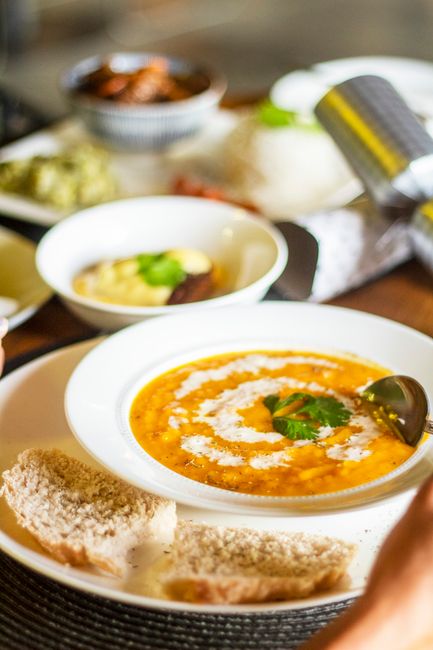
Swamp soup is a thick, deep-green Southern soup built from long-simmered collard greens (or another sturdy leafy green), smoked sausage or ham, and rice or beans, cooked down until the greens lose their structure and the broth turns dark and murky, which is where the name comes from. It's closer to a pot of braised greens loosened into soup form than a clear-broth soup, and it's traditionally a way to stretch a small amount of meat and a lot of cheap greens into a full meal.
Varieties
Cajun and Creole versions lean on andouille and the trinity of onion, celery, and bell pepper for a spicier, more seasoned broth. A vegetarian version swaps the smoked meat for smoked paprika, liquid smoke, and a hearty bean like black-eyed peas or kidney beans to keep some body in the broth.
Buying tips
Choose collard or kale bunches with firm, unblemished leaves and no yellowing at the edges; older leaves turn bitter when cooked this long. For the meat, a fully smoked sausage (not fresh) gives the broth its color and depth without extra browning steps.
Substitutes
Kale, stems removed — 1:1 by weight
Holds up to long simmering like collards but breaks down a little faster; check it 10-15 minutes earlier than the recipe states.
Mustard greens — 1:1 by weight
Sharper, more peppery flavor than collards; good if the soup will also carry vinegar or hot sauce.
Turnip greens — 1:1 by weight
Slightly bitter and traditional in some Southern versions; balance with extra smoked meat or a splash of sugar.
Frozen chopped collard greens — 0.75:1 by weight
Already blanched and more concentrated than fresh, so use less and add later in cooking since they need far less time to soften.
Andouille sausage for smoked sausage — 1:1
Spicier and more heavily seasoned; cuts down on how much additional cayenne or black pepper the soup needs.
Storage
Refrigerate swamp soup in an airtight container for up to 4 days; the greens continue to soften and the flavor deepens overnight. Freeze in portions for up to 3 months, but leave any rice out before freezing and stir it in fresh after reheating since cooked rice turns mushy when frozen in broth.
How to use
Serve over a scoop of white rice so the rice soaks up the potlikker, or ladle it plain with cornbread for dipping. Leftover swamp soup also works thinned with a little broth as a base for a quick gumbo-style stew.
What it pairs with
Pairs with cornbread or hoecakes for dipping, a splash of vinegar-based hot sauce at the table, and simple sides like black-eyed peas or stewed tomatoes.
Nutrition
The greens contribute vitamin A, vitamin K, and fiber, while smoked sausage or ham adds most of the fat and sodium; using a leaner smoked turkey sausage cuts both without losing the smoky backbone of the soup.
FAQ
Why is it called swamp soup?
The name comes from the murky, dark green color the broth turns once the greens break down and release their color and starch into the liquid, not from any specific swamp ingredient.
Can swamp soup be made without meat?
Yes. Replace the smoked sausage with smoked paprika, a bay leaf, and a can of drained beans, and use vegetable broth instead of a meat-based stock to keep the smoky depth.
Why did the greens turn bitter in my swamp soup?
Older or larger leaves, or skipping the step of removing the tough center ribs, are usually the cause; younger leaves with the ribs cut out cook down sweeter.
Should rice be cooked in the soup or added separately?
Add cooked rice separately just before serving. Simmering raw rice directly in the broth for the full cooking time of the greens turns it to mush and clouds the broth.
Have swamp soup on hand? Find recipes with our Recipe Generator →