
Thit Kho
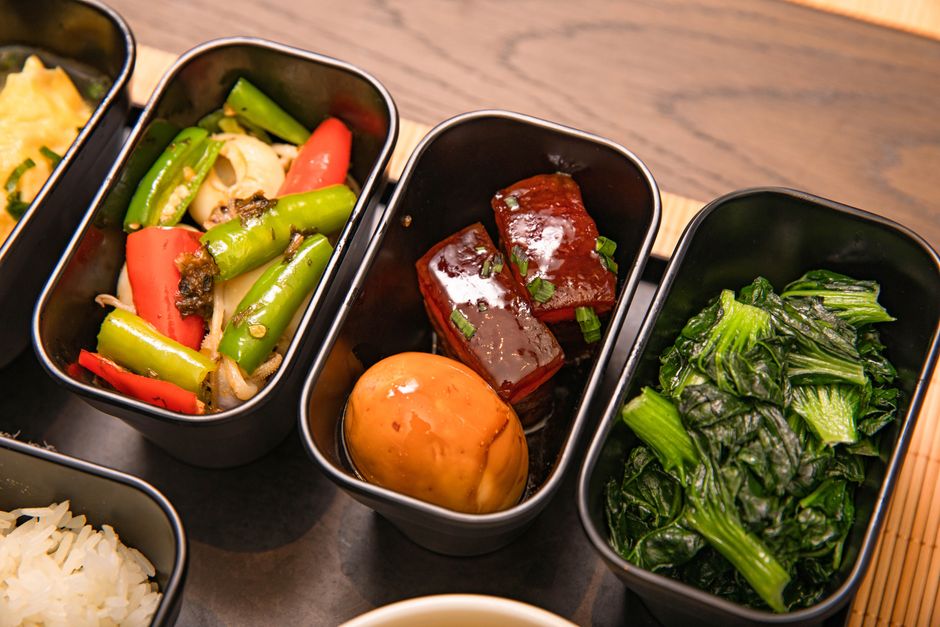
Thit kho (also called thit kho tau or thit kho trung) is a Vietnamese braised pork dish made by simmering pork belly, and usually whole hard-boiled eggs, in a sauce built from caramelized sugar (nuoc mau), fish sauce, and coconut water until the meat turns tender and the sauce reduces to a dark, glossy, savory-sweet glaze. It's a staple of home cooking and a common Tet holiday dish, prized for how well it keeps and reheats over several days.
Varieties
Southern-style thit kho tau includes coconut water and whole eggs and tends to be sweeter. Northern-style thit kho typically skips the coconut water, relies more heavily on the caramel sauce for color and depth, and is often made without eggs. Thit kho tieu is a black pepper-forward variation with less sugar and a sharper, spicier finish.
Buying tips
Choose pork belly with visible alternating layers of fat and meat rather than a solid fat cap; look for skin-on cuts if the recipe calls for it, since the skin turns tender and slightly gelatinous during the long braise. Use plain, unsweetened young coconut water, not coconut milk or coconut soda, which will make the sauce too sweet or too rich.
Substitutes
Pork shoulder (bo vai) — 1:1 by weight
Leaner than pork belly, so the sauce will be less rich and the meat less silky, but it braises tender in the same amount of time.
Pork spare ribs, cut into short pieces — 1:1 by weight
Traditional in some regional versions (thit kho suon); the bone adds flavor to the braise but the meat cooks slightly faster than belly.
Bone-in chicken thighs — 1:1 by weight
Common lighter variation; reduce simmer time to about 30 minutes since chicken cooks much faster than pork belly.
Firm tofu, pan-fried before braising — 1:1 by weight
Used for a vegetarian version (thit kho chay); fry the tofu first so it holds together and soaks up the caramel sauce.
Quail eggs instead of chicken eggs — 6-8 quail eggs per 1 chicken egg replaced
Purely a presentation swap for smaller bites; peel while warm since the shells are more fragile.
Storage
Thit kho keeps better than most braises because the sauce is salty and sugar-heavy, which naturally preserves it. Store in an airtight container fully submerged in its sauce in the refrigerator for up to 5 days, or freeze for up to 2 months. Reheat gently on the stovetop over low heat, adding a splash of water if the sauce has thickened too much.
How to use
Served over steamed white rice as the centerpiece of a meal, almost always alongside something acidic and crunchy to cut the richness, like pickled bean sprouts or mustard greens (dua chua/dua mon). Leftover pork and sauce also work shredded into banh mi or spooned over broken rice (com tam).
What it pairs with
Pairs with pickled mustard greens, pickled bean sprouts, or a simple cucumber salad to balance the richness, plus a stir-fried leafy green like water spinach. A bowl of plain steamed rice is standard, since the sauce is meant to be spooned generously over it.
Nutrition
Pork belly is high in fat, and the sauce contains a fair amount of sugar, so thit kho is calorie-dense per portion. It's traditionally eaten in small amounts alongside plain rice and vegetables rather than as a large standalone serving.
FAQ
What gives thit kho its dark reddish-brown color?
The color comes from nuoc mau, a bitter caramel made by cooking sugar past the point of caramelization until it turns dark amber, then adding water to stop it from burning. It's added to the braise for color and a subtle bitter edge, not primarily for sweetness.
Can thit kho be made without coconut water?
Yes, this is closer to the Northern style. Substitute plain water or a light stock, and expect a slightly less sweet, more savory sauce that relies more on the caramel and fish sauce for flavor.
How long does the pork need to simmer to get tender?
Pork belly typically needs 45 to 60 minutes of gentle simmering, partially covered, until a knife slides through the fat and meat with no resistance and the sauce has reduced by about half.
Why do the eggs turn brown and slightly rubbery?
Extended simmering in the salty caramel sauce firms the egg whites over time and lets the sauce penetrate the surface, which is intentional. For a softer texture, add the eggs during the last 20 to 30 minutes rather than at the start.
Have thit kho on hand? Find recipes with our Recipe Generator →