
Trucha
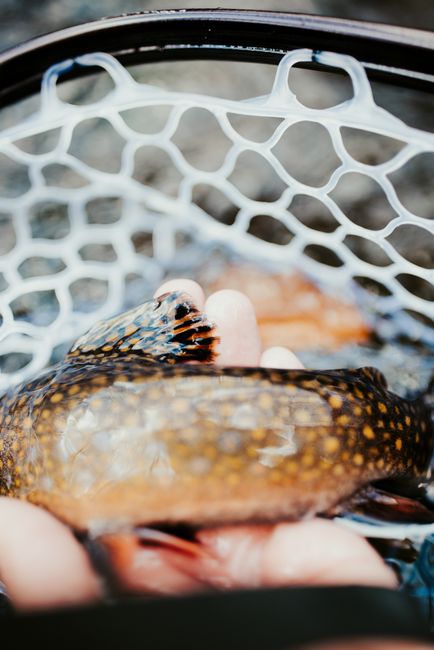
Trucha is the Spanish word for trout, most often referring to rainbow trout (trucha arcoíris) in home kitchens and on menus across Latin America and Spain. It's a freshwater fish with a mild, slightly sweet flavor, tender flake, and skin that crisps well in a hot pan. Farmed trucha, sold whole or as fillets, is one of the most affordable and widely available freshwater fish, which is why it shows up so often in home cooking as an alternative to salmon.
Varieties
Rainbow trout (trucha arcoíris) is the most widely farmed and sold type, with mild flavor and pale pink flesh. Trucha de mar or sea trout (also called salmon trout when farmed in saltwater pens) has a richer, more orange flesh closer to salmon due to its diet. Brown trout, less common commercially, has a slightly earthier flavor and is more often caught wild than farmed.
Buying tips
Whole trucha should have clear, bulging eyes, bright red gills, and firm flesh that springs back when pressed, with no sour or ammonia smell. For fillets, look for moist, translucent flesh without brown spots or dryness at the edges. Farmed rainbow trout is the most common variety sold fresh; it's typically smaller than salmon, so one whole fish usually serves one person.
Substitutes
Salmon fillet — 1:1
Richer and fattier with a stronger flavor, but cooks the same way and works in almost any trucha recipe, especially grilled or pan-seared preparations.
Arctic char — 1:1
Closest match in texture and mild flavor, with flesh color between trout and salmon; often easier to find farmed year-round.
Tilapia — 1:1
Much milder and leaner with no pink flesh; a fair stand-in for baked or breaded trucha dishes but lacks the same richness for grilling.
Branzino (sea bass) — 1:1
A saltwater substitute with a similarly delicate, flaky texture, good for whole-fish preparations like trucha a la plancha.
Storage
Fresh whole trucha or fillets keep 1 to 2 days in the coldest part of the refrigerator, wrapped in plastic and set on a bed of ice in a shallow dish. For longer storage, freeze whole or filleted, wrapped tightly in plastic then foil, for up to 3 months; thaw overnight in the refrigerator before cooking.
How to use
Common preparations include trucha a la plancha (pan-seared whole or fileted), trucha frita (whole fried trout), trucha al mojo de ajo (garlic butter trout), and grilled or baked fillets with lime and herbs. The skin crisps well in a hot, well-oiled pan and helps hold the delicate flesh together during cooking. Whole trucha is typically gutted and scaled before cooking, with the head often left on for presentation.
What it pairs with
Pairs well with garlic, lime, cilantro, and butter, as well as smoked paprika and toasted almonds in Spanish-style preparations. Serve alongside rice, roasted potatoes, or a simple green salad with a citrus vinaigrette.
Nutrition
Trucha is a good source of lean protein and omega-3 fatty acids, along with vitamin B12, vitamin D, and selenium. A 3.5-ounce cooked portion runs around 170 to 190 calories, lower in fat than farmed salmon but still contributing meaningful omega-3s.
FAQ
Is trucha the same fish as salmon?
No, trucha (trout) and salmon are different species, though closely related and often interchangeable in recipes. Trout is generally smaller, milder, and leaner than salmon.
Do you need to remove the skin from trucha before cooking?
Not necessarily. The skin is edible and crisps up nicely when pan-seared skin-side down in a hot pan with oil; it also helps keep the flesh from falling apart.
How do you know when trucha is fully cooked?
The flesh turns from translucent to opaque and flakes easily with a fork; this typically takes 3 to 4 minutes per side for a fillet in a hot pan, or about 15 to 20 minutes for a whole fish baked at 400°F.
Can you eat trucha with bones still in it?
Whole trucha has a central bone structure that's easy to lift out after cooking, but pin bones can remain in fillets; run a finger along the flesh and pull any small bones out with tweezers before cooking or serving.
Have trucha on hand? Find recipes with our Recipe Generator →