
Whiting Fish
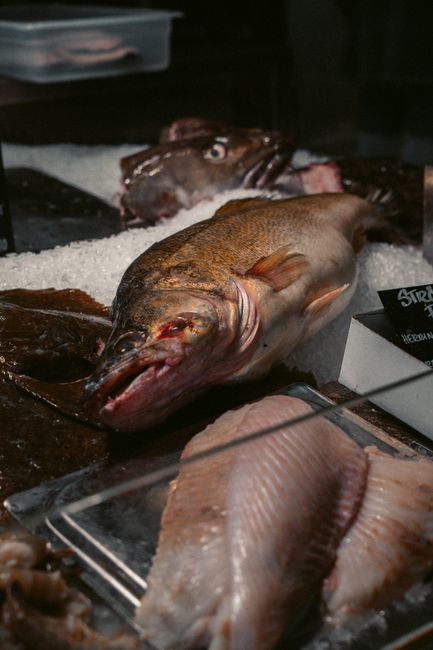
Whiting is a small, mild, lean white fish from the cod family, sold both whole and as thin fillets. The flesh is soft, slightly flaky, and cooks very quickly, with a delicate, faintly sweet flavor that's less pronounced than cod or haddock. In the US, fish sold as "whiting" is often actually Pacific hake or silver hake, close relatives with nearly identical texture and taste.
Varieties
What's labeled "whiting" varies by region: true whiting (Merlangius merlangus) is common in European markets, while much of the whiting sold in the US is actually Pacific whiting (hake) or silver hake. All are close relatives in the cod family with nearly interchangeable texture and taste, so recipes calling for one work fine with another.
Buying tips
Whole whiting should have clear, bulging eyes and firm flesh that springs back when pressed; avoid any with a strong ammonia smell, which signals age. Fillets should look translucent and moist, not dull or gray at the edges. Because whiting spoils fast, buy it the day you plan to cook it whenever possible.
Substitutes
Haddock — 1:1
Slightly firmer texture and a bit more flavor, but works the same way in almost any recipe calling for whiting.
Cod — 1:1
Milder-tasting fish enthusiasts might notice cod holds together a little better under high heat, since its flakes are larger and denser than whiting's.
Flounder or sole — 1:1
Thinner and even more delicate; reduce cook time by a minute or two since these fillets are usually thinner than whiting.
Tilapia — 1:1
Farmed and widely available, with a similarly mild flavor, though the texture is slightly springier than whiting.
Storage
Fresh whiting is highly perishable because it's so lean and soft; use within a day of purchase, stored on ice or in the coldest part of the refrigerator wrapped loosely in butcher paper. Frozen fillets keep well for up to 3 months in an airtight freezer bag; thaw overnight in the refrigerator rather than at room temperature to keep the flesh from turning mushy.
How to use
Best suited to quick, gentle cooking methods: pan-frying in butter, light dredging in flour before frying, baking at 400°F for 10-12 minutes, or poaching in broth. The flesh falls apart easily, so it's a poor choice for grilling directly on grates or for dishes that need long simmering. Whiting is also traditionally used whole, breaded and fried, in British and Mediterranean cooking.
What it pairs with
Pairs well with bright, acidic elements like lemon, capers, and white wine sauces that don't overwhelm its mild flavor. Classic accompaniments include brown butter, parsley, tartar sauce, and simple sides like boiled potatoes or sauteed greens.
Nutrition
A 3.5-ounce cooked serving has around 90 calories and roughly 18 grams of lean protein, with very little fat, making it one of the leaner white fish options along with cod and flounder.
FAQ
Is whiting a good fish for someone who doesn't like "fishy" flavor?
Yes. Whiting has one of the mildest flavors among white fish, making it a common starting point for people who dislike stronger-tasting fish like mackerel or bluefish.
Does whiting have a lot of bones?
Whole whiting has a central bone structure similar to other cod-family fish, but pre-cut fillets are typically sold boneless aside from occasional small pin bones near the head end.
Can whiting be cooked from frozen?
It's not recommended; thawing first allows excess moisture to drain off, which keeps the delicate flesh from turning watery and falling apart during cooking.
Why does whiting fall apart so easily when cooked?
Its muscle fibers are shorter and the flesh has less connective tissue than firmer fish like cod, so it cooks through fast and breaks into flakes with minimal handling.
Have whiting fish on hand? Find recipes with our Recipe Generator →