
Yellowfin Tuna
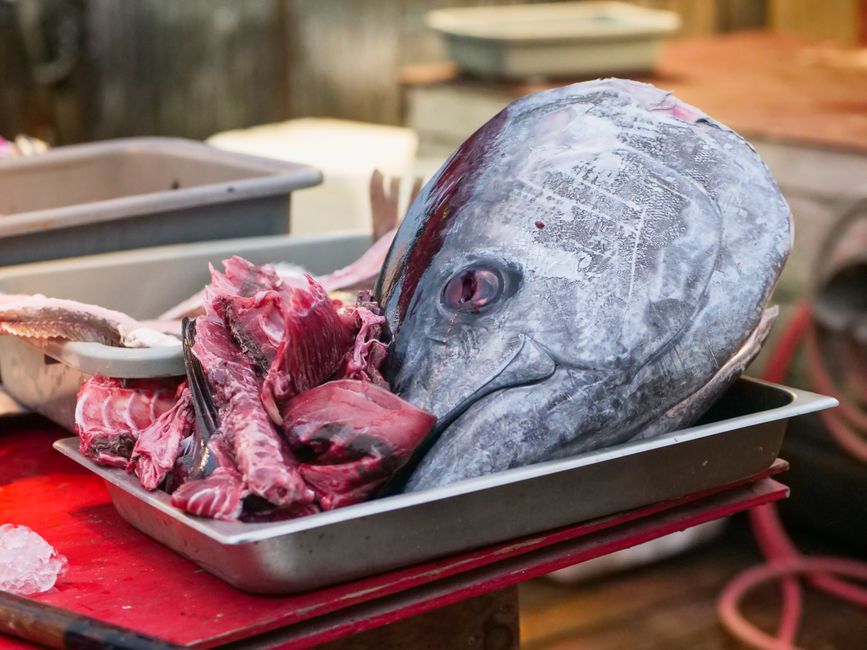
Yellowfin tuna (Thunnus albacares) is a large, warm-water tuna species prized for its firm texture and deep red, lean flesh, sold both raw-grade for sushi and sashimi and as thick steaks for searing or grilling. It's often labeled "ahi," the Hawaiian name used for both yellowfin and bigeye tuna in US markets. Compared to canned light or albacore tuna, fresh yellowfin has a cleaner, milder flavor and a meaty, steak-like bite rather than a flaky one.
Varieties
"Ahi tuna" on menus and labels usually refers to either yellowfin or bigeye tuna; bigeye tends to be fattier and slightly darker. Bluefin tuna is a separate, much fattier and more expensive species typically reserved for high-end sashimi, while albacore and skipjack are smaller, paler species mostly used for canning.
Buying tips
Look for deep red to maroon flesh with a moist, glossy surface and no browning or dull gray patches; a fresh, mild ocean smell is normal, a strong fishy or ammonia odor is not. For raw preparations, ask specifically for sushi-grade or sashimi-grade, since this indicates the fish was flash-frozen to kill parasites.
Substitutes
Bigeye tuna (ahi) — 1:1
Very close in texture and color, slightly higher fat content, and sold under the same "ahi" label at most fish counters.
Albacore tuna steak — 1:1
Paler pink flesh and milder flavor with a softer texture; works for searing but is less common raw.
Swordfish steak — 1:1
Not a tuna at all, but a good substitute for grilled or seared preparations since it holds up to high heat the same way; not suitable raw.
Firm white fish (mahi-mahi or halibut) — 1:1
Use for cooked dishes only; the flavor is much milder and the color is white, not red, so it won't work in poke or sashimi.
Canned or pouched tuna — 1:1 by weight, drained
Only a reasonable stand-in for cooked, flaked applications like salads or casseroles; texture and flavor are far softer than fresh steaks.
Storage
Fresh yellowfin should be used within 1-2 days of purchase; keep it on ice or at the coldest part of the refrigerator, wrapped tightly in plastic. For raw or rare eating, buy fish labeled "sushi-grade" or "previously frozen for parasite destruction." Frozen yellowfin keeps for up to 3 months in a standard freezer at 0°F; thaw overnight in the refrigerator, not at room temperature.
How to use
Sear thick steaks 1-2 minutes per side over very high heat, leaving the center rare to medium-rare, since yellowfin turns dry and chalky if cooked through like chicken. Cube it raw for poke bowls, slice thin for sashimi, or grill whole steaks brushed with oil and finished with soy, sesame, or citrus. It also flakes well grilled and flaked into salads or tacos.
What it pairs with
Pairs well with soy sauce, sesame oil, ginger, scallions, and citrus like lime or yuzu in raw preparations, and with olive oil, garlic, capers, or a peppercorn crust when seared or grilled.
Nutrition
A 4-ounce cooked portion has around 130 calories and roughly 28 grams of lean protein, with very little fat. Yellowfin is a good source of selenium, niacin, and vitamin B12, though as a larger predatory fish it carries more mercury than smaller species like sardines or canned light tuna.
FAQ
Is yellowfin tuna the same as ahi tuna?
Ahi is a market name covering both yellowfin and bigeye tuna, not a separate species; yellowfin is the more commonly sold of the two in US grocery stores.
Can you eat yellowfin tuna raw?
Yes, but only if it's labeled sushi-grade or has been previously frozen to a temperature that kills parasites, typically -4°F for at least 7 days; regular fresh fillets from a standard fish counter aren't guaranteed safe raw.
Why does yellowfin tuna turn brown?
Exposure to oxygen causes the myoglobin in the flesh to oxidize, turning bright red tuna brownish over a day or two; this is a freshness and air-exposure issue, not necessarily spoilage, but strong odor or sliminess means it should be discarded.
How do you know when a yellowfin tuna steak is done?
Most cooks sear it only 1-2 minutes per side so the center stays rare to medium-rare and pink; cooking it to well-done, like chicken, dries out the lean flesh and makes it noticeably tougher.
Have yellowfin tuna on hand? Find recipes with our Recipe Generator →