Buttermilk Baking Powder Biscuits Recipe
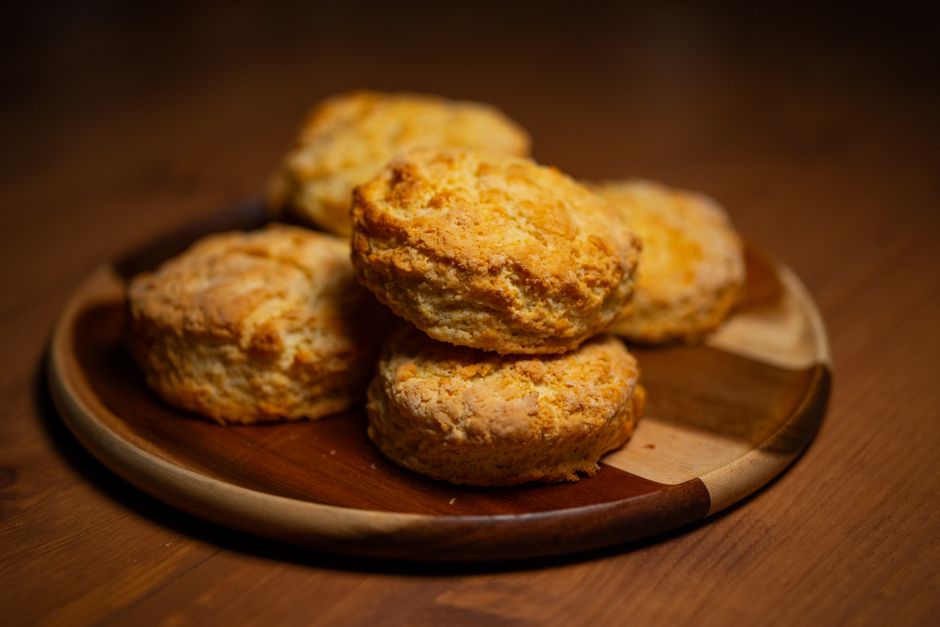
Double-acting baking powder releases gas twice: once when it hits the wet buttermilk during mixing, and again when the biscuits hit the oven's heat. That second, delayed reaction is what gives these biscuits their tall rise and open, flaky layers instead of a flat, dense puck, and it's the reason double-acting powder (the kind sold in nearly every US grocery store) outperforms single-acting powder in a recipe that sits around before baking.
- Prep
- 15 min
- Cook
- 15 min
- Total
- 30 min
- Servings
- 8
Ingredients
- 2 cups all-purpose flour
- 1 tablespoon double-acting baking powder
- 1/2 teaspoon baking soda
- 3/4 teaspoon salt
- 1/2 cup cold unsalted butter, cubed
- 3/4 cup cold buttermilk
Nutrition per serving
- Calories
- 225
- Protein
- 4g
- Carbs
- 25g
- Fat
- 12g
Based on the recipe as written, one serving. Recalculates if you swap an ingredient above. An estimate only, exact values depend on the specific ingredients used.
Need different units or a different yield? Try our Conversion Calculator →
Instructions
- 1Preheat the oven to 450°F (230°C) and line a baking sheet with parchment paper.
- 2In a large bowl, whisk together the flour, baking powder, baking soda, and salt until evenly combined.
- 3Add the cold, cubed butter and work it into the flour with your fingertips or a pastry cutter until the mixture looks like coarse crumbs with some pea-sized pieces of butter remaining.
- 4Pour in the cold buttermilk and stir with a fork just until a shaggy dough forms, no dry flour should be visible, but don't overmix.
- 5Turn the dough out onto a lightly floured surface and pat it into a rectangle about 3/4 inch thick. Fold the dough in half, pat it back out, and repeat this fold two more times.
- 6Pat the dough to a final thickness of 3/4 inch. Cut out rounds with a 2 1/2-inch biscuit cutter, pressing straight down without twisting, and place them on the prepared baking sheet with edges just touching.
- 7Gather the scraps, pat them together gently, and cut a few more rounds.
- 8Bake for 12-15 minutes, until the tops are golden brown and well risen.
- 9Serve warm.
Tips & variations
- Check that baking powder is still active before using it: drop a half teaspoon into hot water, and if it fizzes vigorously right away, it's still good. Powder that's been open for over 6 months often loses enough strength to leave biscuits flat.
- Don't substitute baking soda alone for the baking powder here; baking soda needs a strong acid to react and buttermilk alone isn't quite acidic enough to lift the dough this much without the powder's help.
- For extra height, chill the cut biscuits on the tray for 10-15 minutes before baking so the butter firms back up.
- Brush the tops with melted butter right after baking for a softer, more golden crust.
Storage & reheating
Store cooled biscuits in an airtight container at room temperature for up to 2 days, or freeze unbaked, cut biscuits on a tray until solid, then transfer to a freezer bag for up to 2 months (bake straight from frozen, adding 3-4 extra minutes). To reheat, warm in a 350°F (175°C) oven for about 8 minutes.
Tips from the Tulo kitchen
- Weighing the flour instead of scooping with a measuring cup gives much more consistent results, since scooped flour can pack in 20% more than intended and make the biscuits dense.
- A drinking glass works fine as a substitute biscuit cutter if you don't own one, just dip the rim in flour between cuts so it doesn't stick.
FAQ
What does "double-acting" mean on a baking powder label?
It means the powder contains two different acid salts that react with the baking soda in it at two separate times: one reacts as soon as it gets wet (during mixing), and the second reacts only once it reaches oven heat. Nearly all baking powder sold in US grocery stores today is double-acting; single-acting powder is rare outside of some professional or imported baking products.
Can I use single-acting baking powder in this recipe instead?
It will work, but the rise happens almost entirely during mixing and starts deflating before the biscuits even reach the oven, so you'd need to shape and bake immediately with no resting time to get a similar rise.
Why didn't my biscuits rise much?
The most common causes are baking powder that's lost its potency (test it in hot water first), butter that melted into the dough instead of staying in cold pea-sized pieces, or twisting the cutter when punching out the rounds, which seals the edges shut.
Can I make my own baking powder if I run out?
Yes, mix 1/4 teaspoon baking soda with 1/2 teaspoon cream of tartar for every teaspoon of baking powder called for, though this homemade version is single-acting, so bake the dough right away.
How much baking powder should I use per cup of flour?
A standard ratio is about 1 to 1 1/2 teaspoons of baking powder per cup of flour for recipes that rely on it as the only leavener; this recipe runs slightly higher per cup because it's split with a small amount of baking soda to react with the buttermilk's acidity.