Cacio e Pepe with Pecorino Romano Recipe
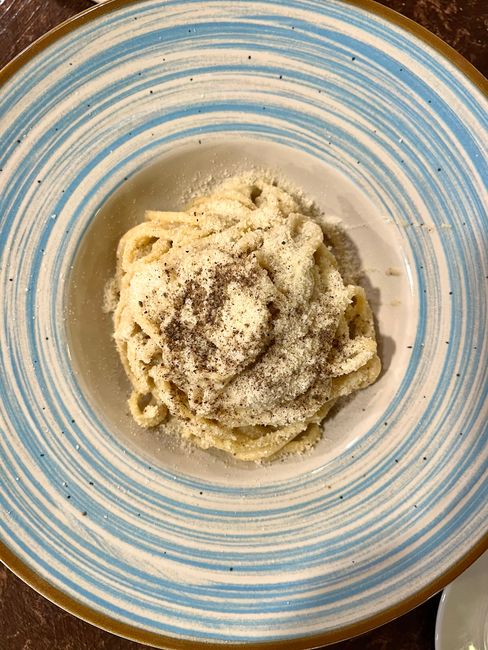
Pecorino romano is sharp, salty, and dense enough to melt into a clingy sauce with nothing but starchy pasta water, no cream or butter needed. Its lower melting point and drier texture compared to parmesan let it emulsify smoothly when the water is hot but not boiling, which is the entire trick behind cacio e pepe.
- Prep
- 5 min
- Cook
- 15 min
- Total
- 20 min
- Servings
- 4
Ingredients
- 12 oz spaghetti or tonnarelli
- 1 1/2 cups pecorino romano, finely grated
- 2 tsp black peppercorns, coarsely cracked
- 2 tbsp kosher salt, for the pasta water
Nutrition per serving
- Calories
- 448
- Protein
- 21g
- Carbs
- 62g
- Fat
- 12g
Based on the recipe as written, one serving. Recalculates if you swap an ingredient above. An estimate only, exact values depend on the specific ingredients used.
Need different units or a different yield? Try our Conversion Calculator →
Instructions
- 1Bring a large pot of water to a boil and salt it, but less than usual, since the pecorino will add plenty of salt to the finished dish.
- 2Toast the cracked black pepper in a dry skillet over medium heat for 1-2 minutes, shaking the pan, until fragrant.
- 3Add the pasta to the boiling water and cook until just shy of al dente, about 1-2 minutes less than the package directs. Reserve 2 cups of the starchy pasta water before draining.
- 4Off the heat, add a splash of the reserved hot pasta water to the toasted pepper in the skillet.
- 5In a large bowl, combine the grated pecorino romano with a few tablespoons of hot pasta water, mashing and stirring with a fork or whisk until it forms a smooth, loose paste with no clumps.
- 6Transfer the drained pasta to the skillet with the pepper, then add the cheese paste and toss constantly over very low heat (or off heat entirely), adding more pasta water a splash at a time, until the sauce turns glossy and coats every strand.
- 7Serve immediately in warmed bowls with extra cracked pepper and grated pecorino on top.
Tips & variations
- Use finely, freshly grated pecorino romano rather than pre-shredded or a fine powder-style grate; pre-shredded cheese is often coated in anti-caking starch that keeps it from melting smoothly.
- If the sauce breaks into a grainy, oily mess, whisk in a splash of cold pasta water off heat to bring it back together.
- A 50/50 blend of pecorino romano and parmesan mellows the sharpness slightly if a milder sauce is preferred, though this moves away from the traditional Roman recipe.
- Crack the peppercorns coarsely with the flat of a knife or in a mortar and pestle rather than using a pepper grinder; larger flecks toast better and give more texture than fine ground pepper.
Storage & reheating
Cacio e pepe is best eaten immediately, since the sauce is an emulsion that can separate as it cools. Leftovers keep in the fridge for up to 2 days; reheat gently in a skillet over low heat with a splash of water or milk, tossing constantly, rather than microwaving, which tends to make the sauce grainy.
Tips from the Tulo kitchen
- Warm the serving bowls under hot tap water before plating; a cold bowl can cause the sauce to seize and clump within minutes.
- Weigh the pecorino if possible instead of measuring by cup, since how tightly cheese is packed into a measuring cup can swing the quantity by 20% or more.
FAQ
Can I substitute parmesan for pecorino romano?
Parmesan will work in a pinch but changes the dish noticeably: pecorino romano is made from sheep's milk and is saltier and sharper, while parmesan is milder and nuttier. If substituting, taste before adding extra salt to the pasta water.
Why did my sauce turn clumpy or stringy?
This happens when grated cheese hits water or a pan that's too hot, causing the proteins to seize instead of melting smoothly. Always mix the cheese with pasta water off the heat first, then toss over gentle or no heat.
Is pecorino romano the same as regular pecorino?
No. Pecorino romano is a specific aged sheep's milk cheese from the Lazio region with DOP protection; other pecorino styles (like pecorino sardo or pecorino toscano) can be milder or softer and won't behave the same way in this sauce.
Can I make this dish ahead of time?
Cacio e pepe doesn't hold well because the emulsion breaks as it sits and cools. It's best made fresh and served within a few minutes of finishing the sauce.