
Classic Vanilla Butter Cake Recipe
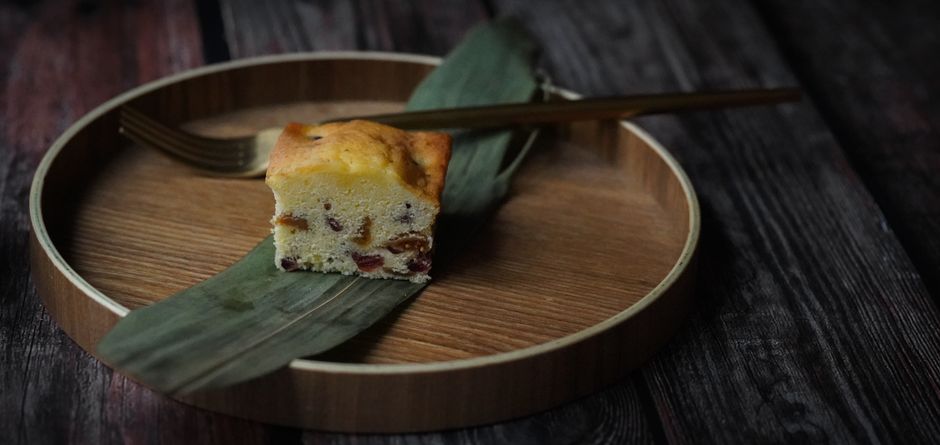
Creaming softened butter with sugar first beats in tiny air pockets that the baking powder later expands, giving the cake lift without a heavy crumb. Alternating the dry ingredients with the milk keeps the batter from curdling or overmixing, and baking at a steady 350°F (175°C) sets the crumb evenly without drying out the edges before the center finishes.
- Prep
- 20 min
- Cook
- 35 min
- Total
- 55 min
- Servings
- 10
Ingredients
- 1 cup unsalted butter, softened
- 1 1/2 cups granulated sugar
- 3 eggs large eggs
- 2 tsp vanilla extract
- 2 1/2 cups all-purpose flour
- 2 1/2 tsp baking powder
- 1/2 tsp salt
- 1 cup whole milk
Nutrition per serving
- Calories
- 432
- Protein
- 6g
- Carbs
- 55g
- Fat
- 21g
Based on the recipe as written, one serving. Recalculates if you swap an ingredient above. An estimate only, exact values depend on the specific ingredients used.
Need different units or a different yield? Try our Conversion Calculator →
Instructions
- 1Preheat the oven to 350°F (175°C). Grease and flour a 9-inch round cake pan, then line the bottom with a circle of parchment paper.
- 2In a large bowl, cream the softened butter and sugar together with an electric mixer on medium speed until pale and fluffy, about 3 to 4 minutes.
- 3Add the eggs one at a time, beating well after each addition, then mix in the vanilla extract.
- 4In a separate bowl, whisk together the flour, baking powder, and salt.
- 5Add the dry ingredients to the butter mixture in three additions, alternating with the milk, beginning and ending with the flour mixture. Mix on low speed just until each addition disappears into the batter.
- 6Pour the batter into the prepared pan and smooth the top with a spatula.
- 7Bake for 32 to 38 minutes, until the top springs back lightly when pressed and a toothpick inserted in the center comes out with a few moist crumbs, not wet batter.
- 8Cool the cake in the pan for 10 minutes, then run a knife around the edge and turn it out onto a wire rack to cool completely before frosting.
Tips & variations
- Use butter, eggs, and milk at room temperature; cold ingredients don't emulsify as smoothly and can make the batter look curdled or separated.
- Swap the whole milk for buttermilk for a slightly tangier flavor and softer crumb, no other changes needed.
- Add 1 tablespoon of lemon or orange zest to the batter for a citrus version.
- At altitudes above 3,000 feet, reduce the baking powder to 2 teaspoons and add 2 tablespoons more flour to keep the crumb from collapsing.
Storage & reheating
Store the unfrosted cake tightly wrapped at room temperature for up to 3 days. Once frosted, refrigerate in an airtight container for up to 5 days and bring to room temperature before serving. To freeze, wrap the unfrosted, cooled layer tightly in plastic wrap and foil for up to 3 months; thaw at room temperature before frosting.
Tips from the Tulo kitchen
- Oven dials are usually marked in 25-degree increments, which is why 175°C gets rounded to 350°F in most recipes rather than the more exact 347°F; the couple of degrees makes no real difference to bake time.
- An oven thermometer is worth using here, since many home ovens run 15 to 25°F off from their dial setting, and that gap affects bake time more than the C-to-F rounding does.
FAQ
What is 175°C in Fahrenheit?
175°C converts to 347°F. Most recipes and oven dials round this to 350°F, since ovens are typically marked in 25-degree Fahrenheit increments and the 3-degree difference has no meaningful effect on baking.
Why do recipes list 175°C as 350°F instead of the exact conversion?
350°F is the nearest standard mark on most oven dials and thermostats, so recipe writers round to it for convenience. The exact math (175 x 9/5 + 32) gives 347°F, but that small a gap doesn't change how a cake or cookie bakes.
Can I bake this cake at exactly 347°F if my oven allows it?
Yes, if the oven has a precise digital setting, 347°F will bake identically to 350°F. There's no need to adjust the time either way.
Why did my cake turn out dense instead of light?
The most common causes are under-creaming the butter and sugar, so not enough air gets beaten in, or overmixing once the flour is added, which develops gluten and toughens the crumb.
Can I bake this in two 8-inch round pans for layers instead?
Yes. Divide the batter evenly between two greased and floured 8-inch pans and check for doneness starting around 22 minutes, since thinner layers bake faster than one thick 9-inch cake.
