Fish and Chips Recipe
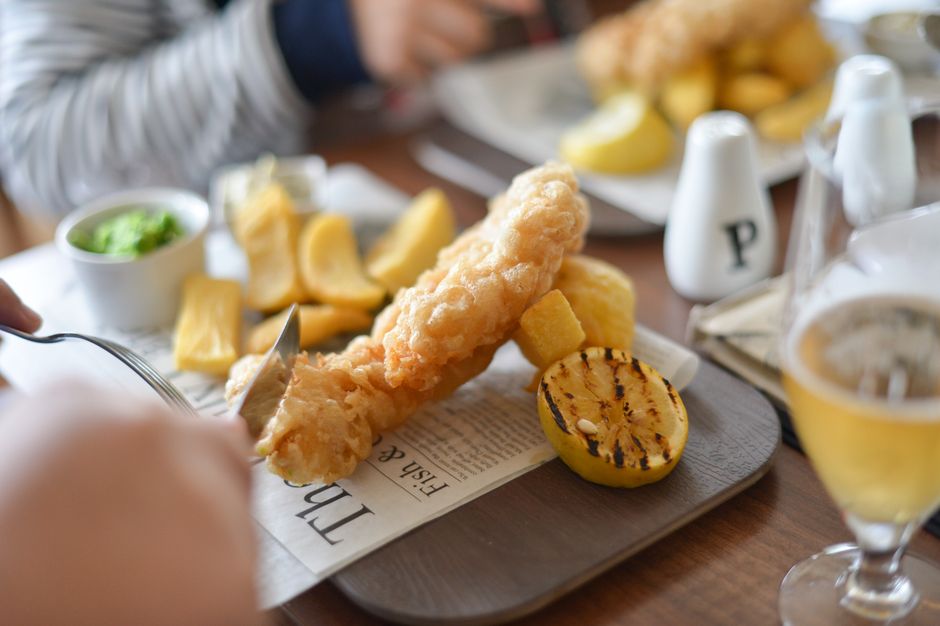
A cold, carbonated batter with cornstarch mixed into the flour fries up thin and shatteringly crisp instead of doughy, and frying the potatoes twice, once low to cook them through and once hot to crisp the outside, gives chips a fluffy interior with a firm crust.
- Prep
- 30 min
- Cook
- 40 min
- Total
- 70 min
- Servings
- 4
Ingredients
- 2 lbs russet potatoes, peeled and cut into 1/2-inch-thick chips
- 1 1/2 lbs cod or haddock fillets, skinless
- 1 1/2 cups all-purpose flour
- 1/4 cup cornstarch
- 1 tsp baking powder
- 1 cup cold beer (lager or pale ale)
- 1 1/2 tsp salt
- 8 cups vegetable oil, for frying
- 2 tbsp malt vinegar, for serving
Nutrition per serving
- Calories
- 542
- Protein
- 14g
- Carbs
- 57g
- Fat
- 29g
Based on the recipe as written, one serving. Recalculates if you swap an ingredient above. An estimate only, exact values depend on the specific ingredients used.
Need different units or a different yield? Try our Conversion Calculator →
Instructions
- 1Cut the potatoes into 1/2-inch-thick chips and soak them in cold water for at least 30 minutes to pull out surface starch; drain and pat completely dry.
- 2Heat oil to 300°F (150°C) in a deep pot or fryer. Fry the chips in batches for 5-6 minutes, just until they're tender but still pale, then lift out and drain on a wire rack.
- 3Raise the oil temperature to 375°F (190°C) for the second fry.
- 4Meanwhile, whisk together the flour, cornstarch, baking powder, and 1 teaspoon of the salt in a large bowl. Pour in the cold beer and whisk just until combined; the batter should be lumpy, not smooth, don't overmix.
- 5Pat the fish fillets dry and season both sides with the remaining salt.
- 6Dip each fillet into the batter, letting excess drip off, and lower it gently into the 375°F oil.
- 7Fry the fish in batches of two, without crowding the pot, for 6-8 minutes per batch, flipping once, until deep golden brown and the batter is crisp. Drain on a wire rack, not paper towels, so the underside stays crisp.
- 8Once all the fish is done, return the chips to the 375°F oil for a second fry, about 2-3 minutes, until deeply golden and crackling-crisp on the outside.
- 9Season the chips with salt immediately after draining.
- 10Serve the fish and chips right away with malt vinegar, lemon wedges, and tartar sauce on the side.
Tips & variations
- Soaking the cut potatoes in cold water rinses off surface starch that would otherwise make the chips gummy instead of fluffy inside.
- Sparkling water can replace the beer for a nonalcoholic batter with nearly the same lightness.
- Thicker fillets (over 1 inch) may need an extra minute or two per side; check that the flesh flakes easily and is opaque all the way through.
- A splash of vodka added to the batter in place of some of the liquid crisps the crust even further, since alcohol evaporates faster than water.
Storage & reheating
Fish and chips are best eaten hot and fresh, the batter softens as it sits. Leftovers keep in the refrigerator for up to 2 days; reheat in a 425°F (220°C) oven on a wire rack for 8-10 minutes to recrisp, rather than microwaving, which turns the batter soft and chewy.
Tips from the Tulo kitchen
- A clip-on candy thermometer on the fryer pot takes the guesswork out of hitting 300°F and 375°F, both temperatures matter for the chips to turn out right.
- Salt the chips the moment they come out of the oil, while they're still glistening; salt won't stick once they cool and dry slightly.
FAQ
What's the best fish for fish and chips?
Firm, mild white fish works best: cod, haddock, and pollock are the classic choices because they hold together in the batter and flake cleanly without falling apart.
Why fry the chips twice?
The first, lower-temperature fry cooks the potato through without browning it; the second, hotter fry crisps the exterior. Skipping the first fry leaves the chips pale and undercooked in the middle by the time the outside browns.
Can I make the batter without beer?
Yes, cold sparkling water or club soda works as a 1:1 substitute and gives a similarly light, crisp coating without the beer flavor.
Why does my batter fall off the fish?
This usually means the fish wasn't patted dry before dipping, or the oil wasn't hot enough when the fish went in, so the batter didn't seal and crisp immediately on contact.