Haddock Fish and Chips

Ice-cold beer batter forms steam pockets as it hits hot oil, which is what makes the crust craggy and light instead of dense; a cornstarch-flour blend keeps that crust crisp longer than flour alone, and parboiling the chips before frying sets a fluffy interior so the second fry only has to build the crust.
- Prep
- 25 min
- Cook
- 35 min
- Total
- 1 hr
- Servings
- 4
Ingredients
- 4 6-oz fillets haddock fillets, skinless
- 2 lbs russet potatoes
- 1 1/2 cups all-purpose flour
- 1/4 cup cornstarch
- 1 cup cold lager or pale ale
- 1 tsp baking powder
- 1 1/2 tsp salt
- 1/2 tsp black pepper
- 8 cups vegetable oil, for frying
- 1/4 cup malt vinegar
- 1/2 cup flour, for dredging
Nutrition per serving
- Calories
- 794
- Protein
- 38g
- Carbs
- 93g
- Fat
- 30g
Based on the recipe as written, one serving. Recalculates if you swap an ingredient above. An estimate only, exact values depend on the specific ingredients used.
Need different units or a different yield? Try our Conversion Calculator →
Instructions
- 1Peel the potatoes and cut into 1/2-inch thick chips. Soak in cold water for at least 30 minutes to pull out surface starch, then drain and pat completely dry.
- 2Bring a large pot of salted water to a boil. Add the chips and parboil for 4-5 minutes, until the edges just start to soften but the chips still hold their shape. Drain and spread on a tray lined with paper towels to dry fully, at least 10 minutes.
- 3Pour the oil into a large heavy pot or deep fryer and heat to 325°F (163°C). Fry the chips in batches for 4-5 minutes each, until pale gold and cooked through but not browned. Lift out and drain on a wire rack.
- 4Raise the oil temperature to 375°F (190°C).
- 5Whisk together the flour, cornstarch, baking powder, salt, and pepper in a large bowl. Pour in the cold beer and whisk just until smooth, a few lumps are fine. The batter should coat the back of a spoon in a thin, even layer.
- 6Pat the haddock fillets dry with paper towels. Season with salt and pepper, then dredge each fillet lightly in the extra flour, shaking off the excess.
- 7Dip a fillet into the batter, letting the excess drip off for a second, then lower it gently into the hot oil away from you. Repeat with one or two more fillets, frying in batches so the oil temperature doesn't drop.
- 8Fry the haddock for 6-7 minutes, turning once halfway through, until the crust is deep golden brown and crisp and the fish flakes easily. Lift out with a spider or slotted spoon and drain on a wire rack set over a tray.
- 9Return the parcooked chips to the 375°F (190°C) oil and fry for 2-3 minutes, until deep golden and crisp. Drain and season immediately with salt.
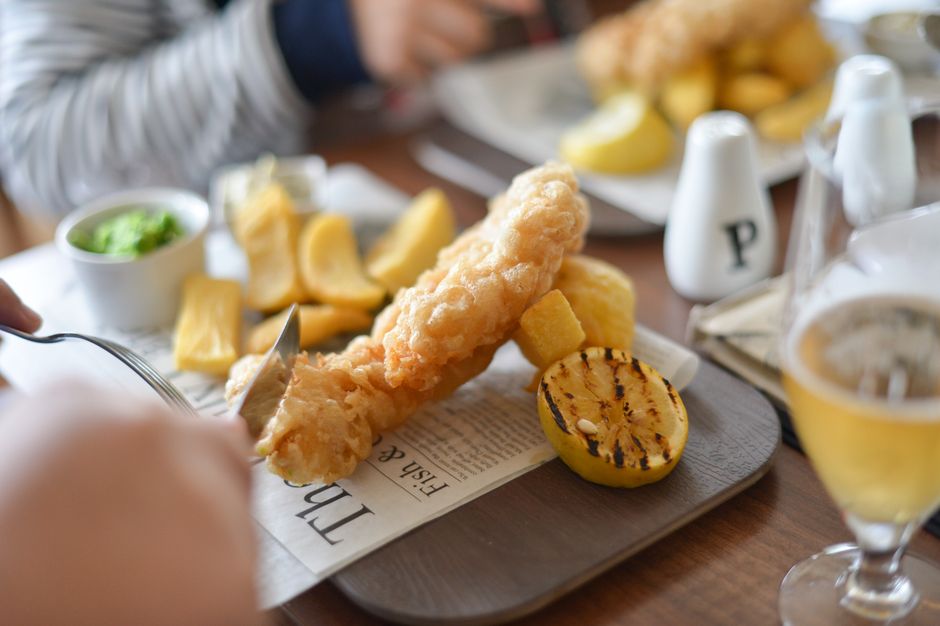
- 10Serve the haddock and chips hot, with malt vinegar and lemon wedges on the side.
Tips & variations
- Cod is the closest substitute for haddock if it's not available, use the same batter and timing.
- Swap half the beer for sparkling water if serving to anyone who wants a lighter, less bready crust.
- Add a pinch of cayenne or smoked paprika to the batter for a subtle background heat that doesn't compete with the malt vinegar.
- A deep-fry or candy thermometer is worth using here, guessing at oil temperature is the most common cause of greasy or underdone results.
Storage & reheating
Fried fish and chips are best eaten immediately, the batter softens quickly once it sits. Leftovers can be refrigerated in an airtight container for up to 2 days; reheat in a 400°F (200°C) oven on a wire rack for 8-10 minutes to recrisp, not in the microwave, which turns the crust soft and chewy.
Tips from the Tulo kitchen
- Letting the cut chips soak in cold water rinses off surface starch that would otherwise make them stick together and brown unevenly.
- Fry in small batches of two or three fillets at a time; overcrowding the pot drops the oil temperature and results in greasy, pale batter instead of a crisp one.
FAQ
Why did my batter fall off the fish?
This usually means the fish was wet or wasn't dredged in flour before dipping. Pat the fillets fully dry and coat them in a thin layer of flour first so the wet batter has something to grip.
What oil is best for frying fish and chips?
A neutral oil with a high smoke point, like vegetable, canola, or peanut oil, holds up best at the 325-375°F range this recipe needs without breaking down or adding off flavors.
Can I make the batter ahead of time?
Mix the dry ingredients ahead, but whisk in the cold beer only right before frying. Batter that sits too long loses its carbonation and fries denser and less crisp.
How do I know the oil is hot enough without a thermometer?
Drop a small cube of bread into the oil; at 375°F (190°C) it should turn golden brown in about 30-40 seconds. If it browns faster, the oil is too hot and will scorch the batter before the fish cooks through.