Hibachi-Style Vegetables and Noodles
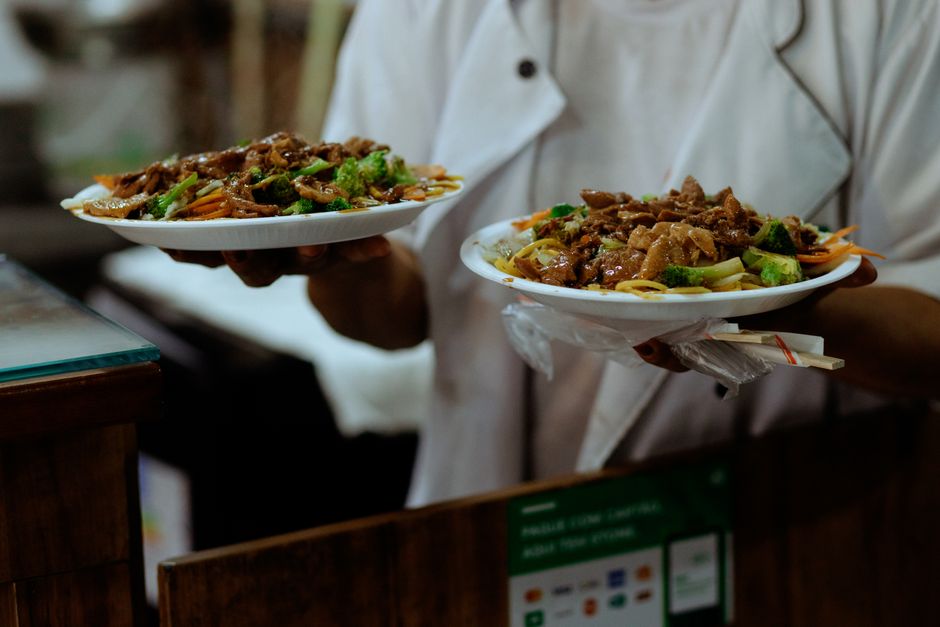
A screaming-hot flat top sears the vegetables' cut surfaces before they release enough water to steam, so they end up lightly charred and still crisp instead of soggy. Cooking the noodles separately from the vegetables and combining them only at the very end, with butter and soy poured directly onto the hot surface, gives the glaze a chance to reduce and cling instead of just pooling underneath everything.
- Prep
- 15 min
- Cook
- 15 min
- Total
- 30 min
- Servings
- 4
Ingredients
- 12 oz yakisoba or lo mein noodles, cooked and cooled
- 2 medium zucchini, halved lengthwise and sliced into half-moons
- 1 large yellow onion, sliced
- 3 cups green cabbage, roughly chopped
- 1 large carrot, julienned or thinly sliced
- 5 tbsp unsalted butter, divided
- 5 tbsp soy sauce, divided
- 3 cloves garlic, minced
- 3 tbsp neutral oil, such as vegetable or avocado oil
- 1 tbsp toasted sesame oil
- 3 stalks green onions, sliced, for garnish
- 1 tbsp toasted sesame seeds, for garnish
Nutrition per serving
- Calories
- 905
- Protein
- 26g
- Carbs
- 133g
- Fat
- 33g
Based on the recipe as written, one serving. Recalculates if you swap an ingredient above. An estimate only, exact values depend on the specific ingredients used.
Need different units or a different yield? Try our Conversion Calculator →
Instructions
- 1Heat a Blackstone or other flat-top griddle over high heat for 5 minutes until it's smoking hot across the whole surface, then divide it into two cooking zones.
- 2Drizzle 2 tablespoons of neutral oil onto one zone. Add the noodles and let them sit undisturbed for 1-2 minutes to pick up some char on the bottom, then toss and push to the cooler edge of the griddle.
- 3Add the remaining 1 tablespoon of oil to the hot zone. Add the zucchini and onion in a single layer and let them sear undisturbed for 2 minutes before tossing.
- 4Add the cabbage and carrot to the same zone. Cook, tossing with two spatulas every 30-60 seconds, for 4-5 minutes, until the cabbage is wilted at the edges and the zucchini is tender but still holds its shape.
- 5Push the vegetables into a mound and clear a bare patch of griddle next to them. Add the minced garlic to the bare patch and cook for 15-20 seconds until fragrant, then stir it into the vegetables.
- 6Pull the noodles over to join the vegetables. Add 4 tablespoons of the butter directly onto the griddle in small pats scattered under the pile, followed by 4 tablespoons of the soy sauce poured straight onto the hot surface.
- 7Toss everything together with the spatulas, scraping up the browned bits from the griddle, until the noodles turn glossy and the butter and soy have reduced into a light glaze, about 1-2 minutes.
- 8Drizzle with the sesame oil and remaining 1 tablespoon of soy sauce, toss once more, and taste for seasoning.
- 9Transfer to plates and top with sliced green onions and sesame seeds. Serve immediately.
Tips & variations
- Cut all the vegetables to a similar size before starting; hibachi cooking moves fast, and uneven pieces mean some are burnt while others are still raw.
- Fresh yakisoba noodles from the refrigerated section give the most authentic texture, but any cooked and cooled wheat noodle, including spaghetti, works in a pinch.
- For a heartier version, push the vegetables aside and sear cubed chicken thigh or shrimp in the cleared space before combining everything.
- Bean sprouts or shredded napa cabbage can be swapped in for some of the green cabbage for a lighter crunch.
Storage & reheating
Refrigerate leftovers in an airtight container for up to 3 days. Reheat in a hot skillet or on the griddle with a splash of water or extra soy sauce for 2-3 minutes; microwaving works but softens the vegetables further.
Tips from the Tulo kitchen
- Cook the noodles and let them cool or even chill briefly before griddling; warm, freshly boiled noodles clump and steam rather than pick up char.
- Keep a squeeze bottle of water nearby to deglaze any stuck-on soy sauce residue between batches if cooking a double portion.
FAQ
Can I make this without a Blackstone griddle?
Yes. A large cast-iron skillet or carbon-steel pan works, but cook the vegetables in smaller batches so they stay in a single layer and actually sear instead of steaming in a crowded pan.
Why do my hibachi vegetables turn out soggy?
Overcrowding the cooking surface is the usual cause. Vegetables release water as they heat, and if there's no room for it to evaporate quickly, they braise in their own liquid instead of charring.
What noodles work best for hibachi-style noodles?
Fresh refrigerated yakisoba or lo mein noodles hold up best to high heat and tossing. Dried noodles cooked al dente and rinsed in cold water are a reliable substitute.
Can this be made vegan?
Swap the butter for a plant-based butter or additional neutral oil; the soy sauce and sesame oil are already vegan, so the glaze flavor stays close to the original.