Homemade Mayonnaise Recipe
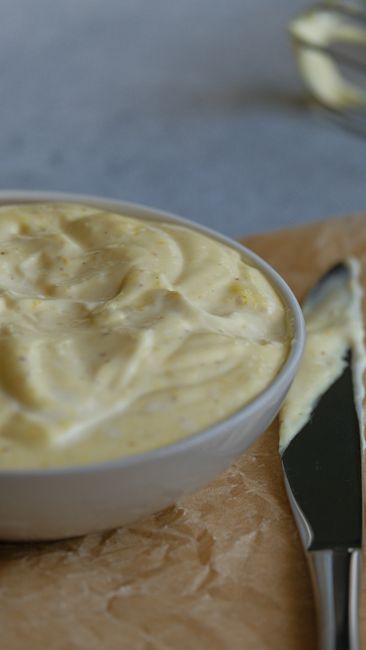
Mayonnaise is an emulsion of egg yolk, oil, and an acid, whisking the yolk with lemon juice first builds a stable base, then adding oil slowly lets the yolk's lecithin bind thousands of tiny oil droplets into a thick, glossy sauce. Because the classic formula contains no milk, cream, or butter, mayo is naturally dairy-free from the start.
- Prep
- 10 min
- Cook
- 0 min
- Total
- 10 min
- Servings
- 8
Ingredients
- 1 large egg yolk, large
- 1 cup neutral oil (such as light olive oil or avocado oil)
- 1 tbsp lemon juice
- 1 tsp Dijon mustard
- 1/4 tsp salt
Nutrition per serving
- Calories
- 249
- Protein
- 0g
- Carbs
- 0g
- Fat
- 28g
Based on the recipe as written, one serving. Recalculates if you swap an ingredient above. An estimate only, exact values depend on the specific ingredients used.
Need different units or a different yield? Try our Conversion Calculator →
Instructions
- 1In a medium bowl, whisk together the egg yolk, Dijon mustard, and half the lemon juice until pale and slightly thickened, about 30 seconds.
- 2Set the bowl on a damp kitchen towel to keep it from sliding, then begin adding the oil about a teaspoon at a time, whisking constantly until each addition is fully absorbed before adding the next.
- 3Once about a quarter of the oil is incorporated and the mixture looks thick and glossy, switch to pouring the remaining oil in a slow, steady stream while whisking nonstop, this is the point where the emulsion locks in and stays stable.
- 4Whisk in the remaining lemon juice and the salt until fully blended.
- 5Taste and adjust the seasoning; if the mayonnaise is thicker than you'd like, whisk in cold water a teaspoon at a time to loosen it.
- 6Transfer to an airtight container and refrigerate for at least 30 minutes before serving so the flavor settles.
Tips & variations
- Use a room-temperature egg yolk and oil rather than cold ones straight from the fridge, cold ingredients emulsify less reliably and are more prone to separating.
- Stick with a mild, light-tasting oil like light olive oil, avocado oil, or a neutral vegetable oil, extra-virgin olive oil turns bitter and grassy once whisked into an emulsion.
- Swap the lemon juice for white wine vinegar or rice vinegar for a sharper, more classic mayo tang.
- Add a small clove of raw garlic, mashed to a paste, along with the mustard for a quick aioli-style variation.
Storage & reheating
Because this mayonnaise is made with raw egg yolk, keep it in an airtight container in the refrigerator and use it within 1 week. It doesn't freeze well since freezing breaks the emulsion and leaves the sauce watery and separated once thawed.
Tips from the Tulo kitchen
- If a broken batch separates into a thin, curdled-looking mixture, whisk a fresh egg yolk in a clean bowl and slowly whisk the broken mayo into it to rebuild the emulsion.
- Resting the mixing bowl on a damp towel frees up a hand to pour the oil steadily while whisking with the other, which matters more than any specific tool for getting a smooth result.
FAQ
Does mayo have dairy?
No. Traditional mayonnaise is an emulsion of egg yolk, oil, and an acid like lemon juice or vinegar, it contains no milk, cream, butter, or other dairy ingredients by classic formula. Some flavored or reduced-fat commercial brands do add milk-derived ingredients like casein or whey as stabilizers, so it's worth checking the label if you're avoiding dairy strictly.
Is mayonnaise vegan?
No, standard mayonnaise relies on egg yolk to form its emulsion, so even though it's dairy-free, it isn't vegan. Vegan mayo substitutes aquafaba or soy protein for the egg yolk to build the same emulsified texture.
Is homemade mayo safe for someone with a milk allergy?
Yes, mayo made from just egg yolk, oil, and an acid contains no milk proteins and is generally safe for milk allergies. Store-bought jars vary by brand, so always scan the ingredient label for casein, whey, or milk solids before serving to someone with a dairy allergy.
Why did my homemade mayonnaise turn out thin or separated?
This happens when oil is added too quickly before the emulsion has a chance to build, or when the oil and egg are too cold. Start over with a fresh yolk in a clean bowl and slowly whisk the separated mixture into it a little at a time to bring it back together.