Miso-Glazed Eggplant (Nasu Dengaku) Recipe
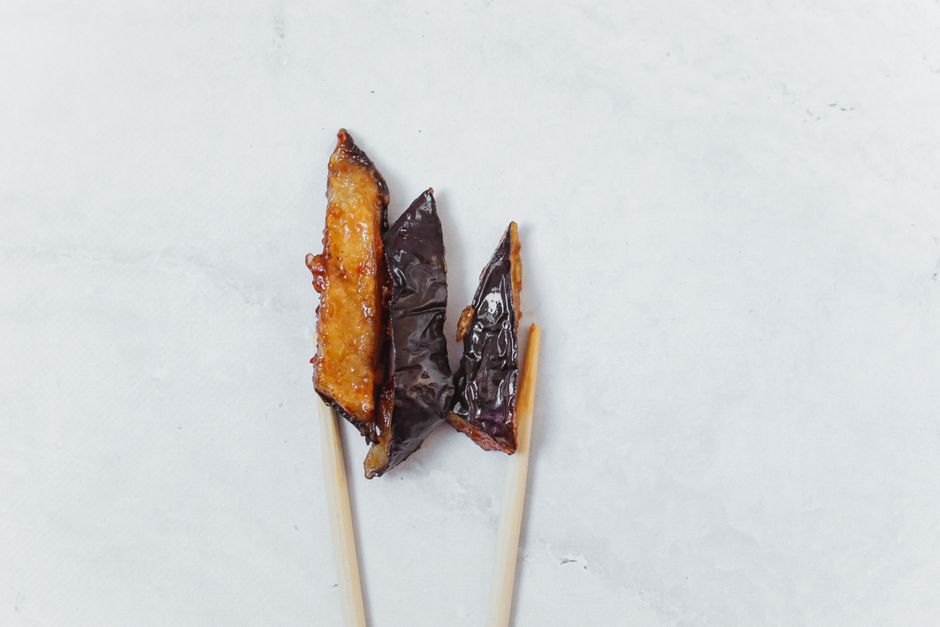
Scoring and pre-cooking the eggplant flesh before broiling lets it soften all the way through, so the miso glaze on top has time to caramelize under the broiler without the eggplant underneath staying raw.
- Prep
- 15 min
- Cook
- 20 min
- Total
- 35 min
- Servings
- 4
Ingredients
- 2 medium Japanese or Italian eggplants, halved lengthwise
- 3 tbsp neutral oil, such as vegetable or grapeseed
- 3 tbsp white or yellow miso paste
- 2 tbsp mirin
- 1 tbsp sake
- 1 tbsp sugar
- 1 tsp toasted sesame seeds, for garnish
- 1 stalk scallion, thinly sliced, for garnish
Need different units or a different yield? Try our Conversion Calculator →
Instructions
- 1Score the cut side of each eggplant half in a crosshatch pattern, cutting about halfway into the flesh without piercing the skin.
- 2Brush the cut sides generously with oil.
- 3Heat a skillet over medium heat and cook the eggplant halves, cut-side down, for 6-8 minutes, until the flesh is golden and mostly tender.
- 4Meanwhile, whisk together the miso, mirin, sake, and sugar in a small saucepan and warm over low heat, stirring, until smooth and slightly thickened, about 2 minutes.
- 5Flip the eggplant so the cut side faces up and transfer to a baking sheet.
- 6Spread a generous layer of the miso glaze over the cut side of each half.
- 7Broil 3-5 minutes, watching closely, until the glaze is bubbling and caramelized in spots.
- 8Garnish with sesame seeds and scallion before serving.
Tips & variations
- Red miso makes a deeper, saltier glaze than white miso, cut the sugar back slightly if you use it.
- No broiler? A 450°F oven works, it just takes a few extra minutes to caramelize the glaze.
- Add a small pat of butter to the glaze for a rounder, less sharply savory finish.
Storage & reheating
Refrigerate leftovers in an airtight container for up to 3 days. Reheat under the broiler for a couple minutes to recrisp the glaze, a microwave will heat it through but leaves the top soft.
Nutrition
A moderate-sodium, vegetable-forward dish with a modest amount of natural sugar from the mirin and glaze.
Tips from the Tulo kitchen
- Watch the broiler closely in the last couple minutes, miso has enough sugar in it that it goes from caramelized to burnt quickly.
- Score deeply but stop short of cutting through the skin, the skin holds the eggplant half together as it softens.
FAQ
What kind of miso should I use for nasu dengaku?
White (shiro) miso is traditional and gives a milder, sweeter glaze. Red or mixed miso works too and produces a saltier, more intense flavor, just scale back the sugar slightly.
Can I make this without sake or mirin?
Mirin's sweetness is hard to replace, but in a pinch you can use a mix of rice vinegar and a little extra sugar for both mirin and sake, the flavor will be a bit flatter but still good.
What kind of eggplant works best for this recipe?
Japanese or Chinese eggplants are ideal, they're smaller and less seedy than globe eggplants. Regular globe eggplant works too, just cut it into thick rounds instead of halves.