Miso Soup Recipe
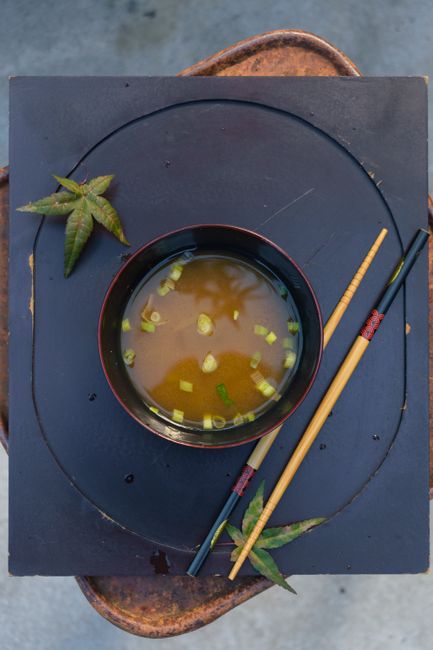
Pulling the kombu out just before the water boils avoids the bitterness it releases at a hard boil, and whisking the miso in off the heat at the very end preserves its delicate aroma and living cultures, which a hard boil would cook away.
- Prep
- 10 min
- Cook
- 15 min
- Total
- 25 min
- Servings
- 4
Ingredients
- 4 cups water
- 1 piece (4-inch) kombu (dried kelp)
- 1 cup katsuobushi (bonito flakes)
- 4 tbsp miso paste
- 7 oz silken tofu, cubed
- 1 tbsp dried wakame seaweed
- 1 whole scallion, thinly sliced
Need different units or a different yield? Try our Conversion Calculator →
Instructions
- 1Combine the water and kombu in a pot and let it soak 20-30 minutes if time allows.
- 2Heat the pot over medium heat and remove the kombu just before the water reaches a boil.
- 3Add the katsuobushi, bring to a boil, then immediately turn off the heat and let it steep 5 minutes.
- 4Strain the dashi through a fine sieve into a clean pot, discarding the solids.
- 5Soak the dried wakame in a small bowl of water for 5 minutes to rehydrate, then drain.
- 6Bring the dashi back to a gentle simmer and add the tofu and wakame.
- 7Ladle a little hot dashi into a small bowl with the miso paste and whisk until smooth.
- 8Remove the pot from the heat and stir the dissolved miso back into the soup.
- 9Garnish with sliced scallion and serve immediately.
Tips & variations
- Instant dashi granules are a fine substitute if kombu and katsuobushi aren't on hand, use about 1 teaspoon dissolved in the water.
- White (shiro) miso gives a milder, sweeter soup; red (aka) miso is saltier and more assertive, mix the two for a balanced flavor.
- Swap tofu and wakame for thinly sliced mushrooms, clams, or leftover cooked greens.
Storage & reheating
Refrigerate up to 2 days; the tofu texture softens over time. Reheat gently over low heat and avoid boiling, which mutes the miso's flavor.
Nutrition
A light, savory soup, moderate in protein from the tofu and generally low in fat and carbohydrates.
Tips from the Tulo kitchen
- Never let the soup boil hard once the miso is in, high heat dulls its flavor and can make it taste flat and overly salty.
- Cut the tofu gently and add it late so the cubes don't break apart while simmering.
FAQ
What's the difference between white and red miso?
White miso is fermented for a shorter time and tastes milder and slightly sweet, while red miso ferments longer and is saltier and more pungent. Many cooks blend the two for a balanced everyday soup.
Can I make miso soup without dashi?
You can use plain water or vegetable stock, but the soup will taste noticeably flatter, dashi's savory depth is really what defines the dish. Instant dashi granules are the easiest shortcut.
Why shouldn't miso soup boil?
Miso is a fermented, living ingredient, and prolonged high heat cooks off some of its aroma and beneficial cultures while also making the flavor taste flatter and more one-note.