Pastina Recipe
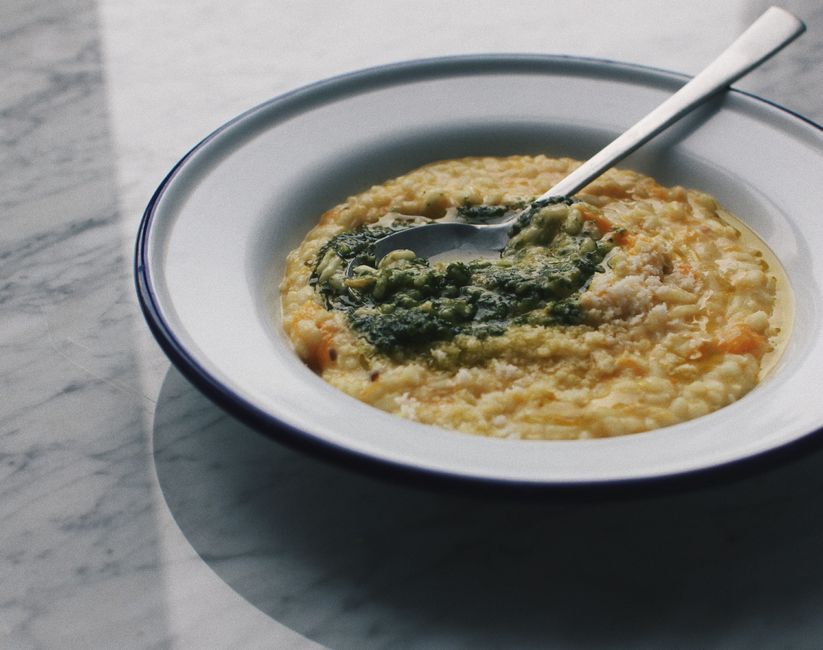
Simmering the tiny pasta directly in broth instead of water lets it absorb savory flavor as it cooks and releases just enough starch to turn the liquid thick and creamy on its own, no separate sauce needed. A beaten egg stirred in at the end, off the heat, sets into soft ribbons that add richness the way it does in egg drop soup or stracciatella.
- Prep
- 5 min
- Cook
- 15 min
- Total
- 20 min
- Servings
- 4
Ingredients
- 1 cup pastina (acini di pepe or stelline)
- 4 cups chicken broth
- 2 tablespoons unsalted butter
- 1 large egg, beaten
- 1/3 cup parmesan cheese, grated, plus more for serving
- 1/4 teaspoon black pepper
- 1/4 teaspoon salt, to taste
Nutrition per serving
- Calories
- 280
- Protein
- 12g
- Carbs
- 35g
- Fat
- 9g
Based on the recipe as written, one serving. Recalculates if you swap an ingredient above. An estimate only, exact values depend on the specific ingredients used.
Need different units or a different yield? Try our Conversion Calculator →
Instructions
- 1Bring the chicken broth to a boil in a medium saucepan over high heat.
- 2Stir in the pastina, reduce the heat to medium, and cook, stirring often, for 5-7 minutes, until the pasta is tender and the broth has thickened to a loose, creamy consistency.
- 3Remove the pan from the heat. In a small bowl, whisk a few spoonfuls of the hot broth into the beaten egg to temper it, then stir the warmed egg mixture back into the pot.
- 4Stir in the butter and grated parmesan until melted and fully incorporated.
- 5Season with salt and black pepper to taste. Let sit for 1-2 minutes off the heat, it will continue to thicken as it cools slightly.
- 6Divide among bowls and top with extra grated parmesan.
Tips & variations
- Use homemade or a good low-sodium store-bought broth; since the broth is the main flavor base, a weak or overly salty one shows immediately.
- Skip the egg entirely for a simpler, dairy-forward version, or add two eggs for a richer, more custardy result.
- For a heartier bowl, stir in shredded rotisserie chicken or a handful of frozen peas during the last minute of cooking.
- Orzo or broken angel hair pasta both work as substitutes if pastina isn't available, though cook times will vary slightly.
Storage & reheating
Pastina thickens significantly as it cools and continues absorbing liquid in the fridge, so store leftovers in an airtight container for up to 3 days. Reheat gently on the stovetop with a splash of extra broth or water to loosen it back to a soupy consistency; it will look almost solid straight from the fridge, that's normal.
Tips from the Tulo kitchen
- If the pastina seizes up into a thick clump after chilling, a few tablespoons of hot broth stirred in over low heat brings it right back to a spoonable consistency.
- Grate the parmesan finely rather than using pre-shredded cheese, it melts into the broth much more smoothly.
FAQ
What exactly is pastina?
Pastina refers to any very small pasta shape, most commonly acini di pepe (tiny beads) or stelline (tiny stars), traditionally cooked in broth rather than boiled and drained like larger pasta.
Why is pastina called Italian penicillin?
It's the classic Italian dish given to sick or teething children and comforting anyone under the weather, similar to how chicken noodle soup is used in American households, because it's warm, mild, and easy to digest.
Can I make pastina without egg?
Yes. The butter and parmesan alone will still give a rich, creamy result; the egg mainly adds extra body and a slightly custardy texture.
Why did my pastina turn out gluey instead of creamy?
That usually means it sat too long after cooking without enough broth. Pastina keeps absorbing liquid even off the heat, so serve it promptly or thin it with a little extra hot broth just before eating.