
Raspberry Jam Recipe
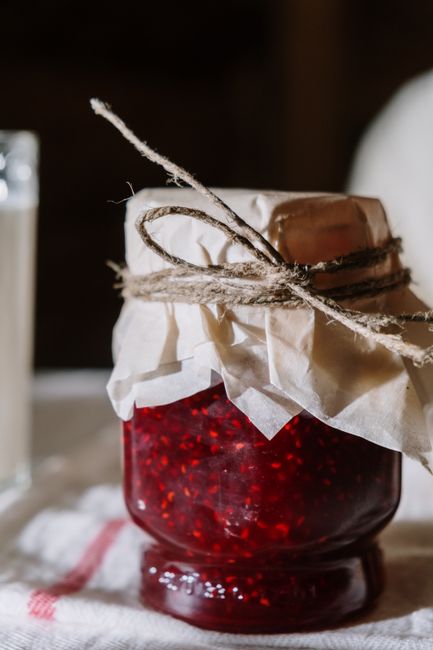
Raspberries are naturally high in pectin, especially in their seeds and slightly underripe fruit, so this recipe skips added pectin entirely and relies on a long enough simmer plus lemon juice's acidity to reach a firm, spreadable set without turning gummy or overly sweet.
- Prep
- 10 min
- Cook
- 25 min
- Total
- 35 min
- Servings
- 48
Ingredients
- 4 cups fresh or frozen raspberries
- 3 cups granulated sugar
- 2 tablespoons lemon juice
Nutrition per serving
- Calories
- 54
- Protein
- 0g
- Carbs
- 14g
- Fat
- 0g
Based on the recipe as written, one serving. Recalculates if you swap an ingredient above. An estimate only, exact values depend on the specific ingredients used.
Need different units or a different yield? Try our Conversion Calculator →
Instructions
- 1Put the raspberries in a wide, heavy-bottomed pot or Dutch oven and mash them roughly with a fork or potato masher, leaving some texture rather than pureeing completely.
- 2Stir in the sugar and lemon juice, then let the mixture sit at room temperature for 15 minutes so the sugar starts drawing juice out of the berries.
- 3Set the pot over medium-high heat and bring to a full, rolling boil, stirring often to keep the sugar from scorching on the bottom.
- 4Once boiling, reduce the heat slightly to maintain a steady simmer and cook for 15-20 minutes, stirring every couple of minutes and skimming off any foam that rises to the surface.
- 5Start testing for set around the 15-minute mark: drop a small spoonful onto a plate that's been chilled in the freezer, wait 1 minute, then push it with a finger. If it wrinkles and holds its shape rather than running back together, the jam is done.
- 6If it's still runny, keep simmering in 2-minute increments and retest, checking each time until it wrinkles properly.
- 7Remove from the heat and let the jam sit for 5 minutes to stop the vigorous bubbling, which helps prevent the fruit from floating to the top of the jars.
- 8Ladle into clean jars, leaving about 1/2 inch of headspace, and let cool to room temperature with the lids on loosely before sealing tightly and refrigerating.
Tips & variations
- If using frozen raspberries, no need to thaw first, just add a few extra minutes to the initial time it takes to reach a boil.
- For a seedless jam, push the mashed berries through a fine-mesh sieve before adding sugar, though this will reduce the yield by about a third.
- Bottled lemon juice gives a more consistent acidity than fresh-squeezed if the jam will be processed for shelf storage rather than refrigerated.
- Swap up to half the raspberries for blackberries or strawberries for a mixed berry version; the pectin level will still be enough to set without added pectin.
- Don't double this recipe in the same pot. Large batches take much longer to reach a boil, which overcooks the fruit before the sugar ratio is right, and often results in a jam that never fully sets.
Storage & reheating
Refrigerate sealed jars for up to 3 weeks. For longer storage, freeze in freezer-safe jars or containers (leaving room for expansion) for up to a year, and thaw in the refrigerator before using. For shelf-stable jam, process filled jars in a boiling water bath for 10 minutes, then store sealed jars in a cool, dark place for up to a year; once opened, refrigerate.
Tips from the Tulo kitchen
- Chill the test plate in the freezer before starting the jam, not partway through, so it's ready the moment the mixture looks close to set.
- Skimming the foam as it cooks, rather than all at once at the end, keeps the finished jam clearer and prevents a cloudy layer from forming on top once it cools.
FAQ
Do I need added pectin for raspberry jam?
No. Raspberries contain enough natural pectin, particularly in the seeds, to set on their own when cooked with sugar and a bit of lemon juice for acidity; added pectin just shortens the cooking time.
Why is my raspberry jam runny?
It likely wasn't cooked long enough to reach the setting point. Simmer it a few more minutes and retest with the cold-plate method; jam also thickens somewhat further as it cools completely.
Can I use frozen raspberries instead of fresh?
Yes, and there's no need to thaw them first. They release more liquid than fresh berries, so the mixture may need a few extra minutes at a boil to cook off the extra moisture before it reaches a set.
Does this jam need to be canned to be safe?
No, if it will be refrigerated and eaten within about 3 weeks. Only jars intended for long-term shelf storage need to be processed in a boiling water bath.
Can I reduce the sugar in this recipe?
Reducing sugar by up to about a quarter is generally fine, but sugar also acts as a preservative and helps the jam set, so cutting much more than that will produce a softer jam that spoils faster.