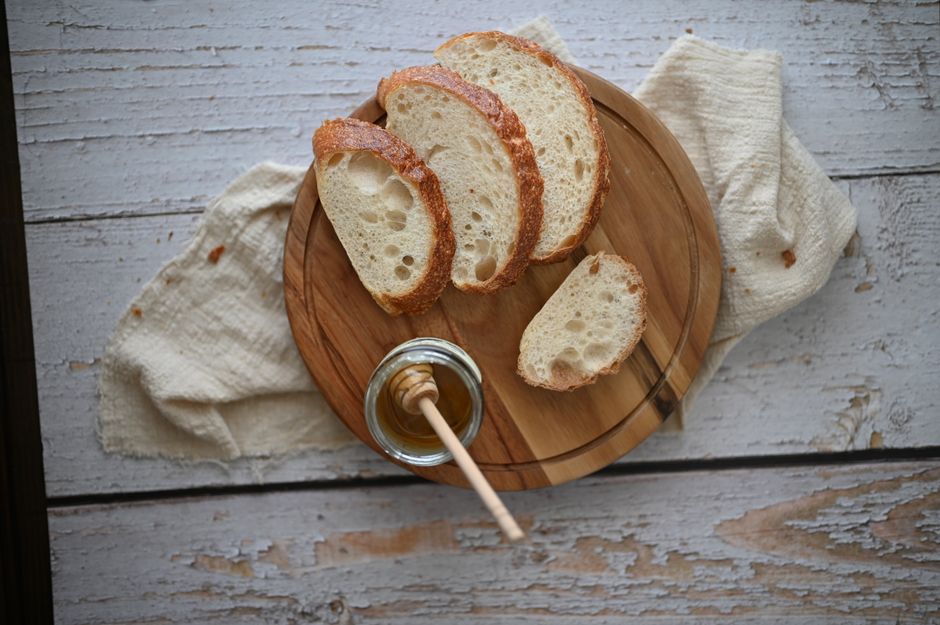
Sourdough Sandwich Bread Recipe
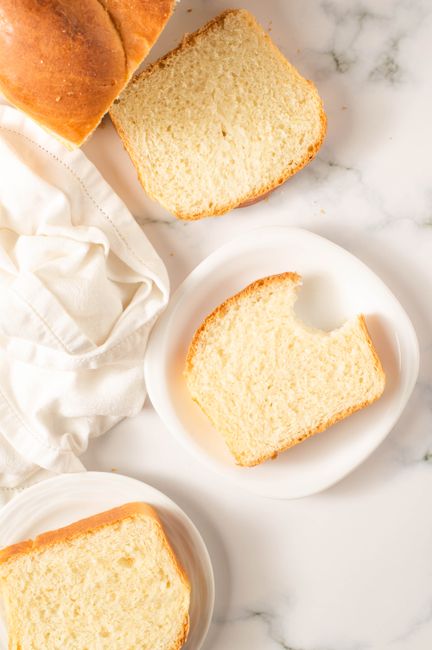
A portion of milk, butter, and honey softens the crumb and slows staling compared to a lean, crusty sourdough boule, while a long, cool bulk fermentation still gives the loaf real sourdough tang and structure. Baking it in a loaf pan instead of free-form keeps the crumb tight and even, which is what actually makes a sandwich loaf slice cleanly instead of tearing.
- Prep
- 30 min
- Cook
- 40 min
- Total
- 640 min
- Servings
- 12
Ingredients
- 1 cup active sourdough starter, fed and bubbly
- 3 1/2 cups bread flour
- 1/2 cup whole milk, warmed to lukewarm
- 2 tablespoons honey
- 3 tablespoons unsalted butter, softened
- 2 teaspoons fine sea salt
Nutrition per serving
- Calories
- 483
- Protein
- 16g
- Carbs
- 93g
- Fat
- 4g
Based on the recipe as written, one serving. Recalculates if you swap an ingredient above. An estimate only, exact values depend on the specific ingredients used.
Need different units or a different yield? Try our Conversion Calculator →
Instructions
- 1In a large bowl, whisk the fed sourdough starter, warm milk, and honey together until the honey dissolves.
- 2Add the bread flour and mix with a spatula or your hands until a rough, shaggy dough forms with no dry patches of flour left. Cover and let rest 30 minutes (this is an autolyse, which gives the flour time to fully hydrate before kneading).
- 3Add the salt and softened butter to the dough. Knead by hand or in a stand mixer with the dough hook for 8-10 minutes, until the dough is smooth, elastic, and pulls away cleanly from the sides of the bowl.
- 4Shape the dough into a ball, place it in a lightly oiled bowl, and cover tightly. Let it bulk ferment at room temperature (around 70-75°F) for 6-8 hours, or until it has roughly doubled and looks visibly puffy and domed.
- 5Turn the dough out onto a lightly floured surface and gently deflate it. Pat it into a rectangle roughly the width of your loaf pan, then roll it up tightly from one short end into a log, pinching the seam closed.
- 6Place the log seam-side down into a greased 9x5-inch loaf pan.
- 7Cover loosely and let the dough proof at room temperature for 2-3 hours, until it has risen about an inch above the rim of the pan and springs back slowly when poked.
- 8Near the end of proofing, preheat the oven to 375°F (190°C).
- 9Bake for 35-40 minutes, tenting the top loosely with foil after the first 20 minutes if it's browning quickly, until the loaf is deeply golden and sounds hollow when tapped on the bottom.
- 10Let the bread cool in the pan for 10 minutes, then turn it out onto a wire rack and cool completely, at least 1-2 hours, before slicing.
Tips & variations
- Use a starter that has been fed 4-8 hours earlier and is visibly domed and bubbly; a sluggish, unfed starter will slow both fermentation stages significantly.
- For a slightly sweeter, softer crumb closer to a classic sandwich loaf, increase the honey to 3 tablespoons and use whole milk rather than a lower-fat milk.
- If the kitchen runs cool, bulk fermentation can stretch to 10-12 hours; look for visual cues (doubled size, domed top, visible bubbles at the surface) rather than the clock.
- For a lighter crust color, tent the loaf with foil starting at the 15-minute mark instead of waiting until 20 minutes.
Storage & reheating
Store the fully cooled loaf in a bread bag or wrapped in a clean kitchen towel at room temperature for up to 3 days; a plastic bag will trap moisture and soften the crust faster but keeps the crumb fresher. For longer storage, slice the loaf and freeze in a zip-top bag for up to 3 months, then toast slices straight from the freezer. Avoid refrigerating sourdough bread, it dries out and stales faster in the fridge than at room temperature.
Tips from the Tulo kitchen
- A kitchen scale makes a real difference here since flour hydration affects both kneading time and how much the dough rises; weighing the flour and starter is far more consistent than scooping cups.
- If the dough feels sticky after kneading, resist adding more flour right away, sourdough sandwich dough is naturally a bit softer than lean bread dough and firms up during bulk fermentation.
FAQ
Can I make this without a stand mixer?
Yes. Hand-knead on a lightly floured counter for 10-12 minutes, using a slap-and-fold technique for the first few minutes if the dough feels very sticky, then switching to regular kneading once it firms up.
Why is my sourdough sandwich bread dense?
Dense sandwich loaves usually come from an underfed or weak starter, or from ending bulk fermentation too early. Look for a dough that's visibly doubled and domed, not just slightly puffed, before shaping.
Can I use discard instead of active starter?
No, this recipe relies on active, recently fed starter for both rise and structure. Unfed discard has much less leavening power and will produce a flat, gummy loaf.
Can I do a cold retard for more sourdough flavor?
Yes. After shaping, refrigerate the loaf pan overnight (8-12 hours) instead of proofing at room temperature, then let it sit out for 1-2 hours to finish rising before baking.