Tea Tasting Flight: A Guide to the Main Kinds of Tea

Each kind of tea comes from a different oxidation level or plant entirely, so a single water temperature and steep time can't do all of them justice. Brewing white, green, oolong, black, pu-erh, and herbal tea back to back, each at its own correct temperature, shows exactly how oxidation and leaf type change flavor, from grassy and delicate to malty and bold.
- Prep
- 10 min
- Cook
- 25 min
- Total
- 35 min
- Servings
- 6
Ingredients
- 1 tsp loose leaf white tea leaves (Silver Needle)
- 1 tsp loose leaf green tea leaves (sencha)
- 1 1/2 tsp loose leaf oolong tea leaves
- 1 tsp loose leaf black tea leaves (Assam or Ceylon)
- 1 tsp loose leaf pu-erh tea (loose or broken from a cake)
- 1 tbsp dried chamomile flowers (or other herbal blend)
- 36 fl oz filtered water, total across all six steeps
Nutrition per serving
- Calories
- 1
- Protein
- 0g
- Carbs
- 0g
- Fat
- 0g
Based on the recipe as written, one serving. Recalculates if you swap an ingredient above. An estimate only, exact values depend on the specific ingredients used.
Need different units or a different yield? Try our Conversion Calculator →
Instructions
- 1Set out six small cups or teapots, one for each kind of tea: white, green, oolong, black, pu-erh, and herbal (chamomile). Use a kettle with an adjustable temperature setting, or a simple thermometer, since each tea below needs its own water temperature to taste right.
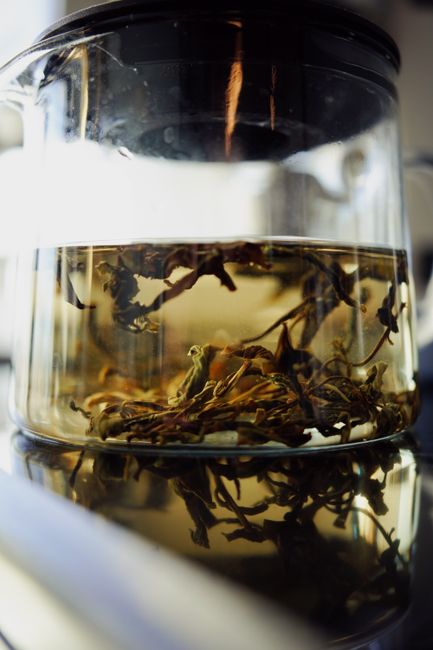
- 2Start with white tea, the most delicate of the six. Heat 6 fl oz (180 ml) of water to 175°F (80°C), pour it over 1 tsp Silver Needle leaves, and steep for 2 to 3 minutes. Strain into a cup and taste it first.
- 3Move to green tea next. Heat a fresh 6 fl oz of water to the same 175°F (80°C), pour over 1 tsp sencha leaves, and steep for exactly 2 minutes. Green tea turns bitter fast past that mark, so pull the leaves out on time.
- 4For oolong, heat water to 195°F (90°C), pour over 1.5 tsp oolong leaves, and steep 3 to 5 minutes depending on the roast, lighter oolongs need less time, darker roasted ones can take the full 5 minutes.
- 5For black tea, bring water closer to a full boil, 205°F (96°C), pour over 1 tsp black tea leaves, and steep 3 to 4 minutes.
- 6For pu-erh, rinse the 1 tsp of leaves first with a quick 10-second pour of hot water and discard that liquid, this washes off dust from the compressed cake and wakes the leaves up. Then pour fresh water at 208°F (98°C) over the rinsed leaves and steep 3 to 5 minutes.
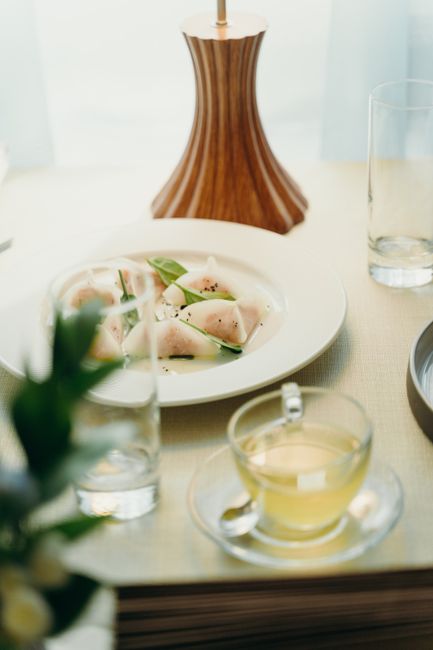
- 7Finish with the herbal tea last, since it has no actual tea leaf and won't compete with the others' caffeine or tannin on the palate. Pour full-boiling water, 212°F (100°C), over 1 tbsp dried chamomile flowers and steep 5 to 7 minutes to fully extract the floral flavor.
- 8Taste in the order poured, lightest to boldest, sipping plain water between each cup to reset the palate.
- 9Save any leaves worth a second steep. Oolong and pu-erh both hold up to two or three more infusions, each poured a little longer than the last.
Tips & variations
- Oolong sits on a spectrum from lightly oxidized (closer to green tea, floral and light) to heavily oxidized and roasted (closer to black tea, toasty and rich), so two oolongs can taste completely different even brewed the same way.
- Pu-erh comes in two styles: raw (sheng), which tastes grassy and sharp when young and mellows with age, and ripe (shou), which is fermented to taste earthy and smooth right away. Either works for this flight.
- Herbal blends like chamomile, peppermint, or hibiscus aren't technically tea at all since they contain no leaves from the Camellia sinensis plant, which is also why they're naturally caffeine-free.
- For a shortcut flight, skip white and pu-erh and just compare green, oolong, and black side by side, they show the clearest oxidation progression from light to dark.
Storage & reheating
Store each dry tea in an airtight tin or jar away from light, heat, and strong odors; leaf tea keeps its flavor for 6 to 12 months this way, with green and white tea fading faster than black or pu-erh. Brewed tea doesn't hold well and turns cloudy or flat within a few hours at room temperature; if there's extra, chill it right after steeping and drink it as iced tea within a day.
Tips from the Tulo kitchen
- Water that's too hard or heavily chlorinated can mute a tea's flavor no matter how carefully it's steeped; filtered water makes a noticeable difference, especially for delicate white and green tea.
- If a thermometer isn't handy, watch the kettle: water at a bare simmer with small bubbles just breaking the surface is close to 175 to 195°F, while a full rolling boil is 205 to 212°F.
FAQ
What actually makes white, green, oolong, black, and pu-erh different kinds of tea?
All four come from the same plant, Camellia sinensis, and the difference is how much the leaves are oxidized after picking. White tea is barely oxidized, green tea is unoxidized but heat-treated, oolong is partially oxidized, black tea is fully oxidized, and pu-erh is fermented and aged on top of that.
Is herbal tea really tea?
Not botanically. Herbal blends like chamomile or peppermint are infusions of flowers, herbs, or fruit and contain no Camellia sinensis leaf, which is also why they have no natural caffeine.
Which kind of tea has the most caffeine?
Black tea generally has the most caffeine per cup, followed by pu-erh, oolong, green, and then white, though brewing time and water temperature affect this as much as the tea type itself.
Can loose leaf tea be steeped more than once?
Yes, especially oolong and pu-erh, which can often be resteeped two or three times, with each infusion needing a slightly longer steep than the last as the leaves give up less flavor each round.
Why does pu-erh get rinsed before brewing but the other teas don't?
Pu-erh is aged and often stored as a compressed cake, so a short rinse clears away surface dust and any musty smell from storage before the real steep; the other teas are loose and fresh enough not to need it.