
Turkish Delight Recipe
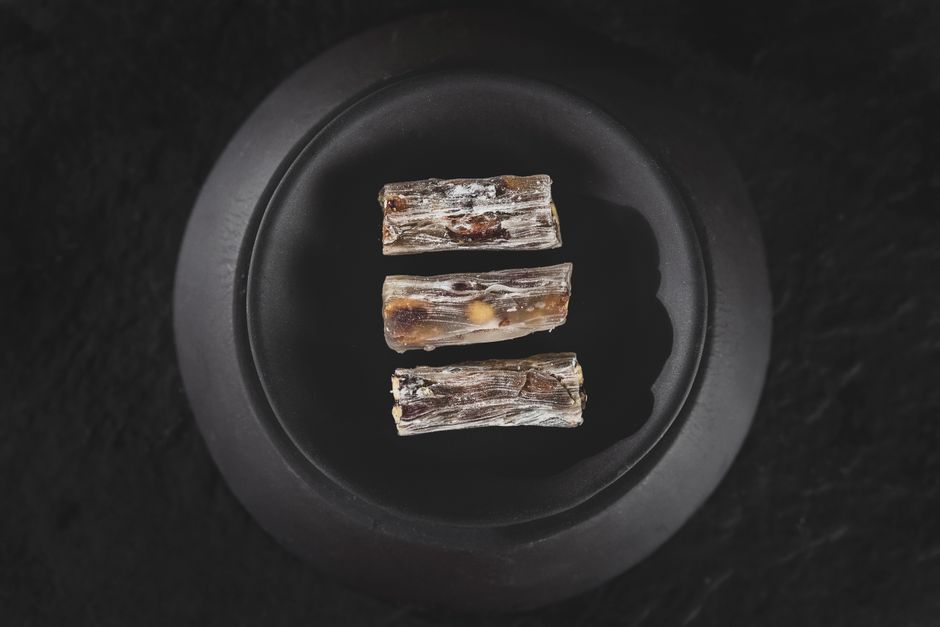
Cooking the cornstarch paste and sugar syrup together low and slow, rather than rushing the heat, is what gives real Turkish delight its signature chewy, sliceable set instead of a gluey or gritty texture, and no gelatin is needed since the cornstarch alone does the gelling.
- Prep
- 20 min
- Cook
- 70 min
- Total
- 330 min
- Servings
- 25
Ingredients
- 2 cups granulated sugar
- 1 1/2 cups water, divided
- 1 tbsp fresh lemon juice
- 1/4 tsp cream of tartar
- 1 1/4 cups cornstarch, divided (for the candy and for dusting)
- 1 tbsp rosewater
- 2 drops pink gel food coloring
- 1/2 cup shelled pistachios, chopped
- 1/2 cup powdered sugar, for dusting
Nutrition per serving
- Calories
- 110
- Protein
- 1g
- Carbs
- 25g
- Fat
- 1g
Based on the recipe as written, one serving. Recalculates if you swap an ingredient above. An estimate only, exact values depend on the specific ingredients used.
Need different units or a different yield? Try our Conversion Calculator →
Instructions
- 1Line an 8-inch square pan with parchment, leaving an overhang on two sides, and grease the parchment lightly with a neutral oil.
- 2In a saucepan, combine the granulated sugar, 3/4 cup (180ml) of the water, the lemon juice, and cream of tartar. Bring to a boil over medium-high heat, then reduce to a simmer and cook, without stirring, until a candy thermometer reads 240°F (115°C), the soft-ball stage.
- 3Meanwhile, in a separate heavy-bottomed pot, whisk 1 cup (120g) of the cornstarch with the remaining 3/4 cup (180ml) water until smooth. Cook over medium heat, whisking constantly, until it thickens into a smooth, glossy paste, about 3-4 minutes.
- 4With the cornstarch paste still over low heat, slowly pour in the hot sugar syrup in a thin stream, whisking constantly to keep the mixture smooth and lump-free.
- 5Reduce the heat to low and simmer the combined mixture gently, stirring often with a wooden spoon or heatproof spatula, for 45-55 minutes, until it turns pale golden, very thick, and pulls away cleanly from the sides of the pot.
- 6Stir in the rosewater and food coloring until evenly colored, then fold in the chopped pistachios, reserving a small handful for topping.
- 7Pour the mixture into the prepared pan and smooth the top with a greased spatula. Scatter the reserved pistachios over the surface and press lightly to adhere.
- 8Let the pan sit uncovered at room temperature for at least 4 hours, or overnight, until fully set and no longer tacky in the center.
- 9Mix the powdered sugar with the remaining 1/4 cup (30g) cornstarch. Dust a cutting board heavily with the mixture, turn the set candy out onto it, and peel off the parchment.
- 10Cut into 1-inch cubes with an oiled knife, then toss each piece in the powdered sugar mixture to coat on all sides before serving.
Tips & variations
- Swap the rosewater for orange blossom water for a citrusy version, or split the batch and flavor half of each for two colors.
- Toasting the pistachios in a dry skillet for 2-3 minutes before chopping brings out more flavor than using them raw.
- If citric acid is on hand, 1/4 teaspoon can replace the lemon juice for a slightly sharper, more traditional tang.
- For a nut-free version, omit the pistachios entirely; the texture and set are unaffected.
Storage & reheating
Store the cubes in an airtight container at room temperature, layering them with extra powdered sugar and cornstarch to keep them from sticking together, for up to 3 weeks. Skip the refrigerator, since the cold makes the sugar in the coating go grainy and the candy itself firmer than intended. Freezing is not recommended, as thawing draws out moisture and turns the texture gummy.
Tips from the Tulo kitchen
- A candy thermometer clipped to the side of the pot (not touching the bottom) gives a far more reliable soft-ball stage reading than timing alone.
- Keep the heat low once the syrup and starch paste are combined; a mixture that's boiling too hard will scorch on the bottom before the center fully thickens.
- If the finished candy seems too soft after a full night of setting, it likely needed a longer simmer; a second batch can be simmered 10-15 minutes longer to firm it up.
FAQ
Why is my Turkish delight too soft or won't set?
This almost always means the mixture wasn't simmered long enough after the syrup and cornstarch paste were combined. It should turn pale gold, pull cleanly from the sides of the pot, and mound thickly off a spoon before it goes into the pan.
Can I use gelatin instead of cornstarch?
Some modern shortcut recipes do, but gelatin-set versions have a springier, more jelly-like bite rather than the dense, slightly chewy texture cornstarch produces, which is the traditional method.
Is Turkish delight gluten-free?
Yes, when made the traditional way with cornstarch rather than wheat starch or flour, it's naturally gluten-free. Always check labels on store-bought versions, since some add wheat starch as filler.
Why does my Turkish delight stay sticky even after dusting?
Undercooking is the usual cause, since a properly cooked batch loses most of its surface tackiness on its own during the resting period, and the powdered sugar coating is meant to finish, not fix, that.