Vietnamese Sugarcane Shrimp (Chao Tom) Recipe
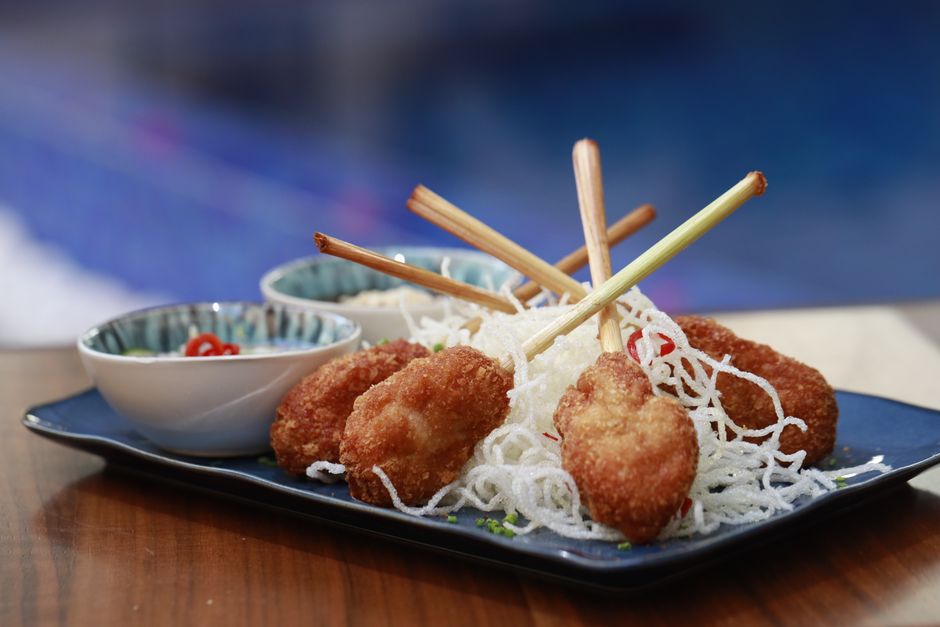
Chilling the shrimp before processing and folding in cornstarch and baking powder gives the paste the bouncy, springy texture that defines good chao tom, while the sugarcane stick itself caramelizes over direct heat, perfuming the shrimp with a smoky, faintly sweet edge you can't get from a regular skewer.
- Prep
- 35 min
- Cook
- 15 min
- Total
- 50 min
- Servings
- 6
Ingredients
- 1 lb shrimp, peeled and deveined
- 4 oz pork fatback, finely diced
- 3 cloves garlic, minced
- 1 medium shallot, minced
- 1 tbsp granulated sugar
- 2 tbsp fish sauce
- 1 tbsp cornstarch
- 1/2 tsp baking powder
- 12 pieces canned sugarcane sticks, drained and cut into 4-inch pieces
- 2 tbsp vegetable oil, for brushing
Nutrition per serving
- Calories
- 824
- Protein
- 21g
- Carbs
- 16g
- Fat
- 74g
Based on the recipe as written, one serving. Recalculates if you swap an ingredient above. An estimate only, exact values depend on the specific ingredients used.
Need different units or a different yield? Try our Conversion Calculator →
Instructions
- 1Pat the shrimp completely dry and chill in the freezer for 15 minutes along with the food processor bowl and blade.
- 2Pulse the cold shrimp with the garlic, shallot, sugar, fish sauce, cornstarch, and baking powder until it forms a sticky, slightly chunky paste, about 10-12 short pulses; don't run the machine continuously or the paste will turn watery.
- 3Transfer the paste to a bowl and fold in the diced pork fatback by hand until evenly distributed.
- 4Cover and refrigerate the paste for 20 minutes so it firms up and is easier to mold.
- 5Wet your hands, take about 2 tablespoons of paste, and mold it around the middle of each sugarcane stick, leaving both bare ends free for handling and turning.
- 6Brush each rolled skewer lightly with oil.
- 7Grill over medium-high heat, or pan-fry in a lightly oiled skillet, turning every 2-3 minutes, for 10-12 minutes total, until the shrimp paste is golden brown on all sides and the edges of the sugarcane start to char slightly.
- 8Serve warm with lettuce leaves, fresh herbs, and rice paper wrappers for building lettuce wraps, alongside a dipping sauce.
Tips & variations
- Look for canned sugarcane sticks packed in syrup near the Asian grocery's canned fruit or drink mixers; rinse off the syrup before using so the paste doesn't turn overly sweet.
- If pork fatback isn't available, unsalted butter, well chilled and finely diced, is a workable substitute, though the texture will be slightly softer.
- No grill or sugarcane on hand? Shape the same paste into small ovals around wooden skewers or just pan-fry as patties; the flavor holds up even without the sugarcane.
Storage & reheating
Store cooked skewers in an airtight container in the refrigerator for up to 2 days. Reheat in a 375°F (190°C) oven for about 8 minutes, or in a dry skillet over medium heat, until warmed through; microwaving tends to make the texture rubbery.
Tips from the Tulo kitchen
- Rubbing a little oil on your hands before shaping the paste keeps it from sticking to your palms.
- If the paste feels too loose to hold its shape on the stick, an extra 10 minutes in the freezer firms it up without changing the flavor.
FAQ
Can I eat the sugarcane stick itself?
The fibrous cane isn't meant to be swallowed. After eating the shrimp, it's traditional to chew on the cane briefly to release its sweet juice, then discard the fibers.
Why does the recipe use baking powder in the shrimp paste?
Baking powder raises the pH slightly, which helps the shrimp proteins bind more tightly during cooking, contributing to the dense, springy texture typical of Vietnamese shrimp pastes.
Can this be made without a food processor?
Yes, though it takes more effort: finely mince the shrimp by hand with a cleaver until it forms a rough paste, then mix in the remaining ingredients by hand.
What's a good dipping sauce to serve alongside?
A nuoc cham made from fish sauce, lime juice, sugar, water, and minced garlic and chile is the traditional pairing and cuts through the richness of the fatback.