Whole Roast Duck Recipe
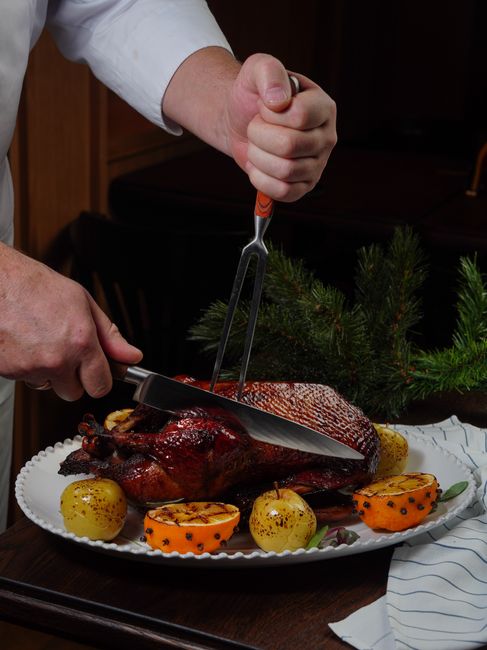
Pricking the skin and roasting low first gives the thick layer of fat under a duck's skin time to render out through the oven's full cook, so a final high-heat blast can crisp the skin without the bird drying out.
- Prep
- 20 min
- Cook
- 120 min
- Total
- 140 min
- Servings
- 4
Ingredients
- 5 lb whole duck
- 2 tsp salt
- 1 tsp black pepper
- 1 whole orange, quartered
- 1 medium onion, quartered
- 4 sprigs fresh thyme sprigs
- 1 head garlic head, halved crosswise
Need different units or a different yield? Try our Conversion Calculator →
Instructions
- 1Remove the duck from the refrigerator 30 minutes before roasting and pat it completely dry, inside and out.
- 2Prick the skin all over, especially over the breast and thighs, being careful not to pierce the meat underneath.
- 3Season the cavity with salt and pepper and stuff with the orange, onion, thyme, and garlic.
- 4Season the outside of the duck generously with salt and pepper and place breast-side up on a roasting rack set in a pan.
- 5Roast at 325°F (165°C) for 90 minutes, carefully spooning or pouring off the rendered fat from the pan every 30 minutes.
- 6Increase the oven temperature to 425°F (220°C) and roast 20-30 minutes more, until the skin is deeply browned and crisp and a thermometer in the thigh reads 165°F.USDA safe minimum for poultry: 165°F (74°C)
- 7Rest the duck for 15 minutes before carving.
Tips & variations
- Save every bit of the rendered fat that collects in the pan, strained and refrigerated it keeps for months.
- A five-spice rub or a honey-soy glaze brushed on in the last 15 minutes are both common variations on the classic orange-and-herb approach here.
- Use the carcass afterward for a rich stock, duck bones make an unusually good base.
Storage & reheating
Refrigerate carved meat in an airtight container for up to 4 days. Reheat gently in a 300°F oven, uncovered, which helps keep the skin from going soft the way covering or microwaving it would.
Nutrition
A rich source of protein; duck carries noticeably more fat than chicken, much of which renders into the pan during roasting.
Tips from the Tulo kitchen
- A roasting rack that lifts the duck above the pan drippings is what actually lets the skin crisp on all sides, a duck sitting in its own fat will steam on the bottom.
- Check the thigh, not the breast, for doneness, thigh meat needs to reach a higher temperature to be tender since it's a harder-working muscle.
FAQ
Why does duck take a two-stage roasting temperature?
The lower initial temperature gives the fat under the skin time to render out slowly without the outside burning, then the final high-heat stage crisps the now fat-free skin quickly.
Do I need to prick the skin before roasting?
Yes, this is what lets the rendered fat escape as it melts. Skip it and the fat stays trapped under the skin, leaving it soft rather than crisp.
How do I know when a whole duck is done?
Check the thigh with an instant-read thermometer, it should read 165°F. The breast will be a bit higher than a pan-seared duck breast alone since a whole roasted bird cooks all the way through.