
Macaroon vs. Macaron: What's the Difference?
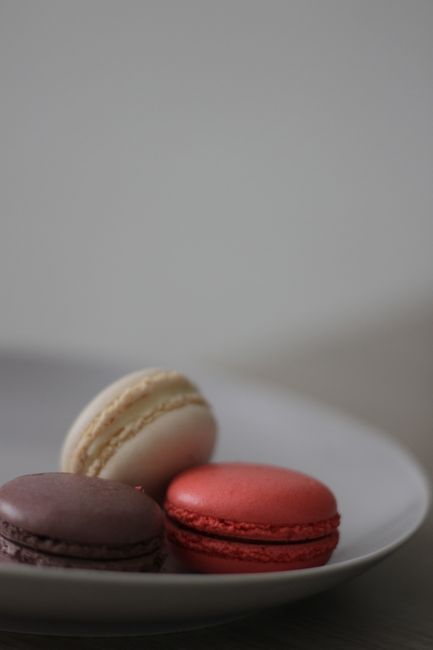
| Macaroon | Macaron | |
|---|---|---|
| Main ingredient | Shredded or flaked coconut | Almond flour |
| Binder | Egg whites and sweetened condensed milk or sugar syrup | Whipped egg white meringue (French or Italian method) |
| Shape | Irregular mounds or clumps | Uniform round discs, sandwiched in pairs |
| Texture | Dense, chewy, craggy exterior | Crisp, thin shell with a soft, chewy interior called the 'foot' |
| Color | Usually golden brown, sometimes dipped in chocolate | Wide range of bright, uniform colors from added food coloring |
| Filling | None, sometimes dipped in chocolate | Buttercream, ganache, jam, or curd between two shells |
| Origin | Italy originally, popularized in Jewish-American and coconut-based baking | France, refined in Parisian patisseries |
| Difficulty to make | Low, forgiving batter, hard to mess up | High, requires precise macaronage technique and often piping skill |
| Gluten-free | Naturally gluten-free | Naturally gluten-free (almond flour based) |
Verdict
Reach for a macaroon when you want an easy, rustic, coconut-forward cookie that comes together in one bowl. Reach for a macaron when you want a delicate, technically precise sandwich cookie built around almond meringue and a filling, and you're willing to work for the ruffled foot.
Macaroon
A macaroon starts with shredded or flaked coconut bound together with egg whites and often sweetened condensed milk, then baked in mounds until the edges turn golden and the inside stays dense and chewy. There's no piping, no resting time, and no fussy technique, just mix, scoop, and bake. Some versions get a dip in melted chocolate on the bottom or a drizzle over the top, but the base cookie is coconut through and through. It's forgiving enough that lumpy, uneven mounds still turn out well.
Macaron
A macaron is built from a meringue made with almond flour and egg whites, piped into small even circles, rested until a skin forms, then baked at a low temperature so a 'foot' ruffles out at the base of each shell. Two shells get sandwiched around a filling like buttercream, ganache, or jam. The batter has to be mixed to a very specific consistency (thick enough to hold shape, loose enough to settle flat when piped) or the shells crack, hollow out, or never develop a foot at all.
Where the names actually come from
Both words trace back to the Italian 'maccherone,' referring to fine paste, likely almond paste in early versions. French macarons kept closer to that almond-paste root, while English-speaking bakers eventually used 'macaroon' for the coconut-based cookie that became popular in the 19th and 20th centuries, especially in Jewish-American baking where it became a Passover staple since it requires no flour or leavening.
FAQ
Are macaroons and macarons made from the same base ingredient?
No. Macaroons are built on shredded coconut, while macarons are built on finely ground almond flour whipped into a meringue. They only share a linguistic root, not an ingredient list.
Which one is easier to bake at home for a beginner?
Macaroons. They use a simple mix-and-scoop method with no piping or resting time, while macarons require precise meringue consistency and often fail with cracked or hollow shells on a first attempt.
Why do macarons have that ruffled edge at the bottom?
That ruffle, called the foot, forms when the piped batter rests long enough to develop a dry skin, then bakes so the batter underneath pushes out and rises through the shell during baking.
Can macaroons be filled like macarons are?
Traditionally no. Macaroons are usually left plain or dipped in chocolate rather than sandwiched with filling, since their dense, chunky texture doesn't hold a filling layer the way a smooth macaron shell does.
Are both cookies gluten-free?
Yes, both are naturally gluten-free since macaroons rely on coconut and macarons rely on almond flour, though cross-contamination in a shared kitchen is still a risk for anyone with celiac disease.