
Nigiri vs. Sashimi: What's the Difference?
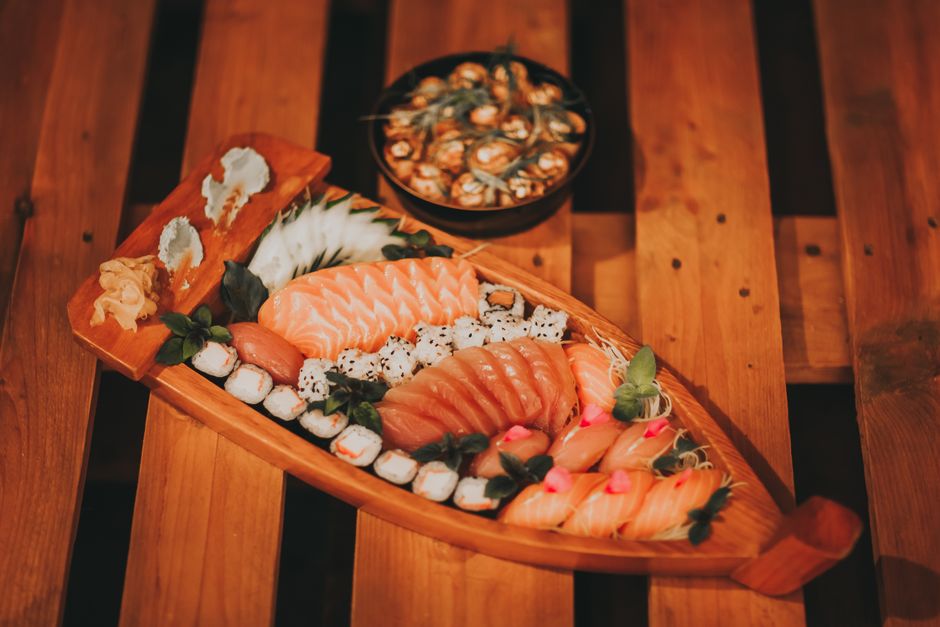
| Nigiri | Sashimi | |
|---|---|---|
| Composition | Hand-pressed mound of vinegared rice topped with a slice of raw fish | Just the raw fish, sliced, no rice |
| Rice | Included, seasoned with rice vinegar, sugar, and salt | None |
| Typical fish cut | Thin slice draped over the rice, often scored or brushed with soy | Thicker slices, cut to showcase the fish itself |
| Portion size | Usually 6-8 pieces per order, one bite each | Usually 5-6 slices per order, arranged in a fan |
| Eating method | Dip fish-side in soy sauce, eat in one bite | Dip in soy sauce with a touch of wasabi, eat with chopsticks |
| Calorie density | Higher, rice adds carbohydrates | Lower, mostly protein and fat from the fish |
Verdict
Order nigiri if you want the classic sushi bite, rice and fish together, seasoned and ready to eat in one motion. Order sashimi if you want to taste the fish on its own, in thicker slices, without rice diluting the texture or flavor.
Nigiri
A small oblong mound of vinegared sushi rice with a thin slice of raw (or sometimes cooked) fish pressed on top by hand. The chef often adds a smear of wasabi between the rice and fish, and may brush the fish with soy sauce or nikiri so it's ready to eat without additional dipping. Because the rice is part of the bite, nigiri is meant to be eaten whole, fish-side down in soy sauce, in a single bite.
Sashimi
Raw fish or seafood sliced and plated with no rice at all, usually alongside garnishes like shiso leaf, daikon radish, or shredded cabbage. Slices are cut thicker than the fish used for nigiri since there's no rice to balance the bite, so the texture of the fish carries the whole dish. It's dipped in soy sauce, often with a small amount of wasabi mixed in, and eaten with chopsticks rather than by hand.
FAQ
Is sashimi always eaten before nigiri in a meal?
There's no strict rule, but sashimi is often served earlier in a multi-course meal since it's unseasoned and meant to highlight the fish's raw flavor before rice and soy sauce come into play.
Why does nigiri sometimes come with soy sauce already brushed on?
Some sushi chefs pre-season nigiri with a light brush of soy sauce or nikiri (a soy-based glaze) so the rice doesn't fall apart from being dipped, and so the seasoning is more precisely controlled.
Is one more expensive than the other at a sushi restaurant?
Sashimi orders typically cost more per piece of fish because you're paying for a larger cut with no rice to bulk up the plate; nigiri stretches the same amount of fish further with rice.
Can the same fish be used for both nigiri and sashimi?
Yes, tuna, salmon, and yellowtail are common to both, but chefs often reserve fattier cuts like otoro for sashimi where the texture stands on its own without rice.