
Prawn vs. Shrimp: What's the Difference?
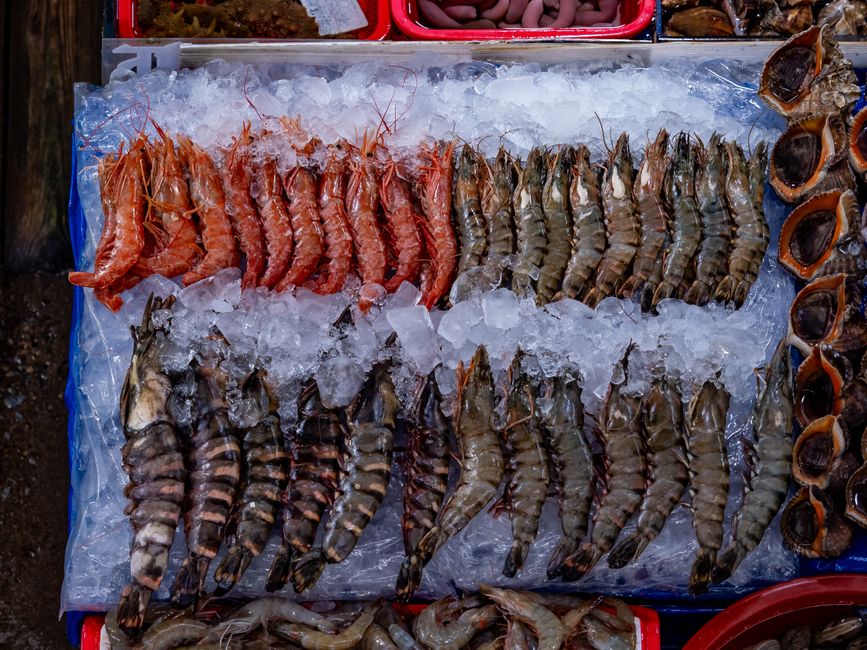
| Prawn | Shrimp | |
|---|---|---|
| Biological classification | Different suborder (Dendrobranchiata) | Different suborder (Pleocyemata) |
| Gill structure | Branching gills | Lamellar (plate-like) gills |
| Body shape | Straighter body segments | More curled body segments |
| Common usage | "Prawn" common in UK, Australia, and India, often for larger specimens | "Shrimp" common in US, often used generically |
Verdict
Biologically, they're genuinely different suborders of crustacean. Commercially and in most kitchens, though, the terms are used loosely and often interchangeably, especially by size (bigger ones get called "prawns" regardless of actual species) rather than strict taxonomy.
Prawn
Biologically distinct from shrimp, with branching gills and straighter body segments. "Prawn" is the more common everyday term in the UK, Australia, and India, and is often applied to larger specimens regardless of true species.
Shrimp
The more common term in North America, used broadly for both true shrimp and, commercially, for what would biologically be classified as prawns, the culinary usage doesn't track the scientific distinction closely.
FAQ
Can I use prawns and shrimp interchangeably in a recipe?
Yes, for virtually all cooking purposes, the flavor and cooking behavior are close enough that recipes don't meaningfully distinguish between them, whichever term the recipe or the market uses.
Why does the US mostly say "shrimp" and other countries say "prawn"?
It's largely a matter of regional culinary tradition and marketing history rather than a strict rule, both true shrimp and true prawns are sold and eaten everywhere, but the common name that stuck varies by region.