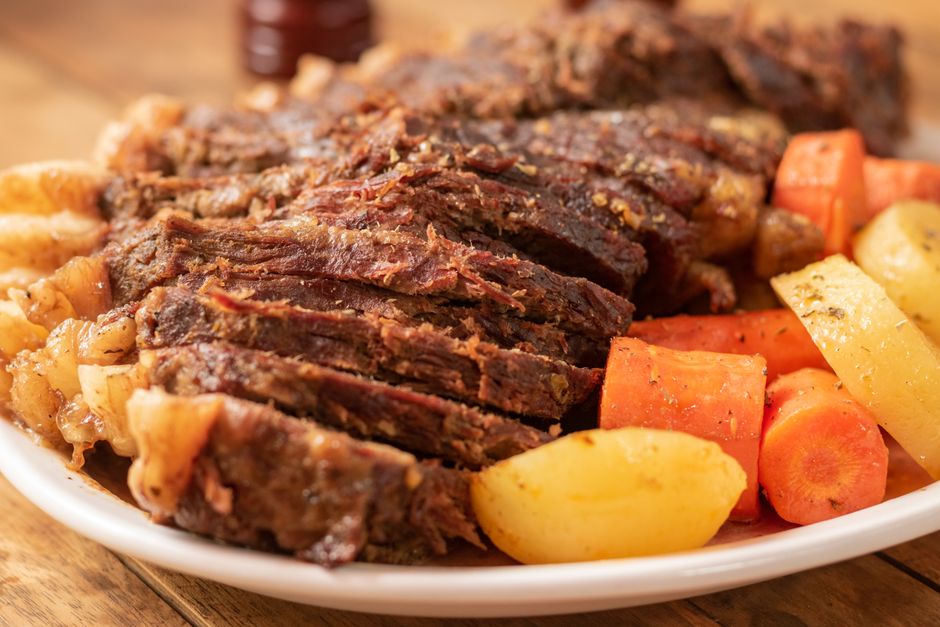
What Is Brisket?
Brisket is a cut of beef from the lower chest of the cow, made of two muscles (the "flat" and the "point") that support a large portion of the animal's body weight.
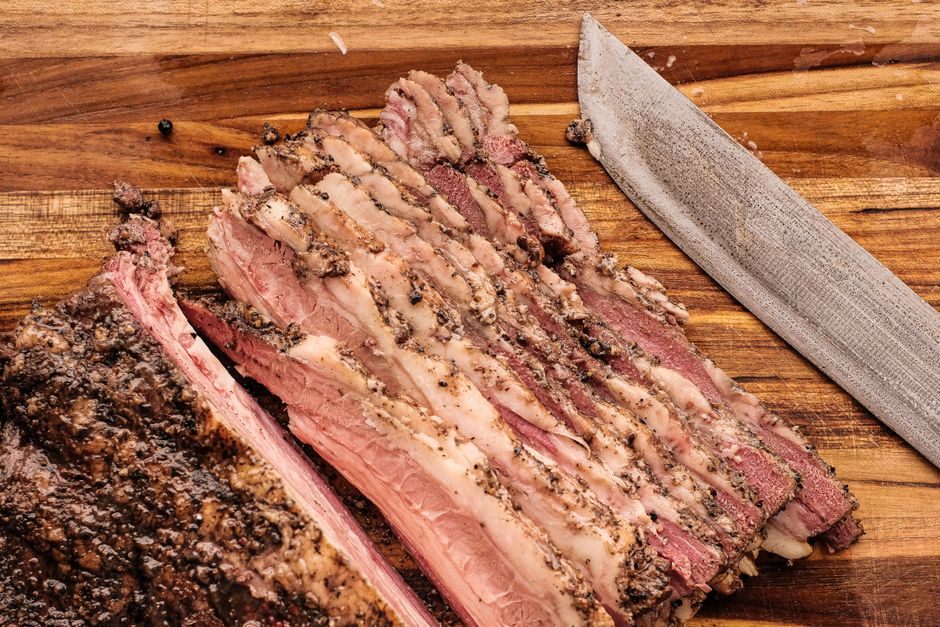
More detail
Because it's a heavily worked muscle, brisket is naturally tough and full of connective tissue, it needs long, slow cooking (smoking, braising) to break that collagen down into gelatin, which is what turns it tender rather than chewy. Cooked quickly with high heat, it stays tough no matter the seasoning.
Where it's used
Central to Texas-style barbecue (smoked low and slow for many hours) and to Jewish deli cooking (braised for corned beef and pastrami). Both traditions rely on the same principle: time and moisture, not high heat, are what make brisket good.
Substitutes
Chuck roast is the closest substitute for braising, though it lacks brisket's specific fat cap and grain for slicing.
FAQ
Why is my brisket tough even after cooking it a long time?
Usually it needs more time, not less heat, brisket often has to pass through a temperature "stall" where it seems stuck for hours before the collagen finally breaks down. Rushing it, or pulling it before it's probe-tender, is the most common cause of toughness.
What's the difference between the flat and the point?
The flat is leaner and slices neatly, while the point is fattier, more marbled, and more forgiving to cook, it's the cut typically used for burnt ends.