Corned Beef Brisket Recipe
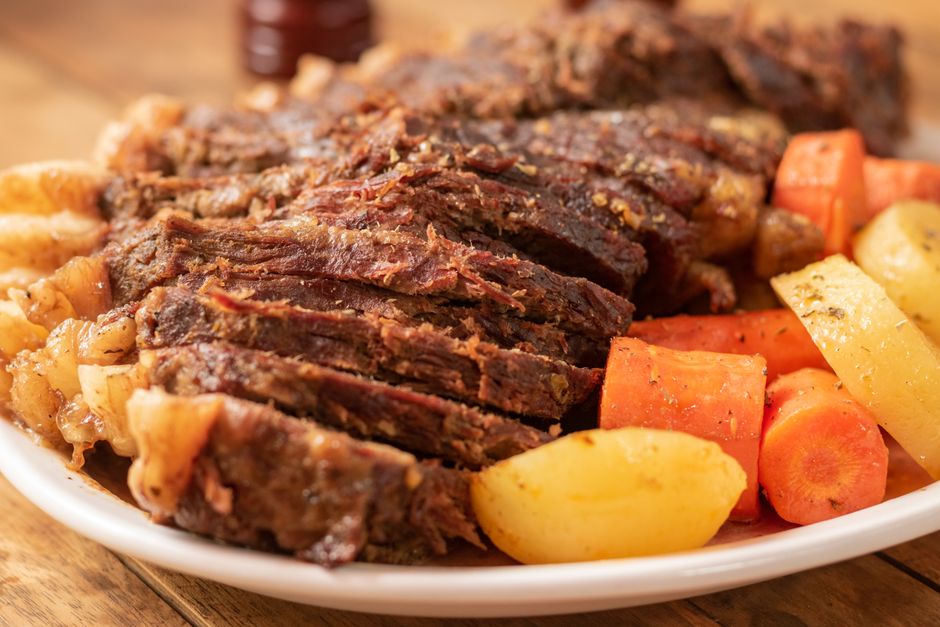
A long, gentle simmer (never a boil) breaks down the brisket's tough collagen without squeezing all the moisture out of the meat, and cooking the vegetables in the same seasoned broth afterward means they pick up the corned beef flavor instead of tasting like plain boiled vegetables.
- Prep
- 15 min
- Cook
- 200 min
- Total
- 215 min
- Servings
- 8
Ingredients
- 4 lb corned beef brisket, with spice packet
- 1 large yellow onion, quartered
- 4 cloves garlic cloves, smashed
- 2 leaves bay leaves
- 1 tsp black peppercorns
- 1 lb baby carrots
- 1 1/2 lb yukon gold potatoes, halved
- 1 medium head green cabbage, cut into wedges
Nutrition per serving
- Calories
- 138
- Protein
- 8g
- Carbs
- 8g
- Fat
- 8g
Based on the recipe as written, one serving. Recalculates if you swap an ingredient above. An estimate only, exact values depend on the specific ingredients used.
Need different units or a different yield? Try our Conversion Calculator →
Instructions
- 1Rinse the corned beef brisket under cold water to remove excess surface brine, then set it in a large Dutch oven or stockpot, fat side up.
- 2Add the onion, garlic, bay leaves, peppercorns, and the contents of the spice packet. Pour in enough water to cover the brisket by about 1 inch.
- 3Bring to a boil over high heat, then immediately reduce to a bare simmer, cover partially, and cook for 2.5 to 3 hours, until a fork slides into the thickest part with almost no resistance.
- 4Lift the brisket out onto a cutting board and tent loosely with foil. Keep the cooking liquid at a simmer.
- 5Add the carrots and potatoes to the pot and simmer for 15 minutes, then add the cabbage wedges and simmer another 12 to 15 minutes, until the vegetables are tender when pierced with a knife.
- 6Slice the brisket thinly against the grain and serve with the vegetables, spooning a little of the cooking broth over the top.
Tips & variations
- Flat cut brisket is leaner and slices into neater pieces; point cut has more fat marbling and shreds well, use it if you're making hash or sandwiches the next day.
- If the packet doesn't include whole spices, build your own with a teaspoon each of mustard seed, coriander seed, and allspice berries plus a cinnamon stick.
- For a firmer, roasted finish, simmer the brisket until fork-tender, then brush it with a mustard and brown sugar glaze and broil for 5 minutes before slicing.
- Save the strained cooking liquid; it makes an excellent base for a simple potato or cabbage soup.
Storage & reheating
Store sliced brisket and vegetables in an airtight container in the refrigerator for up to 4 days. Reheat gently in a covered skillet with a splash of the reserved cooking liquid, or in the microwave at half power, to keep the meat from drying out. Freeze sliced brisket (without the vegetables, which turn watery) in its liquid for up to 3 months.
Tips from the Tulo kitchen
- Skim the foam that rises in the first 10 minutes of simmering; it's mostly proteins and can make the broth cloudy and slightly bitter if left in.
- Let the brisket rest under foil for at least 10 minutes before slicing so the juices redistribute instead of running out onto the cutting board.
FAQ
Do I need to rinse corned beef before cooking?
A quick rinse removes some of the surface brine and loose spices, which keeps the finished dish from tasting overly salty, but it won't remove the cure that gives the meat its pink color and flavor.
Why is my corned beef tough?
Tough, chewy brisket almost always means it was pulled too early or simmered too hard. Brisket needs a long, gentle simmer, usually 2.5 to 3 hours for a 4-pound cut, until a fork meets no resistance.
Can I make corned beef brisket in a slow cooker?
Yes. Cover the brisket with the same aromatics and enough water or broth to submerge it, then cook on low for 8 to 9 hours. Add the vegetables for the last 1.5 hours so they don't turn mushy.
What's the difference between flat cut and point cut brisket?
Flat cut is leaner and more uniform, so it slices neatly for a platter. Point cut has more fat running through it and stays juicier when shredded, which makes it better suited to sandwiches or hash.