What Is Shortening?
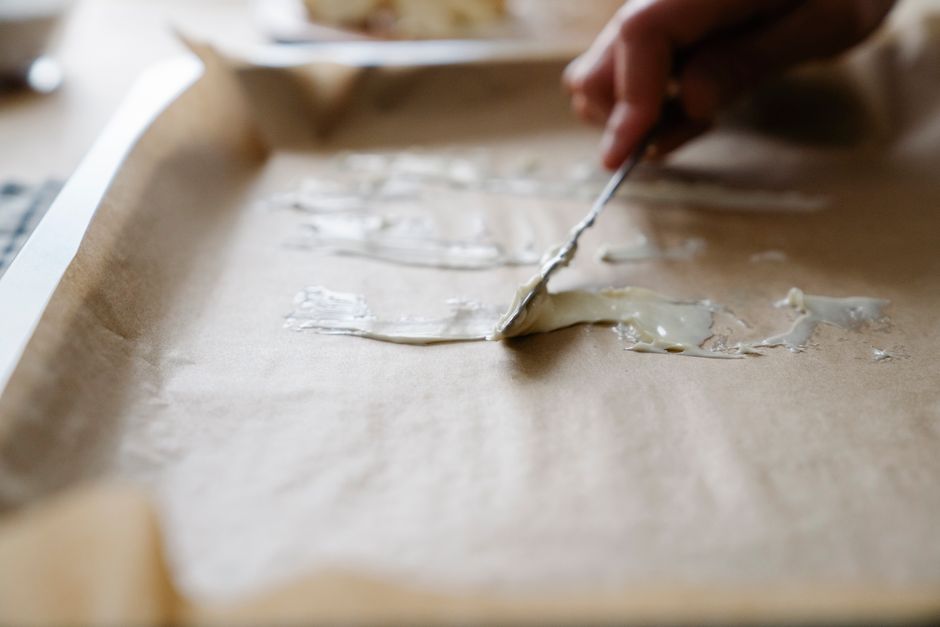
Shortening is a solid fat, most commonly made from hydrogenated vegetable oil, that is 100% fat with no water content. It's white, flavorless, and stays solid at room temperature, which is why it's prized for making baked goods tender and flaky.
More detail
Shortening was developed in the early 1900s as a cheaper, shelf-stable alternative to lard and butter, using vegetable oils that had been hydrogenated to turn them solid. Because it contains no water (unlike butter, which is about 15-20% water), shortening doesn't create steam during baking and doesn't develop gluten as readily when worked into flour. This gives pie crusts a shatter-crisp flakiness and cookies a soft, tall texture rather than a spread-thin one. It also has a much higher melting point than butter, so doughs made with it hold their shape better and are more forgiving of a warm kitchen.
Where it's used
Shortening shows up most often in American pie and biscuit doughs, where it's cut into flour alongside or instead of butter, in frosting (especially the stiff, glossy kind used for decorating), and in fried foods, since its neutral flavor and high smoke point make it a stable frying fat.
Substitutes
Butter is the most common substitute, though it will add flavor, more browning, and slightly less flakiness due to its water content. For frosting, other solid fats like coconut oil (refrigerated to firm up) can work in a pinch, but they carry their own flavor that pure shortening doesn't.
FAQ
Is shortening the same as lard?
No. Lard is rendered pork fat and has a savory, slightly meaty flavor along with some moisture; shortening is plant-based, fully hydrogenated, and completely flavorless.
Can shortening be substituted 1:1 for butter?
Yes, by volume shortening swaps 1:1 for butter in most recipes, but since it has no water or milk solids, baked goods will be paler, less flavorful, and slightly more tender or crumbly.
Does shortening need to be refrigerated?
No. Shortening is shelf-stable and can be stored in a cool, dark pantry for up to a year unopened; refrigeration isn't necessary and can make it too firm to work with straight from the fridge.
Why do some pie recipes call for both butter and shortening?
Combining the two gives the flakiness and structure of shortening with the flavor and browning that only butter's milk solids provide, so the crust gets the benefits of both fats.