
Cacao Nibs vs. Cocoa Powder: What's the Difference?
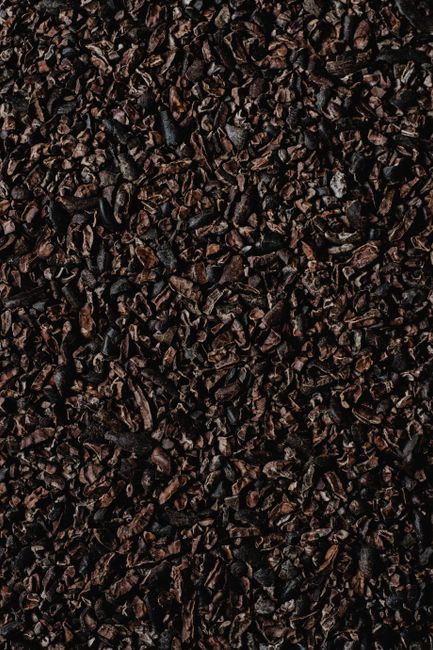
| Cacao Nibs | Cocoa Powder | |
|---|---|---|
| Form | Small, crunchy broken pieces of roasted cacao beans | Fine, dry powder |
| Processing | Beans are fermented, dried, roasted, then cracked and separated from the husk | Beans are roasted, ground into liquor, pressed to remove most of the cocoa butter, then the solid left behind is dried and ground fine |
| Fat content | High, roughly 45-50% cocoa butter by weight | Low, roughly 10-24% cocoa butter depending on whether it's natural or Dutch-process |
| Flavor | Bitter, roasted, slightly fruity, with a texture like a bittersweet coffee bean | Concentrated, bitter chocolate flavor with no crunch |
| Sweetness added | None, sold completely unsweetened | None, also sold unsweetened unless labeled otherwise |
| Best uses | Topping granola, oatmeal, yogurt, trail mix, or baked into cookies for crunch | Baking (brownies, cakes), hot chocolate, mole sauce, mocha drinks |
| Dissolves in liquid | No, stays crunchy and solid | Yes, blends smoothly into batters and liquids |
Verdict
Choose cacao nibs when you want texture and a raw, bitter chocolate crunch mixed into something else. Choose cocoa powder when you need chocolate flavor and color to actually dissolve into a batter, dough, or drink.
Cacao Nibs
Cacao nibs are what's left after roasted cacao beans are cracked and their papery husks are winnowed away. The result is small, hard, dark brown fragments that taste like an intensely bitter, slightly fruity dark chocolate chip with none of the sweetness or smoothness. Because the cocoa butter hasn't been pressed out, nibs are naturally high in fat and don't melt down into a batter the way chocolate or cocoa powder does. They stay crunchy through baking, which makes them better as a mix-in or topping than as a source of chocolate flavor throughout a recipe.
Cocoa Powder
Cocoa powder starts the same way as nibs, roasted and cracked cacao beans, but then goes further: the nibs are ground into a thick liquid called cocoa liquor, most of the cocoa butter is pressed out under high pressure, and the remaining solid cake is dried and pulverized into a fine powder. That removal of fat is what makes cocoa powder able to disperse evenly through wet ingredients instead of clumping. Natural cocoa powder is acidic and reacts with baking soda; Dutch-process cocoa is alkalized to mellow the flavor and neutralize that acidity, so it's typically paired with baking powder instead.
Can you substitute one for the other?
Not directly in most recipes. Swapping cocoa powder for nibs (or the reverse) in a straightforward 1:1 ratio changes both texture and chocolate intensity, since nibs won't dissolve and cocoa powder has almost no crunch. In baking, cocoa powder can sometimes be made from ground nibs in a pinch by processing them into a paste, but the high fat content means the result behaves more like unsweetened baking chocolate than store-bought cocoa powder.
FAQ
Are cacao nibs healthier than cocoa powder?
They're nutritionally similar per gram of cacao solids, but nibs retain more of the natural cocoa butter and fiber from the whole bean, while cocoa powder has had most of that fat pressed out, making it more concentrated in cocoa solids per calorie.
Do cacao nibs need to be cooked before eating?
No, they're already roasted during processing and are commonly eaten raw straight from the bag, sprinkled on food without any further cooking.
Can cacao nibs be ground into cocoa powder at home?
Grinding nibs in a food processor or blender produces cacao paste or nib butter because of their high fat content, not a dry powder; getting true cocoa powder requires industrial pressing to remove the cocoa butter first.
Which one is less bitter?
Neither is sweet, but Dutch-process cocoa powder is noticeably milder and less acidic than either natural cocoa powder or cacao nibs, which both retain the beans' raw bitterness.