
Black Rice
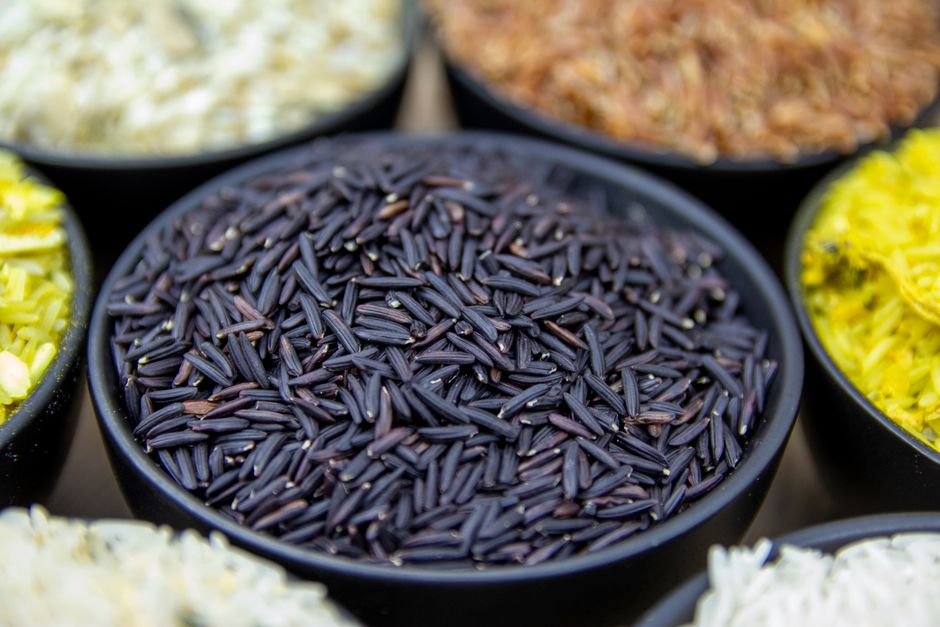
Black rice is a whole-grain rice with a deep purple-black bran layer, sometimes called forbidden rice or emperor's rice because it was historically reserved for Chinese royalty. Unlike white rice, the bran is left intact, giving it a nutty, slightly sweet flavor, a chewy texture, and a dramatic color that bleeds into a deep purple when cooked. It's botanically the same species as other rice varieties but owes its pigment to high levels of anthocyanins, the same antioxidant compounds found in blueberries and purple cabbage.
Varieties
Chinese forbidden rice and Indonesian black rice are the most common savory varieties, both non-glutinous. Black glutinous rice (sometimes labeled 'black sticky rice') is a separate, starchier variety used almost exclusively in Southeast Asian desserts and should not be substituted into savory pilaf recipes without adjusting liquid and expecting a stickier result.
Buying tips
Look for whole, unbroken grains with a uniform deep black-purple color; a lot of dust or a dull gray cast can mean the rice is old. Rinse before cooking, since the loose surface pigment will run and can dye a whole pot of mixed grains if not rinsed first.
Substitutes
Red rice (like Bhutanese or Camargue red rice) — 1:1
Similar chewy whole-grain texture and nutty flavor, though it cooks a light red-brown instead of purple.
Brown rice — 1:1
Much milder flavor and no color, but the same bran-intact chewiness and roughly similar cook time.
Wild rice — 1:1
Darker color and a similar dramatic look, but chewier and more grassy-tasting; works well blended with black rice rather than replacing it entirely.
Black glutinous rice (sweet black rice) — 1:1
Stickier and starchier, intended for desserts; a fine swap in porridge or pudding recipes but too sticky for savory pilafs.
Storage
Store uncooked black rice in an airtight container in a cool, dark pantry for up to a year; the intact bran layer has more natural oils than white rice, so it can turn rancid faster in warm, humid conditions. Refrigerate for longer shelf life in hot climates. Cooked black rice keeps refrigerated in a sealed container for about 5 days.
How to use
Simmer like brown rice, using roughly 1 3/4 to 2 cups of water per cup of rice and cooking 30 to 35 minutes until tender but still chewy. Use it in grain salads, stir-fries, rice pudding, or as a bed for roasted vegetables and fish, where its color makes a strong visual contrast against lighter ingredients.
What it pairs with
Pairs well with coconut milk and mango in desserts, with citrus and herbs in cold grain salads, and with roasted salmon, shrimp, or tofu in savory dishes where its color and chew stand up to bold sauces.
Nutrition
Black rice is higher in fiber, iron, and protein than white rice, and its anthocyanin content gives it more antioxidant activity per serving than most other rice varieties, comparable to some berries.
FAQ
Why does black rice turn purple when cooked?
The anthocyanin pigments in the bran layer dissolve into the cooking water as the rice absorbs it, turning both the grains and any remaining liquid a deep purple.
Does black rice need to be soaked before cooking?
Soaking for 30 minutes to a few hours isn't required but shortens the cook time by about 10 minutes and produces a slightly more even texture.
Is black rice the same as wild rice?
No. Wild rice is a different aquatic grass species, while black rice is a true rice variety with an intact black bran layer; they look similar but differ in flavor, cook time, and texture.
Can black rice stain pots or hands?
Yes, the pigment can leave a temporary purple tint on light-colored cookware and cutting boards, which typically washes out with normal dish soap.
Have black rice on hand? Find recipes with our Recipe Generator →