
Bonito Flakes
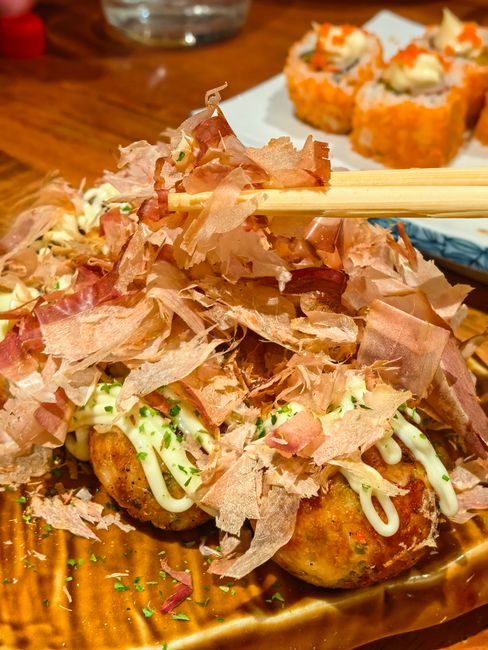
Bonito flakes (katsuobushi) are paper-thin shavings of dried, fermented, and smoked skipjack tuna. The whole fish is cured for months until it becomes hard as wood, then shaved into flakes that curl and shift when hot liquid or steam hits them. They're the backbone of Japanese dashi and a common finishing garnish on their own.
Varieties
Hanakatsuo refers to the standard thin, delicate shavings used for garnishing and quick dashi. Kezurikatsuo (or arabushi-based flakes) are thicker and cut from less-processed bonito, meant for simmered, stronger dashi rather than eating raw. The highest grade, karebushi, is mold-fermented multiple times over months and produces the clearest, most refined broth, but it's harder to find outside specialty Japanese markets.
Buying tips
Look for flakes that are light pink to tan, thin enough to see through, and packed with minimal broken bits at the bottom of the bag. Darker, thicker shavings (kezurikatsuo) are meant for longer simmering rather than quick steeping. Smaller bags sold for immediate use are worth the higher per-ounce cost since flakes lose aroma quickly once opened.
Substitutes
Instant dashi granules (hondashi) — 1/2 teaspoon per 1 cup water
Replaces bonito flakes when making dashi broth rather than using them as a garnish; already seasoned, so cut back on added salt or soy sauce.
Dried niboshi (baby sardines) — 1:1 by weight
Simmer instead of steeping; gives a stronger, slightly more fishy dashi, so rinse the niboshi first and remove heads and guts if the flavor is too sharp.
Dried shiitake mushrooms — 3-4 dried mushrooms per 4 cups water
The standard vegetarian dashi substitute; soak overnight in cold water for the cleanest flavor rather than boiling, which turns it bitter.
Soy sauce plus a drop of fish sauce — to taste
Not a real substitute for dashi, but a quick fix to add savory depth to a broth or sauce when no bonito or alternatives are on hand.
Storage
Keep the bag tightly sealed with as much air pressed out as possible and store in a cool, dark pantry; flakes absorb moisture and go limp and stale within weeks once opened to air. For long-term storage, keep the sealed bag in the freezer and let it come to room temperature before opening so condensation doesn't form on the flakes.
How to use
Steep in just-boiled water off the heat for a few minutes to make dashi, then strain (do not squeeze the flakes, which makes the broth bitter). Use fresh, unsteeped flakes as a garnish on cold tofu, okonomiyaki, or takoyaki, where the heat of the food makes them ripple. Simmer alongside kombu for a deeper, two-stage dashi.
What it pairs with
Pairs naturally with kombu (dried kelp) in dashi, and with soy sauce, mirin, and rice vinegar in Japanese cooking generally. Works well sprinkled over silken tofu with grated ginger, over hot rice with a drizzle of soy sauce, or on top of cabbage pancakes and grilled skewers.
Nutrition
Bonito flakes are a concentrated source of protein and naturally contain inosinate, one of the compounds responsible for umami taste; a typical serving used in broth contributes very little fat or calories since the flakes are strained out or used in small amounts as garnish.
FAQ
Are bonito flakes made from bonito fish or tuna?
Skipjack tuna, which is commonly called bonito in this context even though it's biologically a small tuna species, not a true bonito.
Is there a vegetarian or vegan substitute for bonito flakes?
Dried shiitake mushrooms and kombu together make the closest vegetarian dashi; commercial vegan dashi powders made from kombu and shiitake also exist and work as a direct swap for instant dashi granules.
Why do bonito flakes move on top of hot food?
The flakes are shaved so thin that rising heat and steam physically lift and curl them; it's a purely mechanical effect from their thinness, not a sign of freshness.
Can bonito flakes be reused after making dashi?
Yes, for a second, weaker batch called niban dashi, often simmered longer with the spent flakes and kombu to pull out remaining flavor for miso soup or simmered dishes.
Do bonito flakes go bad?
They don't spoil in the way fresh food does, but they lose aroma and turn stale-tasting within a month or two of being opened to air, especially in humid kitchens.
Have bonito flakes on hand? Find recipes with our Recipe Generator →