
Bresaola
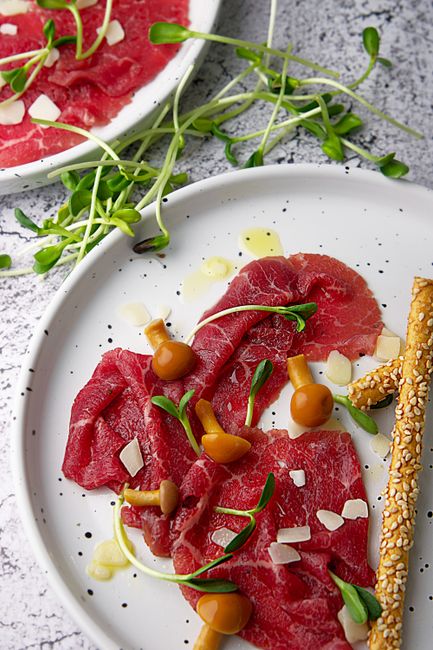
Bresaola is an Italian cured meat made from lean beef (traditionally the eye of round) that's salted, seasoned with juniper, cinnamon, and other spices, then air-dried for one to three months. Unlike prosciutto or salami, it contains no pork and very little fat, so the flavor is deep, slightly gamy, and mineral rather than salty-fatty. It's always eaten raw, sliced paper-thin.
Varieties
Bresaola della Valtellina IGP, made in Lombardy, is the benchmark version and carries a protected geographic designation. Some producers also make bresaola from horse or venison instead of beef, which is more common in northern Italy but rare to find outside specialty shops.
Buying tips
Look for a deep burgundy color throughout the slice, not grayish or brown at the edges, which signals age or poor storage. Buy it freshly sliced from a deli counter when possible since pre-packaged bresaola can taste flat and slightly metallic after sitting. A thin white rim of natural mold on a whole piece is normal and traditional; excessive slime or a sour smell is not.
Substitutes
Prosciutto di Parma or San Daniele — 1:1 by slice count
Fattier and saltier than bresaola, with a sweeter cure. Works well in the same thin-sliced, room-temperature presentations.
Speck (smoked, cured pork from Alto Adige) — 1:1 by slice count
Adds a smoky note bresaola doesn't have, but similar thinness and chew make it a reasonable swap on a charcuterie board.
Bündnerfleisch (Swiss air-dried beef) — 1:1 by slice count
Nearly identical to bresaola in texture and lean profile; often the closest substitute since it's also cured beef.
Pastrami, sliced thin and cold — 1:1 by slice count
Much smokier and spicier from the peppercorn crust; best in sandwiches rather than a delicate carpaccio-style plate.
Smoked venison or smoked duck breast — 1:1 by slice count
Leaner and more assertively gamy than bresaola, closer in spirit than most pork cured meats.
Storage
Keep vacuum-sealed bresaola in the refrigerator until the seal is broken. Once opened, wrap the cut end tightly in parchment paper, then in plastic or foil, and use within 5 to 7 days; it dries out and hardens at the edges quickly if left exposed to air. Whole, unsliced pieces from a deli counter last slightly longer, about 10 days, wrapped the same way.
How to use
Serve at room temperature, sliced as thin as possible, on its own or draped over arugula with olive oil, lemon juice, and shaved parmesan (bresaola alla milanese). It also works folded into sandwiches, laid over flatbread with fig jam, or torn into ribbons over a salad. Because it's lean and delicate, avoid cooking it; heat turns the texture rubbery and mutes the flavor.
What it pairs with
Pairs well with peppery arugula, shaved parmesan or pecorino, fresh lemon and good olive oil, fig or balsamic reduction, and light, high-acid wines like Valpolicella or a dry Lambrusco.
Nutrition
Bresaola is very lean, around 150 calories and roughly 30 grams of protein per 100 grams, with far less fat and sodium per slice than most cured pork products. It's a common choice for people watching fat intake who still want cured meat flavor.
FAQ
Is bresaola raw meat?
Yes in the sense that it's never cooked, but it's cured through salting and air-drying for weeks to months, which is what makes it safe to eat, similar to prosciutto.
Can bresaola be frozen?
Whole, unsliced pieces freeze reasonably well for up to two months, tightly wrapped. Pre-sliced bresaola loses texture and turns mushy after thawing, so it's not recommended.
Why does my bresaola taste bitter or sour?
That usually means it's oxidized from sitting exposed to air too long after opening, or it's simply past its prime. Fresh bresaola should taste clean, slightly sweet, and faintly of juniper and spice, not sharp or off.
Is bresaola the same as carpaccio?
No. Carpaccio is raw, uncured beef sliced thin and served immediately; bresaola is cured and air-dried over weeks, which changes both the texture and the flavor significantly.
Have bresaola on hand? Find recipes with our Recipe Generator →